By Nkechi Eze
Nigeria, conversations about policing rarely begin with praise. For decades, public perception of the Nigeria Police Force has oscillated between cautious hope and deep skepticism, shaped by years of troubling encounters, viral videos, and painful stories of abuse of authority. Every few years, promises of reform emerge, often accompanied by sweeping declarations and ambitious blueprints. Yet the true measure of change rarely lies in policy pronouncements. It lies in enforcement.
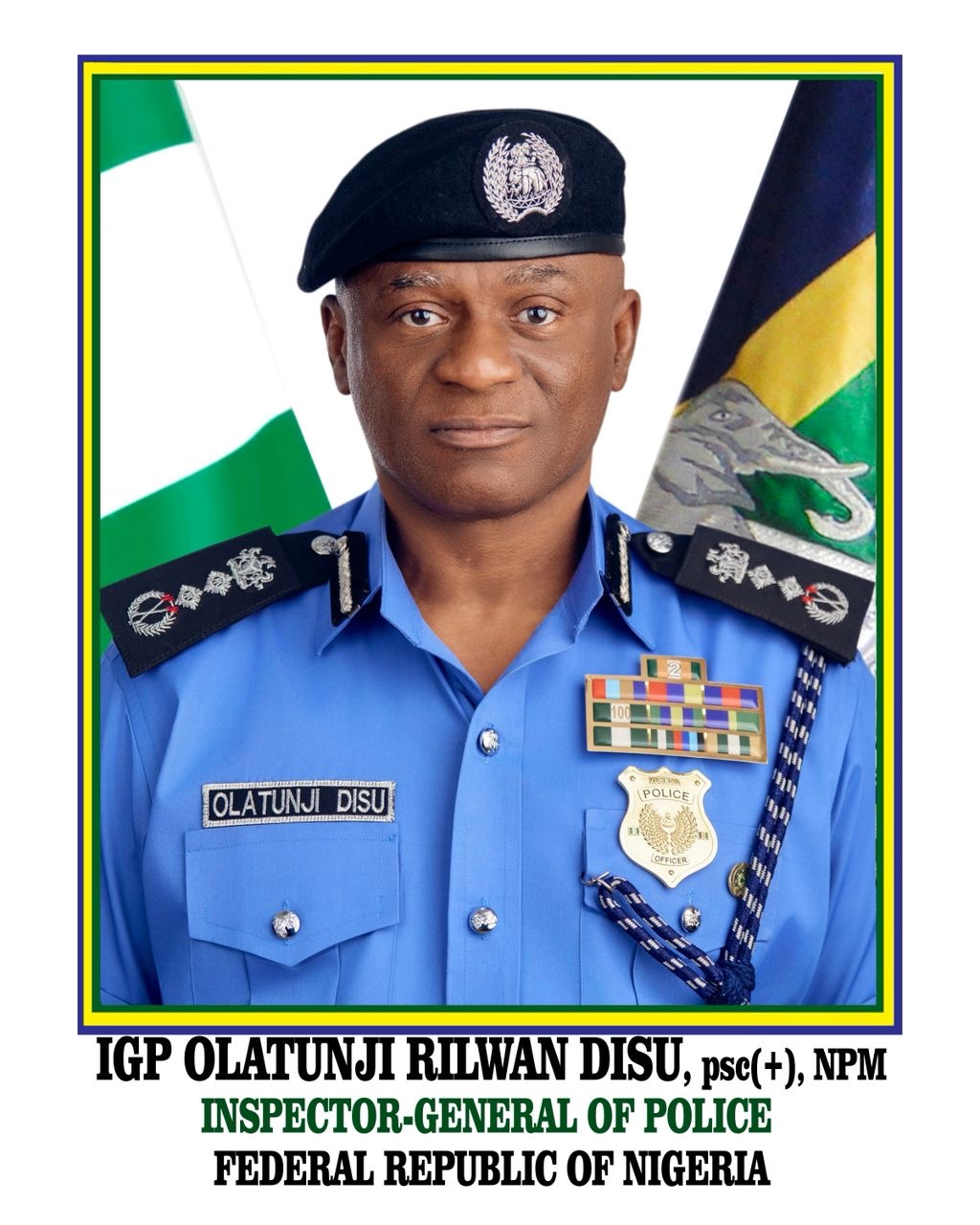
That is why the leadership approach of Olatunji Disu, the current Inspector-General of Police, is attracting increasing attention within security and governance circles. Rather than relying on loud reform slogans, his tenure appears to be defined by a quieter but far more consequential strategy: institutional discipline enforced through consistent action.
Since assuming office as Inspector-General, Disu has made it clear that restoring credibility to the police will require more than structural reforms. It will require confronting misconduct within the ranks decisively, repeatedly, and without hesitation. When he formally took over leadership of the Force, he outlined a reform agenda anchored on professionalism, accountability, and stronger community partnership aimed at rebuilding public confidence.
The philosophy behind this approach is simple: a police institution cannot command respect from the public if it cannot enforce discipline among its own officers.
A recent incident in Lagos provides another telling illustration of this approach in action.
In early April 2026, a video circulating widely on social media showed police officers carrying out a roadside stop-and-search operation in the Satellite Town area of Lagos. In the footage, the officers were seen stopping a vehicle, asking its occupants to step out, and taking one of them aside to conduct a search away from the parked car. The clip quickly triggered public outrage, with many Nigerians questioning the procedure and accusing the officers of harassment and unprofessional conduct.
In the past, such incidents often followed a familiar trajectory, public anger online followed by institutional silence. But under the current leadership of IGP Olatunji Disu, the reaction was markedly different.
Upon becoming aware of the video, the Inspector-General of Police immediately directed that the officers involved be summoned to the Force Headquarters in Abuja for disciplinary review. The Divisional Police Officer of the Satellite Town Division was instructed to produce the officers for questioning as part of a formal internal investigation into the incident.
The directive, communicated through the police leadership, underscored a clear message: allegations of misconduct would be treated seriously, regardless of where or when they occurred.
For observers of police reform, the significance of the episode lies not merely in the misconduct captured on video but in the institutional reflex it triggered. Rather than dismissing the footage as another social-media controversy, the police leadership treated it as an opportunity to reinforce internal discipline and demonstrate responsiveness to public concerns.
The message was unmistakable: misconduct would no longer be quietly absorbed into the system.
This pattern reflects a broader leadership philosophy emerging under Disu’s watch. At internal meetings and official events, the Inspector-General has repeatedly reminded senior officers that discipline is not merely an internal administrative matter, it is the foundation of operational credibility.
At a decoration ceremony for newly promoted Assistant Inspectors-General and Commissioners of Police, Disu issued a clear directive to the leadership cadre of the Force. Senior officers, he warned, must lead by example and would be held accountable not only for operational performance but also for the behaviour of officers under their command.
Such directives may appear routine on the surface, but within a hierarchical security institution, they carry strategic implications. When accountability flows downward from the highest level of command, it reshapes the internal incentive structure of the organization.
Commanders become more vigilant. Supervisors become more proactive. And frontline officers become more conscious of the consequences of misconduct.
Over time, these small shifts accumulate into cultural change.
One of the most distinctive features of the current reform trajectory is its understated nature.
Unlike previous eras where reform initiatives were often accompanied by extensive public relations campaigns, the present approach appears more operational than rhetorical. Instead of dramatic announcements, the system is being recalibrated through incremental enforcement, disciplinary proceedings, internal directives, leadership retreats, and renewed emphasis on professional conduct.
In March, for instance, the Force convened a strategic leadership retreat for Deputy Inspectors-General and Assistant Inspectors-General in Abuja, aimed at strengthening institutional transformation and aligning senior commanders with ongoing reform priorities. The gathering focused on improving accountability mechanisms and reinforcing professional standards across commands.
For a policing institution as large and complex as Nigeria’s, this type of internal alignment is critical. Reform cannot succeed if it remains confined to the office of the Inspector-General. It must cascade through every layer of command, from Force Headquarters to state commands, divisional headquarters, and street patrol units.
The stakes for these reforms are high.
Across Nigeria, the relationship between citizens and law enforcement has long been strained. High-profile incidents, viral recordings of extortion, and memories of past abuses have created a trust deficit that cannot be repaired overnight.
Yet trust remains the most valuable currency in policing.
Without it, communities hesitate to share intelligence. Victims avoid reporting crimes. Witnesses refuse cooperation. In such an environment, law enforcement becomes reactive rather than preventive, responding to crimes after they occur rather than preventing them in the first place.
Rebuilding that trust therefore requires visible proof that the institution is capable of correcting itself.
Disciplinary action against erring officers, when carried out transparently, serves precisely that purpose.
Beyond restoring public confidence, consistent enforcement of discipline also carries a powerful internal deterrent effect.
Police organizations, like all hierarchical institutions, are shaped by signals from leadership. When officers see colleagues escape consequences for misconduct, a culture of impunity begins to take root. But when disciplinary actions become visible and consistent, behaviour begins to adjust.
In the language of organizational reform, accountability creates deterrence.
By ensuring that allegations are investigated promptly and disciplinary measures pursued where necessary, the leadership of the Force is sending a message across its ranks: professionalism is not optional.
None of this suggests that the challenges confronting the Nigeria Police Force will disappear overnight.
Institutional reform within a national police system is inherently complex. It must contend with entrenched habits, operational pressures, resource constraints, and public skepticism shaped by decades of experience.
Yet meaningful reform rarely happens through sudden revolutions. More often, it emerges through sustained leadership, persistent enforcement of rules, and gradual cultural transformation.
In that sense, the evolving leadership style of Olatunji Disu may represent a pragmatic path forward. Rather than promising instant transformation, the current strategy appears focused on rebuilding institutional discipline, one case, one command, and one decision at a time.
For Nigerians who have long yearned for a police force that inspires confidence rather than anxiety, that slow but steady recalibration may prove far more consequential than any headline-grabbing reform announcement.
Because in the end, the true test of police reform is not what leaders say, it is what they enforce.