By Nkechi Eze
The Chief of the Air Staff, Sunday Kelvin Aneke, has declared that operational success in today’s security environment is no longer measured solely by firepower, but by the military’s ability to build trust, foster cooperation, and integrate the human dimension into operations.
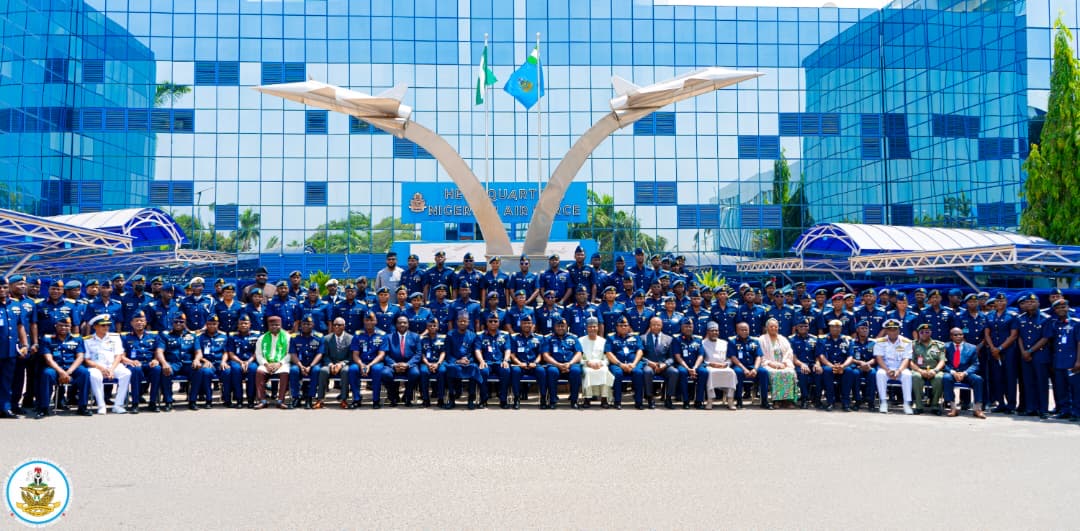
Speaking at the Nigerian Air Force Civil–Military Relations Conference 2026 held on March 24 in Abuja, the Air Chief stressed that strong relationships with civilian populations have become a critical determinant of mission success in modern warfare.
According to a statement by the Director of Public Relations and Information, Ehimen Ejodame, the conference, themed “Leveraging Civil-Military Relations for Enhanced Operational Efficiency,” underscored the Nigerian Air Force’s evolving approach to operations.
Aneke noted that the shift aligns with his command philosophy of building a professional, agile, and people-centred Air Force anchored on precision, accountability, and strategic effectiveness.
“In today’s complex security environment, operational success is no longer defined solely by kinetic dominance, but by our ability to build trust, foster cooperation, and integrate the human dimension into air operations,” he said.
He disclosed that the Nigerian Air Force has repositioned civil–military relations as a core operational enabler through strengthened community engagement, institutionalised feedback mechanisms, and enhanced strategic communication across theatres of operation.
Highlighting practical steps taken by the Service, the Air Chief cited the approval of compensation for victims of an accidental airstrike in Sokoto, as well as the execution of Special Intervention Projects in Kwara, Rivers, Delta, Kano, and Akwa Ibom states, including medical outreaches and infrastructure support aimed at boosting public trust.
He also emphasised the importance of intelligence-driven operations, inter-agency collaboration, and the integration of kinetic and non-kinetic strategies such as strategic communication and community engagement.
Aneke urged participants to develop actionable recommendations that would deepen civil–military cooperation and strengthen partnerships with civil institutions, while also expressing appreciation to Bola Ahmed Tinubu for continued support to the Nigerian Air Force.
In his opening remarks, the Chief of Civil–Military Relations, Edward Gabkwet, highlighted the increasing importance of non-kinetic operations in modern air warfare.
He noted that the establishment of the Civil–Military Relations Branch in July 2024 was part of deliberate efforts to enhance community engagement, ensure human rights compliance, and improve perception management within the Force.
Gabkwet added that the Branch has since rolled out key initiatives, including a Civilian Harm Mitigation and Response Action Plan, the creation of a dedicated department at the Air Warfare and Doctrine Centre, and the introduction of a digital complaints platform to promote accountability and transparency.
The one-day conference brought together Civilian Harm Mitigation Desk Officers from across Nigerian Air Force commands, alongside stakeholders from academia, the military, and the media.
Presentations at the event included “Civil–Military Relations and Perception Management: NAF in Focus,” delivered by Okey Ikechukwu, and “Leveraging Civil–Military Relations for Enhanced Operational Efficiency,” presented by retired Air Vice Marshal JD Gwani.
Other dignitaries in attendance included the Director-General of Voice of Nigeria, Jibrin Baba Ndace, as well as senior and retired military officers.
The conference provided a platform for robust discussions on strengthening collaboration between the military and civil society, with a focus on enhancing operational efficiency through trust-building and accountability.