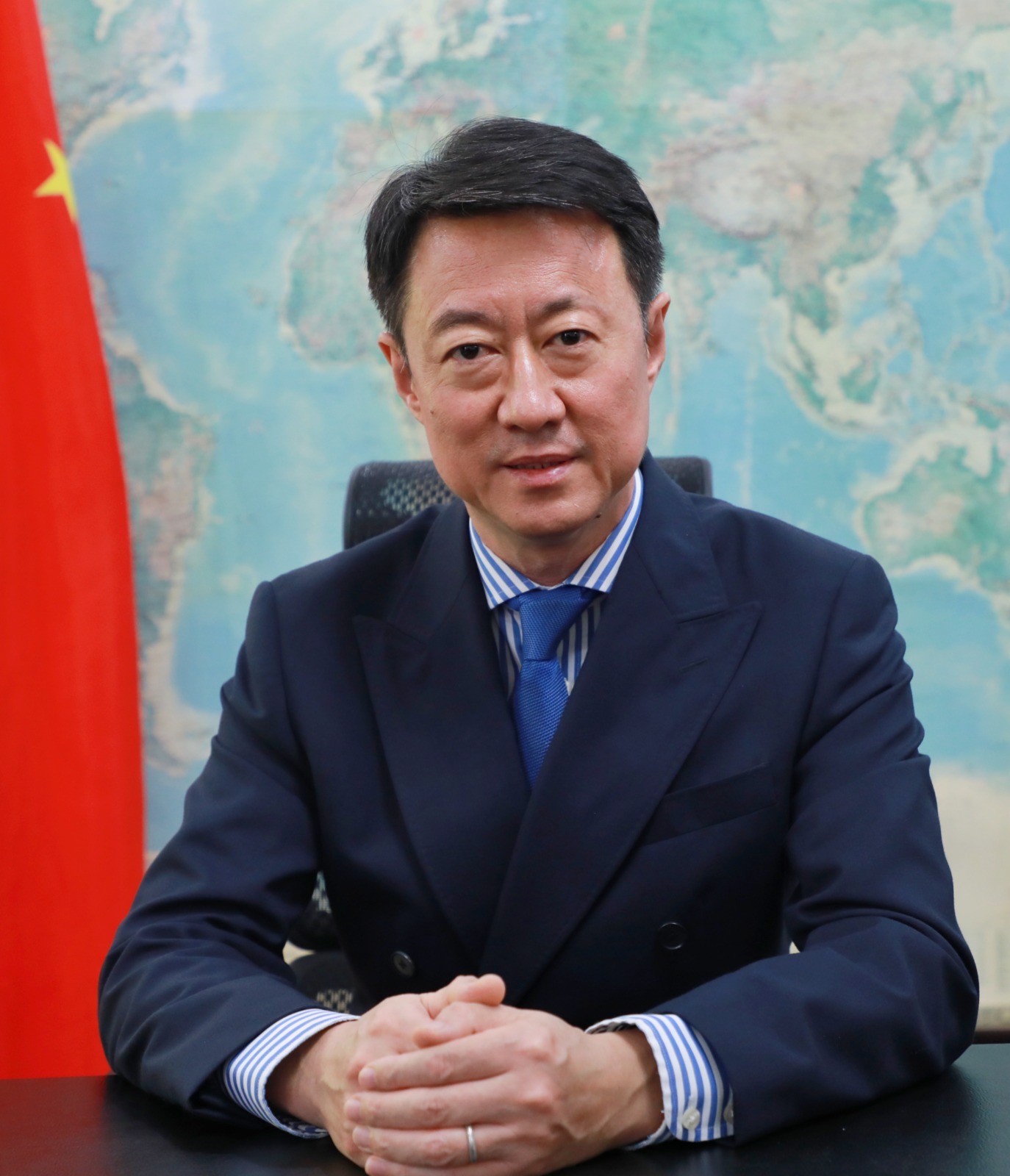
The Chinese Ambassador to Nigeria, Yu Dunhai, has highlighted China’s commitment to advancing eco-friendly modernisation and strengthening climate cooperation with Nigeria, as part of broader global efforts to tackle environmental challenges.
In a policy statement titled “Shared Future, Shared Journey: Building an Eco-Friendly Modernization Together,” the envoy emphasised that balancing economic development with environmental protection remains a critical global task for sustainable development.
He noted that China, as the world’s largest developing country, has made significant strides in green development while contributing solutions and expertise to global environmental governance.
According to him, the recently concluded “Two Sessions” in China approved the country’s 15th Five-Year Plan and an Ecological and Environmental Code, both of which provide a framework for high-quality economic growth and a comprehensive transition to environmentally sustainable development.
“The plan calls for accelerating the green transition of economic and social development and actively participating in global climate governance,” Yu said, adding that it also reinforces commitments under international frameworks such as the Paris Agreement.
He explained that China has integrated ecological progress into its national development strategy, implementing measures to combat pollution, expand forest cover, and promote conservation. The country, he said, contributes about a quarter of the world’s newly added green areas and has recorded consistent reductions in desertification.
The ambassador also highlighted China’s leadership in renewable energy, noting that it has built the world’s largest renewable energy system and leads globally in solar and wind power capacity.
“We supply over 80 per cent of the world’s photovoltaic components and 70 per cent of wind power equipment,” he stated, describing China as both an advocate and active implementer of climate action.
On global cooperation, Yu said China continues to champion multilateral approaches and South-South collaboration, particularly through initiatives such as the Belt and Road, which promotes green development across partner countries.
He further pointed to growing China-Africa cooperation in environmental sustainability, including clean energy projects, desertification control, and agricultural innovation. He cited the adoption of China’s Three-North Shelterbelt experience in Africa’s Great Green Wall Initiative, as well as the deployment of Juncao technology and renewable energy projects across the continent.
“Through these tangible practices, China and Africa are setting an example of solidarity and shared development for the Global South,” he said.
Focusing on Nigeria, the envoy described the country as a key partner in climate action and regional green development, stressing the importance of deeper collaboration.
“China is ready to work with Nigeria to strengthen policy dialogue, share governance experience, and deepen cooperation in clean energy, disaster prevention, desertification control, and green finance,” Yu stated.
He added that both countries could work together to promote environmental sustainability and long-term development, while strengthening bilateral ties.
The ambassador reaffirmed China’s commitment to pursuing green, low-carbon and high-quality development, expressing optimism that global cooperation would pave the way for a cleaner and more sustainable future.