By Nkechi Eze
The Nigerian Army and the South African Army have reaffirmed their commitment to strengthening military cooperation through enhanced training, knowledge exchange and operational collaboration aimed at tackling emerging security threats across Africa.
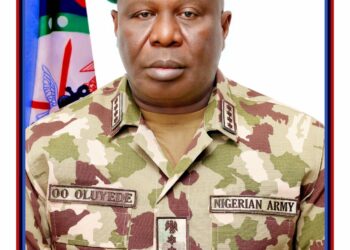
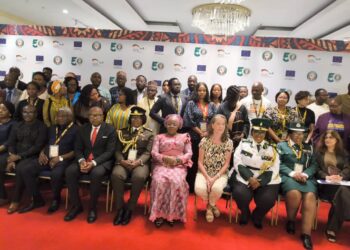
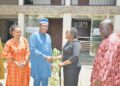
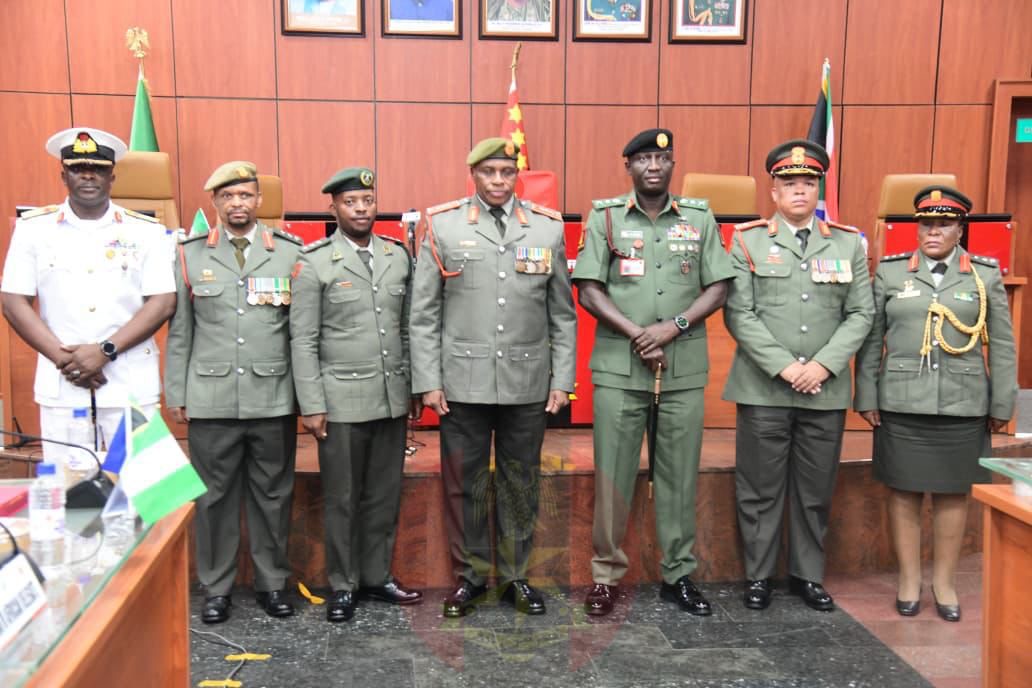
This was disclosed when the Chief of Army Staff, Lieutenant General Waidi Shaibu, received the Chief of the South African Army, Lieutenant General Lawrence Khulekani Mbatha, during an official working visit to Army Headquarters in Abuja on Tuesday.
In a statement issued by the Acting Director of Army Public Relations, Appolonia Anele, the Army Chief stressed that stronger collaboration among African militaries is critical to addressing the complex and evolving security threats confronting the continent.
Lieutenant General Shaibu highlighted the importance of shared training and operational knowledge, particularly in the fight against terrorism and insurgency, referencing ongoing counter-terrorism operations in Nigeria’s North-East under Operation Hadin Kai.
He explained that the Nigerian Army has developed robust training frameworks designed to equip troops with the skills required to confront modern battlefield threats, including the use of Improvised Explosive Devices (IEDs) by terrorist groups and the integration of air assets in counter-insurgency operations.
According to him, the Nigerian Army has placed significant emphasis on specialised training in IED detection, counter-IED operations and battlefield survivability as part of its operational strategy.
The Army Chief noted that deeper collaboration with the South African Army would further strengthen these training programmes while contributing to the development of a stronger regional security architecture.
Lieutenant General Shaibu also disclosed that both armies are expanding cooperation in professional military education and capacity development.
He noted that Nigerian officers currently attend courses at the South African Defence College, while officers from the South African Army serve as directing staff and instructors at the Army War College Nigeria and the Armed Forces Command and Staff College.
He explained that such exchanges are designed to deepen institutional ties, improve operational knowledge and strengthen strategic leadership development among officers.
In his remarks, Lieutenant General Mbatha said his visit to Nigeria provided an opportunity for the South African Army to study Nigeria’s operational experience in confronting terrorism and other asymmetric security threats.
He acknowledged the extensive battlefield experience of the Nigerian Army and expressed interest in learning how Nigeria has structured its training and operational strategies to effectively address evolving security challenges, particularly in countering the use of IEDs in insurgent warfare.
Both leaders also discussed opportunities to expand technical cooperation in specialised areas, including aviation.
The South African Army Chief noted that his country possesses considerable technical expertise in aviation maintenance and pilot training, adding that stronger collaboration in that sector could further support the Nigerian Army’s aviation development.
The meeting concluded with a renewed commitment from both sides to sustain joint training, operational exchanges and technical cooperation.
Both military leaders agreed that stronger collaboration between Nigeria and South Africa would enhance the operational effectiveness of their respective armies and contribute significantly to peace, stability and collective security across the African continent.