

By Nkechi Eze
The Fiscal Responsibility Commission and the Economic and Financial Crimes Commission have formalised a strategic partnership to strengthen enforcement of the Fiscal Responsibility Act (FRA) 2007 and deepen collaboration in promoting fiscal transparency and accountability across government institutions.
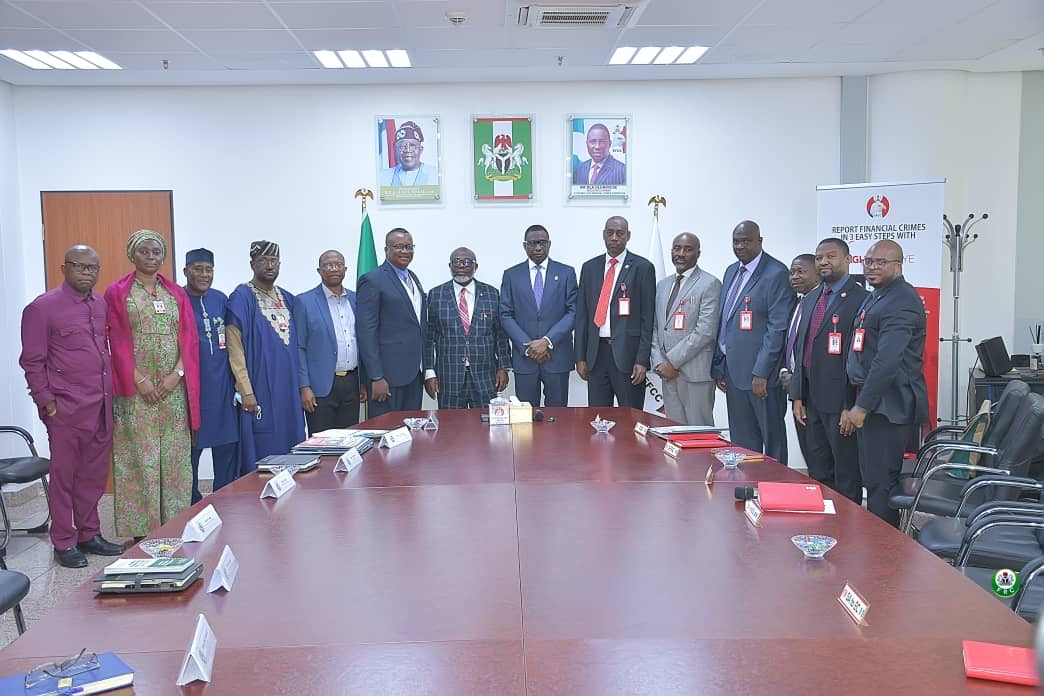
The agreement was sealed through the signing of a Memorandum of Understanding at the EFCC Headquarters in Abuja during a high-level meeting between the leadership of both agencies, marking a significant step in Nigeria’s efforts to reinforce fiscal discipline and combat financial misconduct in public administration.
According to an official statement signed by the Deputy Director, Strategic Communication Directorate of the Commission, Bede Anyanwu, the MoU is designed to bridge operational gaps in enforcing fiscal regulations, particularly in cases where fiscal infractions overlap with economic and financial crimes.
Speaking at the ceremony, Executive Chairman of the Fiscal Responsibility Commission, Victor Muruako, said the partnership builds on an existing relationship between both institutions and represents a decisive move to institutionalise cooperation.
“This MoU represents a critical step toward eliminating corrupt practices across government institutions. By working closely with the EFCC, we are reinforcing our mandate and strengthening Nigeria’s fiscal governance framework,” he said.
Muruako highlighted ongoing reforms within the Commission, including the development of a template for calculating operating surplus in line with evolving fiscal realities and the physical verification of Federal Government projects to ensure value for money.
He also pointed to challenges facing the Commission, including pending amendments to the Fiscal Responsibility Act and the need for improved office accommodation to enhance operational efficiency. He commended the EFCC for providing office space and appealed for further support to address capacity constraints.
In his remarks, Executive Chairman of the EFCC, Ola Olukoyede, praised the Fiscal Responsibility Commission for its contributions to promoting fiscal discipline and assured of the anti-graft agency’s commitment to strengthening collaboration.
“The EFCC remains committed to working with the Fiscal Responsibility Commission to ensure that Nigeria is free from corrupt practices. We encourage the FRC to bring to our attention any matter that falls within our investigative purview,” Olukoyede said.
He reiterated the EFCC’s statutory role in combating money laundering, procurement fraud, abuse of office, and improper disposal of public assets, stressing that inter-agency intelligence sharing is critical to achieving sustainable results.
Under the terms of the agreement, the EFCC may provide training for FRC personnel in financial analysis, forensic investigation, and financial crimes awareness, while the FRC will refer cases involving suspected economic and financial crimes to the anti-graft agency for further action.
Both organisations also agreed to establish structured mechanisms for information sharing, capacity building, and operational coordination, including the designation of liaison officers to oversee implementation and periodic review of joint activities.
The MoU was signed on behalf of the EFCC by its Secretary, Mohammed Hassan Hammajoda, and Chief of Staff to the Executive Chairman, Michael Nzekwe, while Victor Muruako and Director of Legal Investigation and Enforcement, Barrister Charles Chukwuemeka Abana, signed for the Fiscal Responsibility Commission. Abana was also designated as the FRC Liaison Officer for the partnership.
The agreement affirms that both institutions will continue to operate independently within their statutory mandates while working together to strengthen enforcement, ensure proper remittance of government revenues, and promote transparency and accountability in Nigeria’s public finance system.
The partnership is widely regarded as a major milestone in strengthening institutional cooperation and reinforcing Nigeria’s fiscal governance and anti-corruption framework.