

By Nkechi Eze
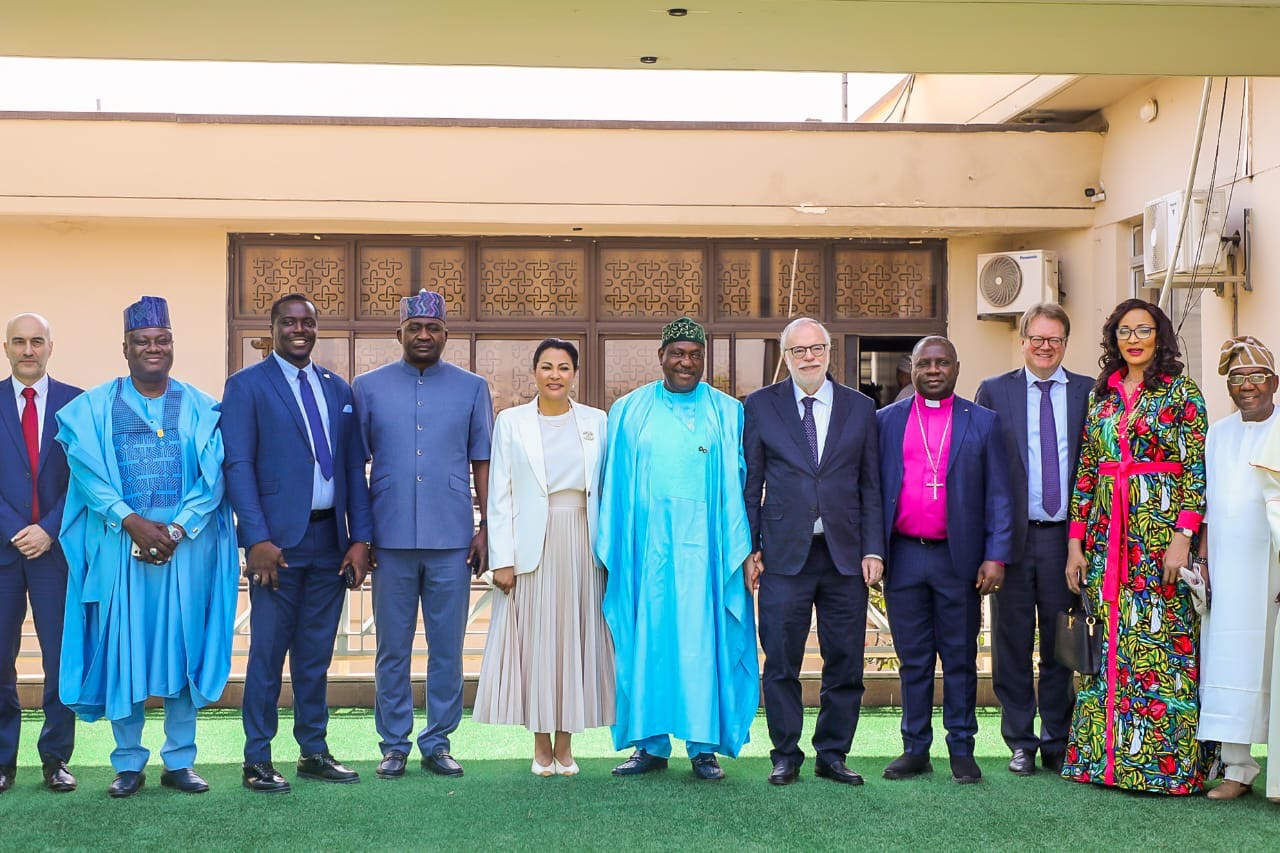
President Bola Ahmed Tinubu has reaffirmed Nigeria’s unwavering commitment to interfaith dialogue, national cohesion, and global peace partnerships as he received renowned Italian historian and founder of the Community of Sant’Egidio, Professor Andrea Riccardi, at the Presidential Villa in Abuja.
The assurance came during a high-level meeting that also had in attendance the Italian Ambassador to Nigeria, Roberto Mengoni, senior government officials, religious leaders, and key stakeholders in Nigeria’s peacebuilding and interfaith community.
According to a statement signed by the Head of Information and Public Relations, Office of the Secretary to the Government of the Federation, Dewan Goshit, President Tinubu, while welcoming the delegation, described Nigeria as a pluralistic nation of over 220 million people and more than 250 ethnic groups coexisting within a democratic framework anchored on diversity and mutual respect.
He noted that Islam, Christianity, and indigenous traditional belief systems collectively form the country’s spiritual and cultural identity, emphasizing that Nigeria’s diversity remains a major source of strength rather than division.
The Secretary to the Government of the Federation, Senator George Akume, who received the delegation on behalf of the President, highlighted ongoing efforts by the Federal Government to strengthen national security and promote unity through both kinetic and non-kinetic measures.
He said the government has reinforced counter-terrorism frameworks through the Terrorism Prevention Act and its amendments, improved intelligence coordination, enhanced prosecutorial capacity, and strengthened inter-agency collaboration.
Akume added that these security measures are complemented by non-kinetic strategies, including deradicalisation programmes, community engagement initiatives, and socio-economic stabilisation efforts designed to address the root causes of extremism and insecurity.
Speaking earlier, Professor Riccardi praised Nigeria’s unique model of coexistence, describing the country as a powerful example of unity in diversity.
He said Nigeria’s strength lies not only in its vast population and natural resources but in its ability to accommodate diverse ethnic, cultural, and religious identities within a single national framework.
Riccardi described the peaceful coexistence of Islam and Christianity in Nigeria as a “miracle of unity in diversity” and reaffirmed his organisation’s commitment to supporting peacebuilding, humanitarian outreach, and interfaith dialogue initiatives across the country.
Also speaking, President of the Christian Association of Nigeria (CAN), Archbishop Daniel Okoh, commended the Federal Government for its continued engagement with religious leaders, particularly on issues of national security, peacebuilding, and interfaith relations.
He expressed optimism that sustained collaboration between government, faith leaders, and international partners would further strengthen national unity, security, and development.
In his remarks, the Catholic Archbishop of Abuja, Most Reverend Ignatius Kaigama, stressed that dialogue remains the most effective tool for addressing Nigeria’s security and social challenges, including criminality and communal tensions.
He acknowledged his longstanding partnership with the Community of Sant’Egidio and praised the organisation’s global reputation in promoting peace, humanitarian service, and interreligious understanding.
Other dignitaries present at the meeting included the Minister of Defence, Gen. Christopher Musa (rtd); Minister of State for Foreign Affairs, Bianca Odumegwu-Ojukwu; Minister of State for Finance, Dr. Doris Uzoka-Anite; Permanent Secretary, General Services Office, Dr. Abubakar Ibrahim Kana; Senior Special Assistant to the President on Linguistics and Foreign Matters, Alhaji Jamiu Abiola; and representatives of the Nigeria Inter-Religious Council, led by Professor Father Cornelius Afebu Omonokhua.
The meeting underscored Nigeria’s continued commitment to strengthening interfaith harmony, deepening international partnerships, and promoting peace and unity as essential pillars of national stability and development.