
• About us
  • Advertise
  • Privacy & Policy
  • Contact
Friday, February 6, 2026
  • Login
NewsPeg Magazine logo
  • Home
  • News
    • World
    • Business
    • Politics
  • Technology
  • Entertainment
    • Sports
  • Lifestyle
    • Health
No Result
View All Result
  • Home
  • News
    • World
    • Business
    • Politics
  • Technology
  • Entertainment
    • Sports
  • Lifestyle
    • Health
No Result
View All Result
NewsPeg Magazine logo
No Result
View All Result
Home News

Tudun Biri and the New Frontier of Humanitarian Reconstruction in Africa

Nkechi Eze by Nkechi Eze
February 6, 2026
in News
Reading Time: 3 mins read
0
Tudun Biri and the New Frontier of Humanitarian Reconstruction in Africa
Share on FacebookShare on TwitterShare on Whatsapp

By Abdulkadir Ibrahim

In the lexicon of humanitarian response, emergencies often dominate headlines, while reconstruction and long-term recovery are relegated to footnotes. Yet, history teaches that the true measure of leadership in crisis is not merely how swiftly relief arrives, but how deliberately dignity is restored. The rehabilitation and reconstruction of Tudun Biri community in Kaduna State stands as a defining moment in Nigeria’s humanitarian governance and arguably, a model for Africa.

Following the tragic drone incident that devastated Tudun Biri, the Federal Government, through the National Emergency Management Agency (NEMA), undertook what can best be described as a comprehensive humanitarian reconstruction intervention. Under the leadership of Director-General of NEMA, Mrs. Zubaida Umar, and with strategic oversight from the Office of the Vice President, Senator Kashim Shettima, the Tudun Biri rehabilitation project redefined the scope and ambition of post-disaster recovery in Nigeria.

Traditionally, Nigeria’s disaster response architecture has focused on immediate relief distribution of food, shelter materials, and medical support. While essential, such interventions rarely address the deeper socio-economic and psychological scars left behind by disasters.

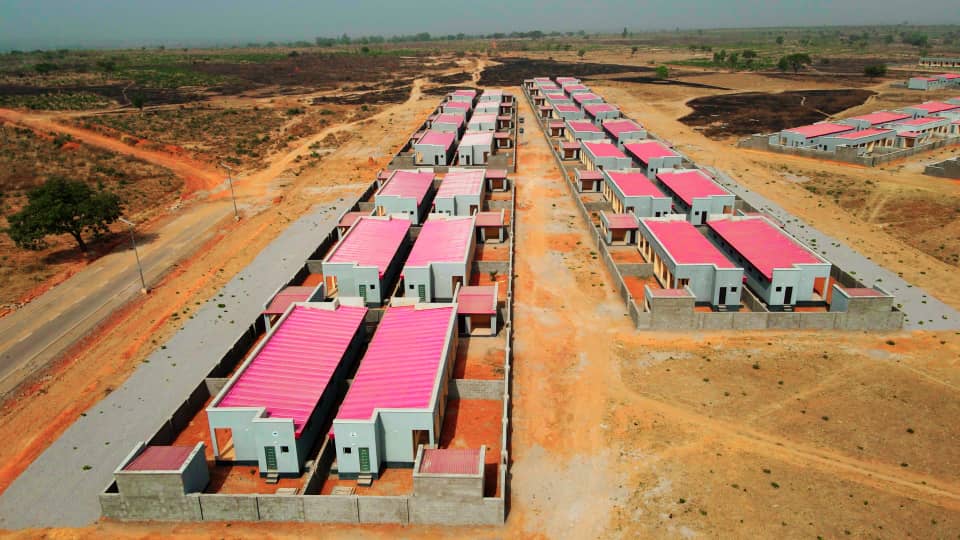
Tudun Biri represents a paradigm shift. The project moved beyond tents and handouts to permanent housing, community infrastructure, social services, and livelihood restoration. Roads, housing units, community facilities, and essential amenities were rebuilt in a coordinated, government-led framework. This integrated approach mirrors global best practices in post-conflict and post-disaster recovery, yet it is rare within Africa’s humanitarian landscape.

At the heart of this achievement lies political will. Vice President Kashim Shettima’s direct oversight of the Resettlement Scheme for Persons Impacted by Conflicts (RSPIC) ensured high-level coordination across federal agencies, state authorities, and development partners. His office provided the political backing necessary to fast-track funding, procurement, and inter-agency collaboration—an often-elusive element in public sector recovery projects.

Equally pivotal was the leadership of NEMA DG Zubaida Umar, whose tenure has been marked by a shift toward institutional reform, transparency, and proactive disaster risk management. Under her stewardship, NEMA has evolved from a reactive relief agency to a strategic humanitarian institution with a vision for resilience and recovery.

Across Africa, post-disaster communities often languish in prolonged displacement, with reconstruction delayed by bureaucratic inertia, funding gaps, and fragmented coordination. Tudun Biri offers a different narrative: a state-led, coordinated, and comprehensive rehabilitation model executed within a defined framework and political mandate.

The implications are profound. The project demonstrates that African states can design and deliver structured humanitarian reconstruction without outsourcing sovereignty to external actors. It also provides a template for integrating humanitarian response with national development planning, bridging the long-standing gap between relief and recovery.

Beyond bricks and mortar, the Tudun Biri project carries symbolic weight. For a community traumatised by tragedy, the reconstruction effort sends a powerful message: the state acknowledges its responsibility, values its citizens, and is committed to restoring trust. In a region grappling with insecurity and state-society distrust, such gestures are not merely developmental—they are political and moral imperatives.

The rehabilitation and reconstruction of Tudun Biri is more than a project; it is a doctrine, a statement that humanitarian governance in Nigeria can be proactive, accountable, and transformative. It sets a benchmark for future disaster recovery efforts and positions Nigeria as a reference point for African humanitarian policy innovation.

If sustained, institutionalised, and replicated, the Tudun Biri model could redefine how Africa rebuilds after tragedy, not as an afterthought, but as a national priority rooted in dignity, resilience, and state responsibility.

Abdulkadir Ibrahim writes from NEMA press Unit Abuja operations office

ShareTweetSend
Previous Post

ICPC, NIS strengthen collaboration to deepen anti-corruption drive in Kano

Next Post

Federal Government Cracks Down On Contractors, Orders Immediate Remedial Works On Key Highways

Nkechi Eze

Nkechi Eze

Related Posts

Federal Government Cracks Down On Contractors, Orders Immediate Remedial Works On Key Highways
News

Federal Government Cracks Down On Contractors, Orders Immediate Remedial Works On Key Highways

February 6, 2026
NDLEA Cracks Down Hard as Brazil Returnee and Nearly 10 Tons of Cannabis Alongside 12,500 Pentazocine Ampoules Are Seized Across Nigeria
News

NDLEA Cracks Down Hard as Brazil Returnee and Nearly 10 Tons of Cannabis Alongside 12,500 Pentazocine Ampoules Are Seized Across Nigeria

February 1, 2026
Nigeria Customs Takes Centre Stage in Abu Dhabi, Driving the Global Conversation on Smart Borders and Digital Trade
News

Nigeria Customs Takes Centre Stage in Abu Dhabi, Driving the Global Conversation on Smart Borders and Digital Trade

February 1, 2026
Next Post
Federal Government Cracks Down On Contractors, Orders Immediate Remedial Works On Key Highways

Federal Government Cracks Down On Contractors, Orders Immediate Remedial Works On Key Highways

Leave a Reply Cancel reply

Your email address will not be published. Required fields are marked *

Editor's Choice

Tudun Biri and the New Frontier of Humanitarian Reconstruction in Africa

Tudun Biri and the New Frontier of Humanitarian Reconstruction in Africa

February 6, 2026
ICPC, NIS strengthen collaboration to deepen anti-corruption drive in Kano

ICPC, NIS strengthen collaboration to deepen anti-corruption drive in Kano

February 5, 2026
  • Trending
  • Comments
  • Latest
Imo Monarch Raises Alarm as 22-Year-Old Abandoned Road Threatens to Cut Off Okwuohia Community

Imo Monarch Raises Alarm as 22-Year-Old Abandoned Road Threatens to Cut Off Okwuohia Community

August 26, 2025
NIMC Trains Corps Members for Nationwide NIN Ward Enrollment Initiative

NIMC Trains Corps Members for Nationwide NIN Ward Enrollment Initiative

June 24, 2025
FG Rescues 11 Nigerian Miners Stranded in Central African Republic, Brings Them Home Safely

FG Rescues 11 Nigerian Miners Stranded in Central African Republic, Brings Them Home Safely

August 15, 2025

NAVY CAPTAIN A. MNGUVE UNVEILS THREE INSPIRATIONAL BOOKS IN LITERARY TRIUMPH

May 7, 2025

MEDIA FOUNDATION SEEKS UPGRADED DIGITAL INFRASTRUCTURE IN NIGERIA

4

Easter/Eid-el-Fitr: FRSC Records Massive Reduction in Road Crashes.

2
GSAI TRAINS JOURNALISTS TO INTENSIFY ENGAGEMENTS REVOLVING AROUND INVOLVEMENT OF WOMEN IN POLITICS AND GOVERNANCE

GSAI TRAINS JOURNALISTS TO INTENSIFY ENGAGEMENTS REVOLVING AROUND INVOLVEMENT OF WOMEN IN POLITICS AND GOVERNANCE

2

IDENTIFYING BARRIERS TO WOMEN’S POOR REMUNERATIONS, IT’S EFFECTS ON HOUSEHOLD.  LACK OF INCLUSIVE LABOUR LAWS?

2
Tudun Biri and the New Frontier of Humanitarian Reconstruction in Africa

Tudun Biri and the New Frontier of Humanitarian Reconstruction in Africa

February 6, 2026
ICPC, NIS strengthen collaboration to deepen anti-corruption drive in Kano

ICPC, NIS strengthen collaboration to deepen anti-corruption drive in Kano

February 5, 2026
NCC, NDPC partner to strengthen data protection in Nigeria’s telecom sector

NCC, NDPC partner to strengthen data protection in Nigeria’s telecom sector

February 5, 2026
Private sector remains key driver of Nigeria’s economy – SGF

Private sector remains key driver of Nigeria’s economy – SGF

February 5, 2026
NewsPeg Magazine

Newspeg is a General interest Magazine conceived by Nigerian Media practitioners of like minds across ethnic and geo-political divides of the country, for the purpose of creating uniqueness in Magazine reporting in Nigeria and repositioning the country for the needed growth.

Follow Us

  • About us
  • Advertise
  • Privacy & Policy
  • Contact

© 2024 Newspeg magazine - powered by Vecrit.

No Result
View All Result
  • Home
  • News
    • Business
    • World
  • Technology
  • Entertainment
  • Lifestyle
  • Editorial
  • Columns
  • More

© 2024 Newspeg magazine - powered by Vecrit.

Welcome Back!

Login to your account below

Forgotten Password?

Retrieve your password

Please enter your username or email address to reset your password.

Log In