


…the strategic role of APPO and the africa energy bank
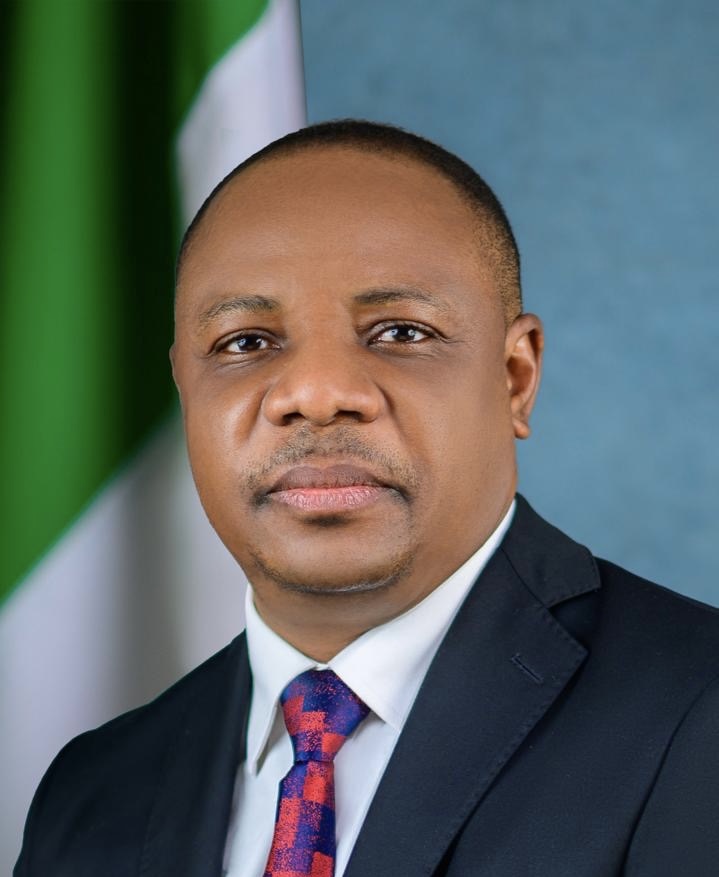
By Amb. Gabriel Aduda
ABSTRACT
Africa faces a dual challenge of persistent energy poverty and increasing exclusion from global energy finance, despite possessing substantial oil and gas reserves and accounting for less than four percent of global greenhouse gas emissions. As the global energy transition accelerates, it is increasingly governed by financial conditionalities, regulatory norms, and environmental, social, and governance (ESG) frameworks that disproportionately constrain fossil fuel investment in developing regions.
This article examines the African Petroleum Producers’ Organization (APPO) and the Africa Energy Bank (AEB) as emerging African-led institutional responses to these constraints. Drawing on political economy and energy transition literature, the paper argues that Africa’s ability to shape its own energy future depends on institutional sovereignty over energy finance and development sequencing. It contends that financing hydrocarbons, cleaner technologies, and energy research and development constitutes a development-centred transition pathway rather than a deviation from global climate objectives.
The analysis demonstrates that African-led financial institutions can reconcile climate mitigation goals with the continent’s urgent needs for energy access, industrialization, and fiscal stability. A transition framework that neglects these realities risks reinforcing structural underdevelopment and undermining the legitimacy of global climate governance.
INTRODUCTION
The global energy transition is increasingly shaped by regulatory standards, financial rules, and normative policy narratives rather than by technological innovation alone. Multilateral development banks, export credit agencies, and private financial institutions have adopted restrictive approaches to fossil fuel financing, often operationalized through ESG frameworks and climate-aligned investment taxonomies (IEA, 2021; World Bank, 2023).
While frequently presented as a uniform global process, the impacts of the energy transition vary significantly across regions. Africa contributes less than four percent of global greenhouse gas emissions, yet approximately 600 million people on the continent lack access to electricity, and nearly one billion lack access to clean cooking fuels (IEA, 2022). At the same time, Africa’s oil and gas resources remain underdeveloped relative to global reserves, despite their continued importance for export revenues, public finance, and industrial development.
This asymmetry has exposed a growing disconnect between global climate finance priorities and Africa’s development realities. Addressing this gap requires not only policy dialogue but also the establishment of autonomous financial institutions capable of supporting Africa’s energy priorities. This paper evaluates the role of APPO and the Africa Energy Bank as institutional mechanisms designed to reclaim African agency in the energy transition.
Analytical framework: energy transitions and institutional political economy
Energy transition scholarship increasingly emphasizes that transitions are socially and politically constructed processes rather than purely technological shifts (Meadowcroft, 2011; Newell & Paterson, 2010). Historical transitions from coal to oil and from oil to diversified energy systems were driven by state policy, financial institutions, and geopolitical interests as much as by innovation.
From an institutional political economy perspective, financial institutions function as active agents shaping development trajectories, investment flows, and resource governance (Mazzucato, 2018). The withdrawal of fossil fuel finance by major multilateral and private lenders thus represents a structural transformation with significant implications for resource-dependent economies.
Within this framework, energy sovereignty is defined as the capacity of states or regions to determine how energy resources are utilized, which technologies are prioritized, and how financing is structured, in alignment with domestic development objectives rather than externally imposed constraints.
Appo and the emergence of collective energy diplomacy
The African Petroleum Producers’ Organization was established to promote cooperation among African hydrocarbon-producing states through technical assistance, capacity building, and information exchange. Its strategic relevance has increased as international capital markets have restricted hydrocarbon investment in developing economies.
APPO’s contemporary role extends beyond sectoral coordination and encompasses three interrelated functions:
Harmonization of technical and regulatory standards among member states.
Collective representation in global energy and climate governance forums; and
Institutional sponsorship and strategic guidance of the Africa Energy Bank.
This evolution reflects a shift toward collective energy diplomacy, positioning APPO as a platform for coordinated African engagement in global energy governance.
The Africa Energy Bank: Mandate and Institutional Design
The Africa Energy Bank was established by APPO in partnership with Afreximbank, with a target capitalization of USD 5 billion. The AEB was conceived as a specialized continental institution designed to address Africa’s energy financing constraints, particularly in upstream and midstream oil and gas, energy infrastructure, and transition-aligned investments.
A central strategic question concerns whether the AEB will maintain its identity as an energy development institution or converge toward a general-purpose multilateral development bank model. Institutional convergence would likely entail portfolio diversification away from hydrocarbons, alignment with donor-driven climate conditionalities, and replication of ESG-based exclusion criteria.
Such a trajectory risks undermining the AEB’s founding rationale. Its institutional value lies precisely in providing financing aligned with Africa’s energy sovereignty and development sequencing.
Strategic Independence and the Political Economy of Energy Finance
The withdrawal of fossil fuel financing by institutions such as the World Bank, the European Investment Bank, and major private lenders has created a significant financing gap for upstream, midstream, and gas-to-power projects across Africa. This gap reflects political and policy choices rather than market fundamentals.
In the absence of alternative financing mechanisms, African states face declining reserve development, stalled power generation projects, and constrained industrial growth. The AEB’s effectiveness therefore depends on its ability to maintain strategic independence in energy finance.
Institutional Requirements for Energy Finance Sovereignty
Strategic independence requires:
Autonomous risk assessment methodologies.
Context-specific transition benchmarks.
Legal safeguards protecting hydrocarbon financing mandates; and
Governance structures insulated from donor capture.
Such independence does not negate environmental responsibility but challenges externally imposed development ceilings inconsistent with Africa’s socio-economic realities.
Fossil Fuels, Gas, and Developmental Sequencing
Empirical evidence indicates that sustained industrialization has historically depended on fossil energy use. For Africa, hydrocarbons continue to serve three critical functions:
Public finance: Oil and gas revenues support infrastructure investment and fiscal stability.
Energy access: Natural gas enables reliable power generation and cleaner cooking alternatives.
Industrial development: Petrochemicals and fertilizers enhance agricultural productivity and manufacturing capacity.
Transition strategies that overlook these functions risk perpetuating structural underdevelopment and widening global inequality.
Financing Cleaner Production and Technological Upgrading
The environmental footprint of hydrocarbon production is not fixed. Investments in methane abatement, gas flaring elimination, carbon capture and utilization, digital reservoir management, and modular refining technologies can significantly reduce emissions intensity.
The AEB could play a catalytic role by establishing dedicated funding windows for energy research and development, supporting domestic technological capability and reducing reliance on imported systems.
Energy Poverty and Distributional Justice
Restrictive transition policies have often curtailed fuel financing without providing viable alternatives, exacerbating energy poverty and distributional inequities. Energy deprivation is closely linked to adverse health outcomes, gender inequality, and constrained economic opportunity.
From a welfare economics perspective, prioritizing emissions reductions over energy access in low-income contexts constitutes a misallocation of social welfare weights. Lending criteria should therefore incorporate explicit energy access and distributional justice indicators.
Mobilizing Domestic and Regional Capital
African pension funds, sovereign wealth funds, and central bank reserves remain underutilized sources of long-term capital. Instruments such as infrastructure bonds, diaspora energy funds, and commodity-backed securities could mobilize domestic savings while deepening regional capital markets and reducing external dependence.
Governance Risks and Institutional Safeguards
To avoid politicization and mission drift, the AEB must adopt strong institutional safeguards, including independent professional management, technocratic board composition, transparent disclosure standards, and statutory protection of its energy financing mandate. Failure to institutionalize such safeguards risks replicating inefficiencies observed in other regional development banks.
Africa in Global Climate Governance
Climate governance increasingly operates through financial mechanisms, trade instruments, and investment screening rather than formal treaties. African states often function as rule-takers within this evolving architecture.
APPO and the AEB provide platforms for articulating a collective African position emphasizing differentiated responsibilities, development-centred transition pathways, and energy poverty eradication as a legitimate climate objective.
Looking Forward
The global energy transition is reshaping both energy systems and financial power structures. Without autonomous financing institutions, Africa risks becoming locked into a low-energy, low-growth equilibrium.
APPO and the Africa Energy Bank represent strategic attempts to counter this trajectory. Their success depends on maintaining institutional independence, resisting mandate dilution, and embedding development priorities within climate action frameworks. An energy transition that neglects Africa’s energy poverty and industrial aspirations cannot be considered either equitable or sustainable.
Amb. Gabriel Aduda is an Independent Energy and Climate Policy Expert, Former OPEC Governor for Nigeria. He can be reached on
Linkedin: https://shorturl.at/JQHTB
Twitter: https://x.com/adudag?s=11