

By Nkechi Eze
The Federal Government has reaffirmed its commitment to expanding and modernising Nigeria’s road infrastructure with the ongoing construction of the Kano Northern Bypass, a flagship project expected to decongest the Kano metropolis, enhance road safety, and significantly improve connectivity within the North-West Zone and beyond.
The assurance was given during an inspection tour of the project by senior officials of the Federal Ministry of Works, representatives of regulatory and professional bodies, members of the media, and other stakeholders. The visit provided an opportunity to assess progress on the bypass as well as other strategic road projects across Kano State.
Providing technical details of the project, the Engineering Representative, Engr. Abba Sani Bello, explained that the Kano Northern Bypass is a dual-carriageway road spanning approximately 37.8 kilometres, designed to modern highway standards and constructed for durability and long service life.
“The bypass consists of two carriageways with reinforced concrete shoulders, a three-metre-wide concrete median, and ten major bridges. The alignment starts from Danzaki on the Kano–Hadejia Road and terminates on the Kano–Katsina Road, about nine kilometres away from the Kano metropolis on both ends,” he said.
According to Engr. Bello, the strategic importance of the bypass lies in its capacity to divert through-traffic, especially heavy-duty vehicles travelling between the North-East and the North-West, away from the congested Kano city centre.
“This road will allow motorists, particularly articulated vehicles, to completely bypass Kano city. It will drastically reduce travel time, traffic congestion, and logistics costs, while improving safety for road users within the metropolis,” he added.
He disclosed that the project has recorded about 6.8 per cent completion, with substantial progress already achieved in site clearance, topsoil removal, earthworks, pavement layers, and structural works.
“About 5.9 kilometres of pavement wearing course has been completed on both carriageways, including reinforced concrete shoulders and medians. Piling and pier works have also commenced at several bridge locations. Issues relating to compensation on some sections of the alignment are currently being processed, and we do not anticipate any major relocation challenges,” Engr. Bello stated.
In his remarks, the Federal Controller of Works in Kano State, Engr. Abdulsalam Dayyabu, expressed satisfaction with the quality and pace of construction, noting that the contractor is adhering strictly to approved engineering designs and specifications.
“The quality of work we have seen so far is commendable, and the project is being executed in line with established standards and measurements. We appreciate the Honourable Minister of Works for his strong leadership and also thank the media team for coming to see the realities on ground,” he said.
Also speaking, the Senior Special Assistant to the President on Community Engagement (North-West), Hon. Abdullahi Tanko Yakasai, described the Kano Northern Bypass as a critical national asset being delivered under the Renewed Hope Agenda of President Bola Ahmed Tinubu, GCFR.
“This bypass will provide direct access for travellers and goods moving from the North-East to the North-West or vice versa without passing through Kano city. Beyond easing traffic, it will unlock economic opportunities, attract investments, and stimulate development along its corridor,” Hon. Yakasai said.
He commended the construction firm, CCECC (Nigeria) Limited, for deploying modern equipment and maintaining high construction standards, adding that professional bodies such as the Council for the Regulation of Engineering in Nigeria (COREN) and the Nigerian Society of Engineers (NSE), as well as Civil Society Organisations and members of the media, were present to independently verify the quality and pace of work.
Hon. Yakasai further revealed that of the 260 Emergency Road Projects currently being executed nationwide by the Federal Government, 48 are located in the North-West Zone, underscoring the administration’s strong focus on infrastructure development in the region.
He highlighted additional safety and durability features of the bypass, including concrete shoulders and medians, as well as planned solar-powered street lighting.
“These design elements will not only enhance safety but also extend the lifespan of the road to over 50 years,” he noted.
Beyond the Kano Northern Bypass, the inspection team also assessed progress on outstanding sections of the Abuja–Kaduna–Kano Expressway (Kano End). One of the supervising engineers on site, Engr. Muhammed Kudu, informed the team that asphalt overlay, shoulder reconstruction, stone-base laying, lane markings, and street-light installations are currently ongoing across multiple segments of the alignment.
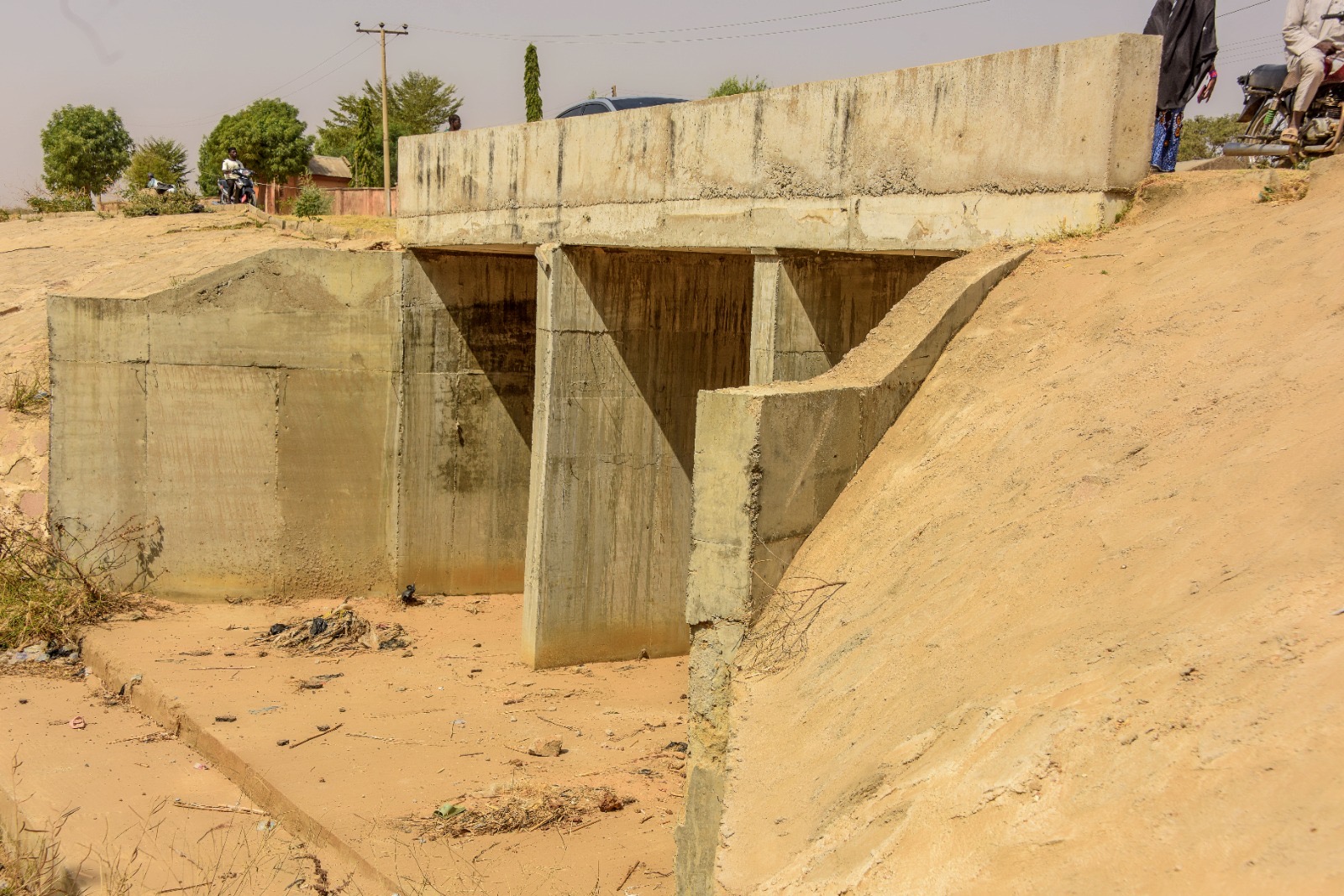
In addition, five completed Emergency and Special Intervention Projects were commissioned across Kano State. These include the reconstruction of Magajin Rumfa Road in Nasarawa G.R.A., Kano City; repairs of flood-damaged culverts and failed sections along Kwanar Garko–Garko–Kibiya Road; remedial works on hydraulic structures affected by flooding along Wudil–Darki Road; and the construction of roads at the Economic City, Bichi (Phases I and II).
The commissioning exercises were carried out by the Senior Special Assistant to the President, a Deputy Director in the Kano State Ministry of Works, the Chairman of the Nigeria Union of Journalists, and the Chairman of the Correspondents’ Chapel, Kano State.
Representatives of host communities along the project corridor, including Shehu Fada Garko and Tijani Buhari, expressed gratitude to President Bola Ahmed Tinubu and the Honourable Minister of Works, Sen. Engr. David Umahi, CON, FNSE, FNATE, for what they described as timely and impactful interventions.
“These projects are critical to road safety, commerce, and community development. They will transform our communities and improve the quality of life of our people,” they said.
The Federal Government reaffirmed its resolve to ensure that all ongoing road projects are completed within approved timelines and in accordance with quality standards, stressing that the Kano Northern Bypass and other strategic interventions will play a vital role in boosting economic activities, improving mobility, and strengthening national integration.