

By Nkechi Eze
Against the long and often frustrating history of Nigeria’s struggle with corruption and illicit financial flows, the recent recovery of $9.5 million in stolen Nigerian assets from the United Kingdom stands out as a moment of cautious optimism. It is a reminder that persistence, international cooperation and strong legal frameworks can yield tangible results. Yet, as civil society leaders have repeatedly warned, recovery is only one part of a much larger and more complex journey.
The Civil Society Legislative Advocacy Centre (CISLAC) and Transparency International Nigeria (TI Nigeria) have welcomed the asset recovery as a positive demonstration of global collaboration in the fight against corruption, while firmly insisting that transparency, accountability and strict adherence to Nigeria’s Proceeds of Crime Act (POCA) 2022 must define what happens next.
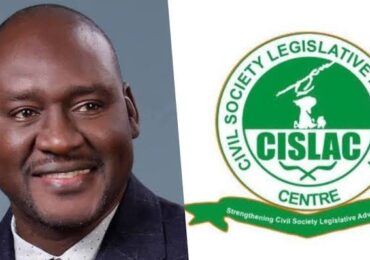
In a statement signed by the Executive Director of CISLAC and Head of Transparency International Nigeria, Comrade Auwal Musa Rafsanjani, the organisations described the recovery as a strong signal that international partnerships, when properly harnessed, can help Nigeria claw back resources stolen from its people and hidden abroad. They noted that the action aligns with the spirit and provisions of POCA, which provides Nigeria with a comprehensive legal framework for tracing, freezing, confiscating, managing and recovering proceeds of crime, both domestically and across borders.
For CISLAC and TI Nigeria, POCA is more than a statute; it is Nigeria’s most potent legal instrument for ensuring that corruption does not pay. The law was designed to close loopholes that previously allowed criminals to enjoy the benefits of looted public funds, particularly those concealed in foreign jurisdictions. The organisations stressed that the latest recovery reinforces the importance of mutual legal assistance and cross-border cooperation, which are central pillars of POCA and critical tools in disrupting illicit financial flows.
However, beneath the applause lies a deeper concern that has long animated Nigeria’s anti-corruption discourse: what happens after recovered funds return home. CISLAC and TI Nigeria cautioned that while asset recovery is commendable, Nigerians have, over the years, remained largely in the dark about how recovered assets are managed and deployed. Despite billions of naira and millions of dollars reportedly recovered over the past decade, citizens continue to see little clarity on where these funds go or how they are used to improve public welfare.
The organisations observed that this opacity has bred public dissatisfaction and mistrust, undermining the very gains that asset recovery is meant to deliver. In response, civil society groups, including CISLAC and TI Nigeria, have developed accountability frameworks aligned with POCA to prevent re-looting and ensure that recovered funds are used transparently and for the common good.
Comrade Rafsanjani and his team were emphatic that Nigeria must not focus solely on retrieving stolen money while ignoring the systemic weaknesses that allow such theft to occur in the first place. With estimated annual losses of about $18 billion to illicit financial flows, they argued, Nigeria cannot afford to rely on recovery alone. Financial institutions, regulatory systems and enforcement mechanisms must be thoroughly sanitised to stop looters at the source and prevent taxpayers’ money from leaving the country illegally.
They further noted that Nigeria’s outsized share of illicit financial flows in Africa has far-reaching consequences beyond economic losses. According to the organisations, domestic financial mismanagement has damaged Nigeria’s credibility on the global stage, exposing ordinary Nigerians to suspicion and discrimination abroad, where their documents, certifications and data are often subjected to heightened scrutiny. Strengthening accountability, transparency and enforcement at home, they argued, would not only protect national wealth but also help restore international confidence and improve the global perception of Nigerian citizens.
To guarantee transparency in asset management, CISLAC and TI Nigeria outlined key accountability measures that must be enforced. These include independent monitoring and oversight of recovered assets, public disclosure of Memoranda of Understanding governing asset repatriation, and clear, accessible information on where and how recovered funds will be spent. They stressed that public reporting, regular audits and strict sanctions against any individuals involved in the re-looting of recovered assets, as предусмотрed under POCA, are non-negotiable.
A major concern raised by the organisations is the practice of paying recovered assets into general government accounts. According to them, once funds are absorbed into routine government spending, tracking and accountability become difficult, increasing the risk of misuse. They therefore advocated for recovered assets to be lodged in dedicated accounts, allowing for proper monitoring and transparent utilisation in line with the law and international best practices.
While welcoming the UK-facilitated recovery, CISLAC and TI Nigeria urged the Nigerian government to fully implement the Proceeds of Crime Act and honour its commitments under the Global Forum on Asset Recovery. Nigeria, they recalled, pledged at the forum to ensure that recovered assets are managed transparently and deployed in ways that directly benefit citizens.
The organisations also called for robust and independent oversight by the National Assembly, noting that legislative scrutiny is essential to ensure recovered funds are effectively traced, tracked and measured against POCA’s objectives. Without such oversight, they warned, accountability becomes almost impossible, especially when assets are merged into general expenditure without clear reporting mechanisms.
CISLAC and TI Nigeria highlighted the persistent challenges faced by civil society organisations, particularly limited access to timely and accurate information on recovered assets. They urged the government to embrace openness by providing clearer and more consistent data, noting that transparency would also help counter misinformation, rumours and fake news that often thrive in information vacuums.
While describing the $9.5 million recovery as a positive development for Nigeria’s financial integrity, the organisations warned that weak enforcement continues to undermine existing laws. Prolonged litigation, institutional weaknesses and procedural delays, they noted, still allow significant amounts of stolen funds to slip through the cracks.
At the centre of this sustained advocacy is CISLAC’s Executive Director, Comrade Auwal Musa Rafsanjani, whose leadership has positioned the organisation and its Transparency International Nigeria team as persistent voices for accountability, reform and citizen-focused governance. Through research, policy engagement and public advocacy, Rafsanjani and his team have consistently pushed for stronger institutions, credible enforcement and transparent management of public resources, insisting that anti-corruption efforts must translate into real benefits for ordinary Nigerians.
The statement concluded with a clear call to action: Nigeria must prioritise the effective implementation of the Proceeds of Crime Act, strengthen institutions, block financial leakages and prevent looting if recovered assets are to deliver tangible and lasting value. For CISLAC and TI Nigeria, asset recovery is not the finish line, but a critical checkpoint on the path to a more transparent, accountable and equitable Nigeria.