

The Independent National Electoral Commission (INEC) and security agencies have resolved to strengthen intelligence sharing, deepen inter-agency cooperation and adopt proactive security measures to prevent political violence ahead of the 2027 general elections.
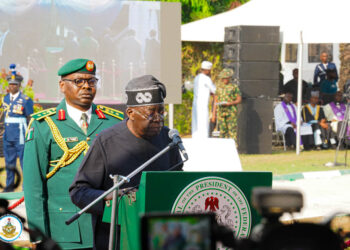
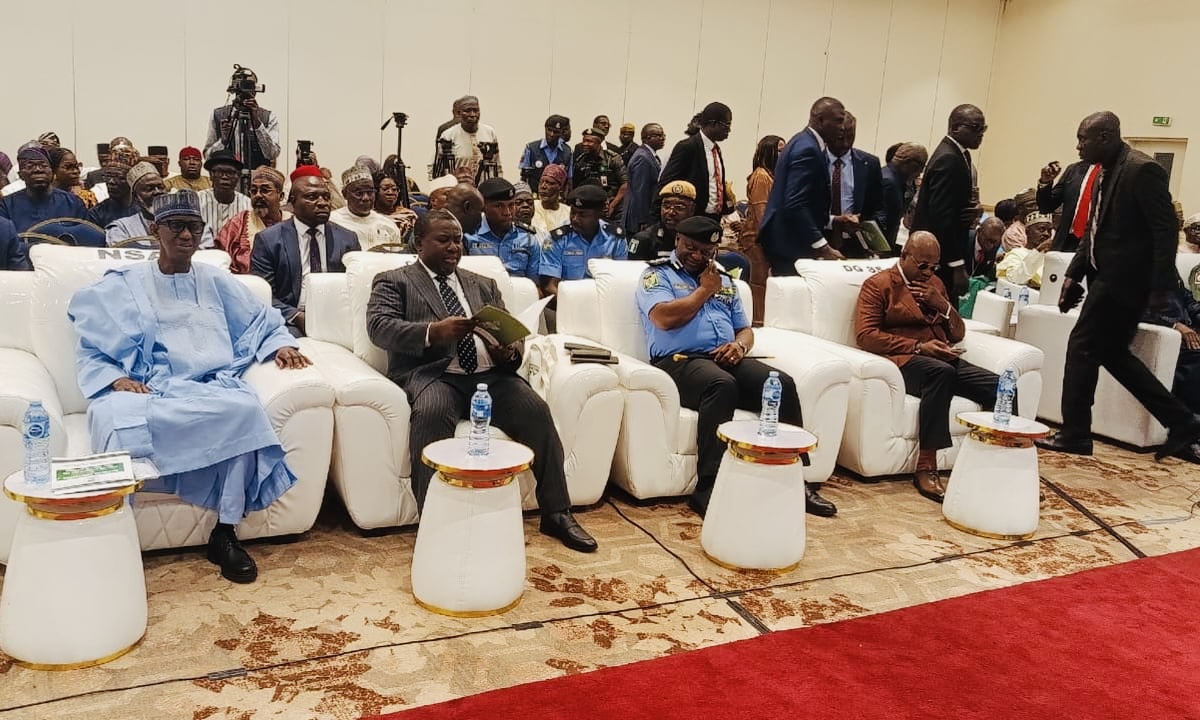
The resolution was reached on Thursday in Abuja at the INEC–Office of the National Security Adviser (ONSA) Strategic Election Security Conference, where stakeholders stressed the need for coordinated security operations, early threat detection and non-partisan enforcement to guarantee peaceful and credible elections.
Speaking at the conference, INEC Chairman, Professor Joash Amupitan, SAN, described the 2027 elections as a critical test for Nigeria’s democratic institutions, warning that emerging security threats and political violence could undermine public confidence in the electoral process if not addressed early.
Amupitan disclosed that the presidential and National Assembly elections would hold on January 16, 2027, while governorship and state assembly elections were scheduled for February 6, 2027.
He noted that the scale of the exercise, involving more than 100 million registered voters and 177,299 polling units nationwide, required a robust security architecture supported by effective collaboration between INEC and relevant security institutions.
The INEC chairman stressed that “election security is a collective responsibility,” insisting that the Commission could only deliver credible elections in an atmosphere where voters, electoral officials and other stakeholders were protected from intimidation, violence and interference.
He called on the Inter-Agency Consultative Committee on Election Security (ICCES) to move beyond reactive responses to security breaches and embrace preventive strategies anchored on intelligence gathering, threat assessment and coordinated deployment of security personnel.
Amupitan expressed concern over reported attacks on political campaigns, party offices, supporters and electoral officials in different parts of the country, warning that such incidents could discourage voter participation, endanger election workers and erode public confidence in democratic institutions.
reported attacks on political campaigns, party offices, supporters and electoral officials in different parts of the country, warning that such incidents could discourage voter participation, endanger election workers and erode public confidence in democratic institutions.
He condemned attacks against INEC officials, declaring that the Commission “would not succumb to intimidation” or external pressure capable of compromising its independence and constitutional responsibilities.
The INEC chairman also challenged political parties and their leaders to take responsibility for the conduct of their supporters, noting that peace agreements would remain ineffective if political violence persisted at the grassroots.
On strengthening election security coordination, Amupitan disclosed that INEC was working towards decentralising security arrangements under the ICCES framework to ensure effective coordination beyond the state level.
He explained that Resident Electoral Commissioners (RECs) and Commissioners of Police would be expected to maintain close working relationships across the 36 states and the Federal Capital Territory, with similar arrangements extended to local government areas and wards.
According to him, electoral officers, police personnel and intelligence operatives must have functional communication channels and emergency response mechanisms before election day to ensure timely intervention whenever security threats arise.
He further identified the protection of election materials, logistics, ad hoc personnel and vulnerable voters, including internally displaced persons, women, elderly citizens and persons with disabilities, as key priorities in the security arrangements.
The INEC chairman disclosed that the Commission would require more than 1.41 million ad hoc personnel to conduct the elections and deploy 57,000 newly acquired Bimodal Voter Accreditation System (BVAS) machines.
He consequently urged security agencies to guarantee the safe transportation of sensitive election materials and personnel from distribution centres to polling units, particularly in riverine communities and areas with difficult terrain.
The Commission had earlier inaugurated an Electoral Logistics Committee, chaired by Rear Admiral Jamila Malafa (Rtd.), to coordinate logistics planning, transportation, storage and distribution of election materials ahead of the 2027 polls.
Amupitan maintained that effective security arrangements must cover the entire electoral cycle, from pre-election political activities and campaign periods to voting, collation and the announcement of results.