


By Nkechi Eze
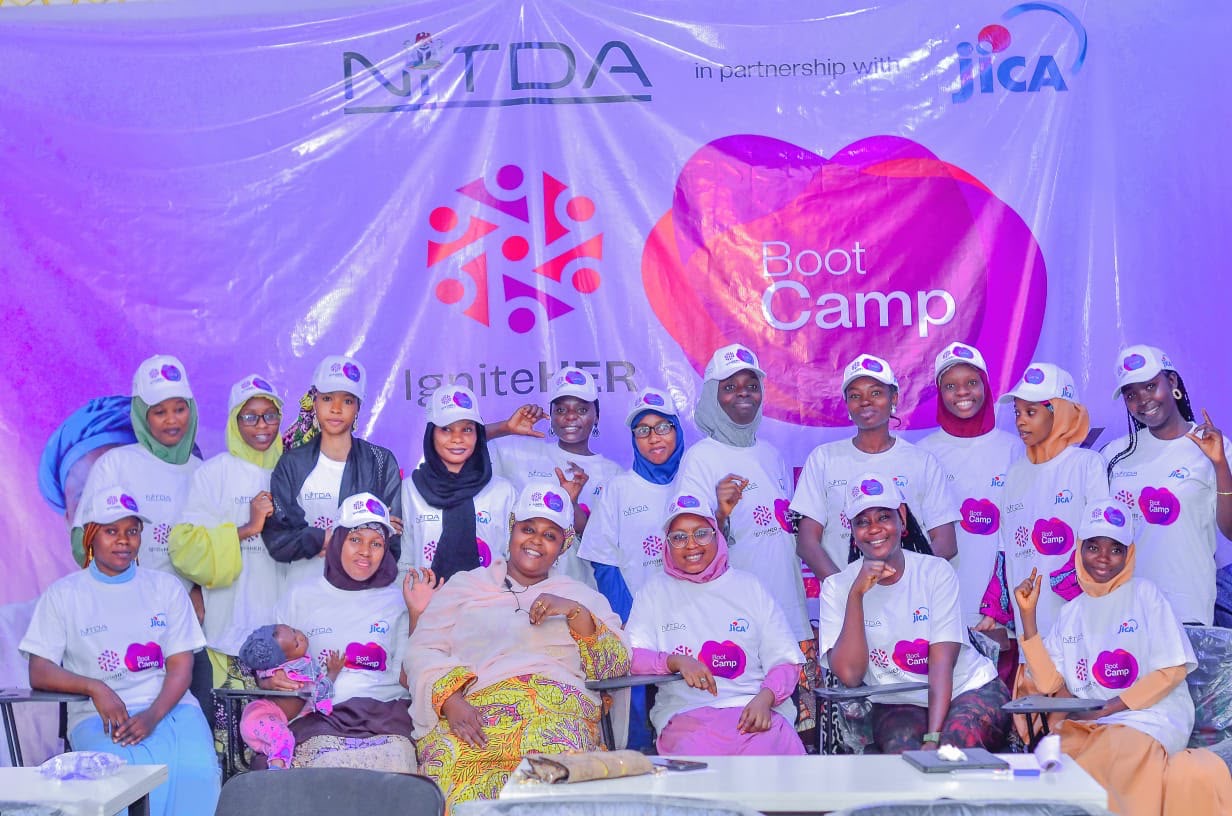
The National Information Technology Development Agency (NITDA) has selected 317 women entrepreneurs for the third cohort of its IgniteHER Boot Camp, as part of efforts to equip women-led businesses with digital skills, mentorship and access to investment opportunities.
The Director-General of NITDA, Kashifu Inuwa, disclosed this during the virtual opening ceremony of IgniteHER Boot Camp Cohort 3, noting that the selected participants were drawn from the North-West, North-East, South-East and South-South geopolitical zones.
Inuwa said the initiative aligns with President Bola Ahmed Tinubu’s Renewed Hope Agenda, particularly its focus on human capital development, economic inclusion and innovation.
He explained that the programme was designed to translate these policy priorities into practical economic opportunities for women while building on the achievements of previous editions.
According to him, the first two cohorts trained 220 women, including 111 participants who benefited from an intensive two-week hybrid boot camp in August 2025.
Highlighting the impact of the programme, Inuwa disclosed that seven women entrepreneurs from previous cohorts gained international exposure in Japan, with one of the beneficiaries, Kemisola Bolarinwa of NextWare Technologies, subsequently securing $500,000 in equity funding from WhiteStat Ventures.
He said the achievement demonstrated the opportunities available to entrepreneurs when they are connected to relevant networks, business insights and international markets.
The NITDA boss urged the new participants to look beyond acquiring certificates and focus on building sustainable businesses capable of addressing real-life challenges.
He said the agency would strengthen the connection between IgniteHER and its Idea Hatch incubation programme to provide continued mentorship, investment readiness support and market access, particularly for entrepreneurs with minimum viable products in healthcare, agriculture, finance and fashion.
Inuwa noted that technology offers women entrepreneurs the opportunity to expand their businesses, reach wider markets and develop solutions for underserved communities.
On the expansion of the initiative, he said NITDA planned to extend future cohorts across all six geopolitical zones, with the ultimate goal of reaching all 36 states and the Federal Capital Territory.
He stressed that the success of IgniteHER would be measured by tangible outcomes, including business growth, capital raised, access to new markets and job creation, rather than the number of participants trained or certificates issued.
To sustain the programme’s impact, Inuwa disclosed that NITDA was working to strengthen the country’s innovation ecosystem, including the establishment of seed funding mechanisms for high-potential entrepreneurs.
He also called on implementing partners, including the Japan International Cooperation Agency (JICA), mentors and other stakeholders to monitor and document beneficiaries’ progress to ensure that the programme delivers sustainable economic benefits.
Representing JICA, Ayumi Sato congratulated the participants and urged them to approach the boot camp as the beginning of a transformative entrepreneurial journey.
She encouraged the women to maximise the training opportunities, work closely with mentors and build meaningful relationships with fellow participants, noting that collaboration and diverse perspectives were essential to developing successful businesses.
Sato observed that beneficiaries of previous cohorts had already secured grants and opened discussions with investors, demonstrating the importance of practical skills and strong entrepreneurial networks.
She urged the participants to apply the knowledge acquired during the programme with courage and determination to grow their businesses and contribute to Nigeria’s economic development.
Also speaking, the IgniteHER Cohort 3 Lead Facilitator, Nnamdi Nwachukwu, described the initiative as a flagship NITDA programme implemented in partnership with JICA to equip women entrepreneurs with digital, innovation and business development skills.
He identified the programme’s objectives as strengthening digital innovation and entrepreneurship capabilities, preparing women-led startups for investment and venture financing, deepening investment readiness, improving founders’ capacity to engage investors and scale sustainable businesses, as well as building a national pipeline of women-led, technology-driven startups.
Nwachukwu disclosed that the programme currently operates across four geopolitical zones, with hubs in Rivers, Kano, Jigawa and Enugu states.
He said the boot camp was structured to help participants refine their technology-driven business models, strengthen their entrepreneurial capabilities and position their ventures for investment opportunities.