


By Nkechi Eze
The National Information Technology Development Agency (NITDA) has intensified efforts to improve digital public service delivery by training officials of Ministries, Departments and Agencies (MDAs) on Nigeria’s transition from Internet Protocol version 4 (IPv4) to Internet Protocol version 6 (IPv6).
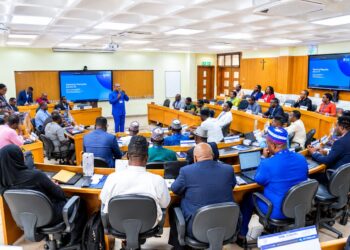
The Director-General of NITDA, Kashifu Inuwa, CCIE, stated this at the opening of an IPv6 migration readiness workshop in Abuja, organised by the agency in collaboration with the Nigeria IPv6 Council and the African Network Information Centre (AFRINIC). His remarks were delivered by the Director of NITDA’s Digital Development Services Department, Oladejo Olawumi.
Inuwa said the transition was essential to building a scalable digital infrastructure capable of supporting the growing demand for internet connectivity and enabling government institutions to deliver more efficient services online.
He urged directors and management-level officials to support the migration process by understanding its importance and providing the necessary backing for their technical teams to implement it successfully.
According to him, the workshop adopted a two-stream approach, with one session designed to equip management officials with the knowledge needed to oversee the transition, while the other focused on strengthening the technical capacity of personnel responsible for implementing IPv6 across government institutions.
“It is to help you understand the process of transitioning from IPv4 to IPv6 and why we need to do it. And importantly, to support the technical staff who are also being trained. So, you need to support them when they start the migration process,” Inuwa said.
He stressed that effective collaboration between management and technical personnel would be critical to ensuring a smooth transition across government agencies.
The NITDA chief noted that the participating management officials were the first set to undergo the specialised training for MDAs, adding that their involvement was necessary to secure institutional support for the migration.
“Without having you on board, we cannot have a proper transition. That is why we are having this training to make sure that you have the skills and you are certified,” he added.
Inuwa explained that IPv6 adoption had become increasingly important as the number of internet-connected devices and digital services continued to expand. He noted that the older IPv4 protocol provides approximately 4.3 billion internet addresses, while IPv6 offers a substantially larger address space to accommodate future connectivity demands.
He said the transition would support government institutions as they increasingly rely on digital platforms to store, process and exchange information, ensuring that their networks could accommodate expanding services and growing numbers of users.
The director-general linked the initiative to the Federal Government’s broader digital transformation agenda, particularly efforts to make public services more accessible online and strengthen Nigeria’s National Sovereign Cloud Initiative.
He explained that a reliable and scalable internet infrastructure would enable MDAs to expand their digital platforms, improve service delivery and reduce the need for citizens to visit government offices physically to access public services.
To sustain the initiative, Inuwa disclosed that NITDA was sponsoring certification for participating technical personnel, who would sit examinations at the end of the training.
He described the certification as an investment in developing the technical expertise required by government institutions while providing personnel with specialised skills and professional development opportunities.
Chairman of the Nigeria IPv6 Council and Chief Executive Officer of the Internet Exchange Point of Nigeria (IXPN), Mohamed Rudman, who served as the workshop’s lead facilitator, welcomed the collaboration with NITDA.
Rudman described the initiative as an important step towards encouraging IPv6 adoption among government agencies and urged participants to engage actively with the trainers to prepare adequately for the migration.
The workshop highlights NITDA’s efforts to combine management commitment with technical expertise in strengthening Nigeria’s digital infrastructure and supporting the delivery of seamless public services.