

By Nkechi Eze
The Federal Government has commenced the reconstruction and dualisation of the 401-kilometre Lambata–Bida–Mokwa–Makera–Kontagora Road in Niger State, in a major infrastructure intervention aimed at improving connectivity, facilitating trade and strengthening economic activities across the North-Central region.
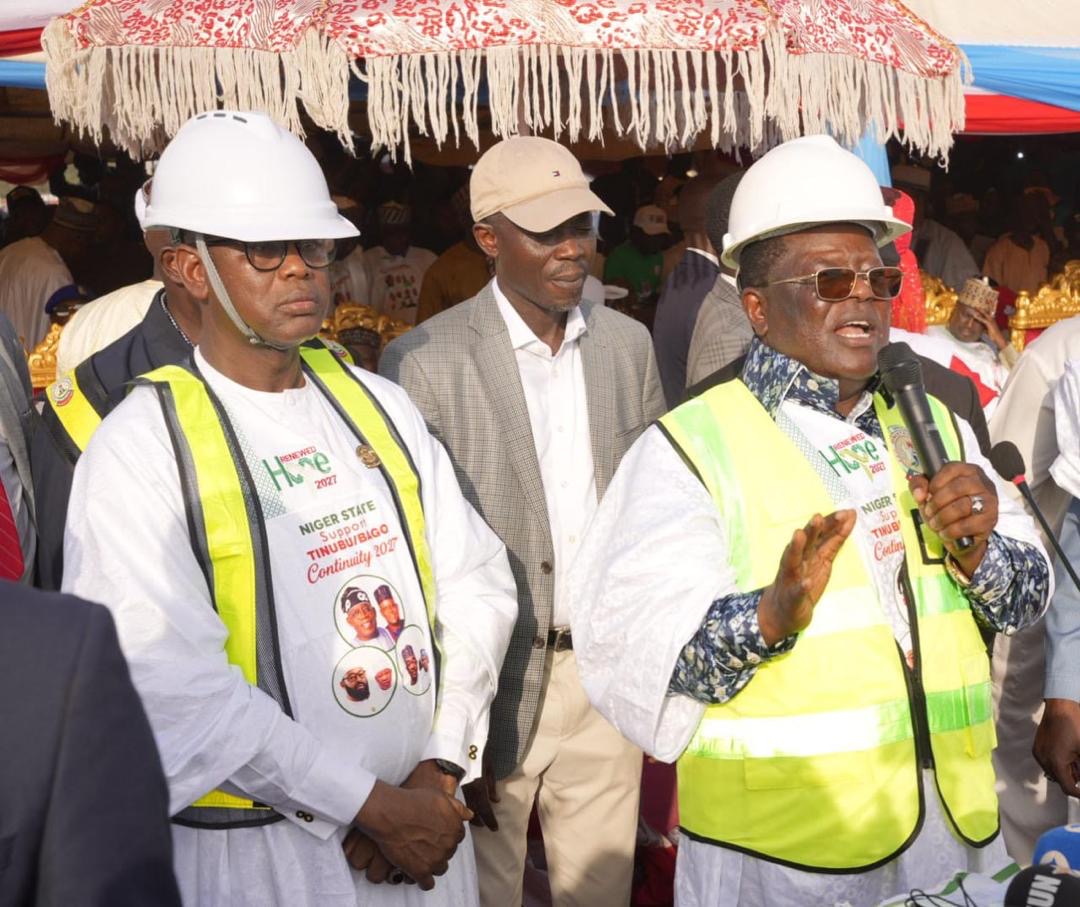
The ₦1.83 trillion project was officially flagged off in Bida on Tuesday, October 13, 2026, by Niger State Governor, Farmer Mohammed Umaru Bago, on behalf of President Bola Ahmed Tinubu.
According to an official statement signed by Mohammed A. Ahmed, Director of Information and Public Relations, the project is being financed by the Dangote Group through the Federal Government’s tax-credit financing model.
Speaking at the ceremony, Bago described the project as a significant milestone in improving transportation infrastructure and enhancing the movement of people and goods across Niger State and neighbouring areas.
He commended Tinubu for approving the project, noting that the highway serves as an important economic corridor for motorists, traders, farmers and other road users.
The governor said the reconstruction would improve transportation and expand economic opportunities for communities along the route.
The Minister of Works, Senator David Umahi, said the project formed part of the Federal Government’s broader infrastructure development programme, which he said covered approximately 5,500 kilometres of roads across the North-Central geopolitical zone.
He disclosed that Niger State accounted for more than 1,000 kilometres of the road projects initiated in the zone.
Umahi explained that the removal of fuel subsidy had created additional fiscal space for infrastructure investment, allowing the government to pursue major road projects across the country.
He added that the Lambata–Bida–Mokwa–Makera–Kontagora Road would be constructed using continuously reinforced concrete pavement (CRCP) technology, designed to provide a durable and climate-resilient road surface.
The minister said the choice of technology was intended to support the long-term performance of the highway and improve its reliability for commercial and passenger transportation.
Also speaking, the Minister of State for Works, Bello Muhammad Goronyo, recalled the Federal Government’s intervention on the failed Dikko Junction–Maje Road, a seven-kilometre corridor linked to the highway project.
Goronyo said President Tinubu had approved immediate palliative works following an assessment of the road’s condition, addressing longstanding transportation difficulties experienced by motorists and host communities.
The Minister of Information and National Orientation, Mohammed Idris Malagi, said the Federal Government remained committed to infrastructure development and economic recovery, adding that improved road networks were important to supporting agricultural transformation and broader commercial activities.
The Chairman of the Senate Committee on Works, Senator Allwell Onyesoh, described the project as a deliberate effort to expand infrastructure across the country.
Similarly, the Chairman of the House of Representatives Committee on Works, Akin Alabi, said the highway was a critical transport corridor connecting northern and southern Nigeria.
He noted that its reconstruction would ease the movement of goods and passengers, improve transportation efficiency and facilitate commercial activities. He also pledged legislative oversight to support the project’s implementation.
Providing details, the Director of Highways, Construction and Rehabilitation, Engr. David Yiltong, said the road would run from Lambata through Bida, Mokwa and Makera before terminating at Kontagora.
He explained that the project was expected to improve security, strengthen access to agricultural production areas, connect communities to markets and facilitate the delivery of services along the corridor.
A representative of the Dangote Group, Engr. Mansur Ahmed, reaffirmed the company’s commitment to supporting infrastructure development through private-sector investment.
Ahmed said the project would open up communities, create employment opportunities and stimulate commercial activities, while expressing confidence that the construction would be completed within the stipulated timeframe.
He estimated the group’s investments in road infrastructure development across Nigeria at more than ₦5 trillion and also highlighted its planned rice mill in Wushishi, Niger State, alongside other development initiatives.
The Senior Special Assistant to the President on Community Engagement for the North-Central Zone, Dr. Abiodun Essiet, emphasised the importance of sustained collaboration among federal and state governments, private-sector partners and host communities in delivering infrastructure projects.
In his welcome address, the Secretary to the Niger State Government, Abubakar Usman, said the road would strengthen the state’s economic advantages and those of neighbouring areas by improving transport links and facilitating the movement of agricultural produce and other goods.
The Etsu Nupe and Chairman of the Niger State Council of Traditional Rulers, Dr. Yahaya Abubakar, also expressed support for the project, noting its potential to improve transportation and enhance the welfare of communities along the route.
When completed, the dualised highway is expected to improve regional connectivity, reduce transportation difficulties, expand access to markets and agricultural areas, and support trade and employment generation across Niger State and adjoining communities.