

By Nkechi Eze
The controversy surrounding the latest consequential adjustments to military pensions has taken centre stage in engagements between the Military Pensions Board (MPB) and retired military personnel, with veterans demanding clarity over discrepancies between the salary increases announced by the Federal Government and the adjustments reflected in their pension payments.
At the heart of the dispute is whether the announced increases of between 30 and 80 per cent for serving military personnel have translated into corresponding adjustments for retirees, and what formula was used to determine their revised entitlements.
Against this backdrop, the Chairman of the Military Pensions Board, Air Vice Marshal Mikail Abdulraheem, has called for a records-based examination of the complaints, assuring veterans that legitimate grievances would be investigated while insisting that pension calculations must follow the applicable salary structures and regulations.
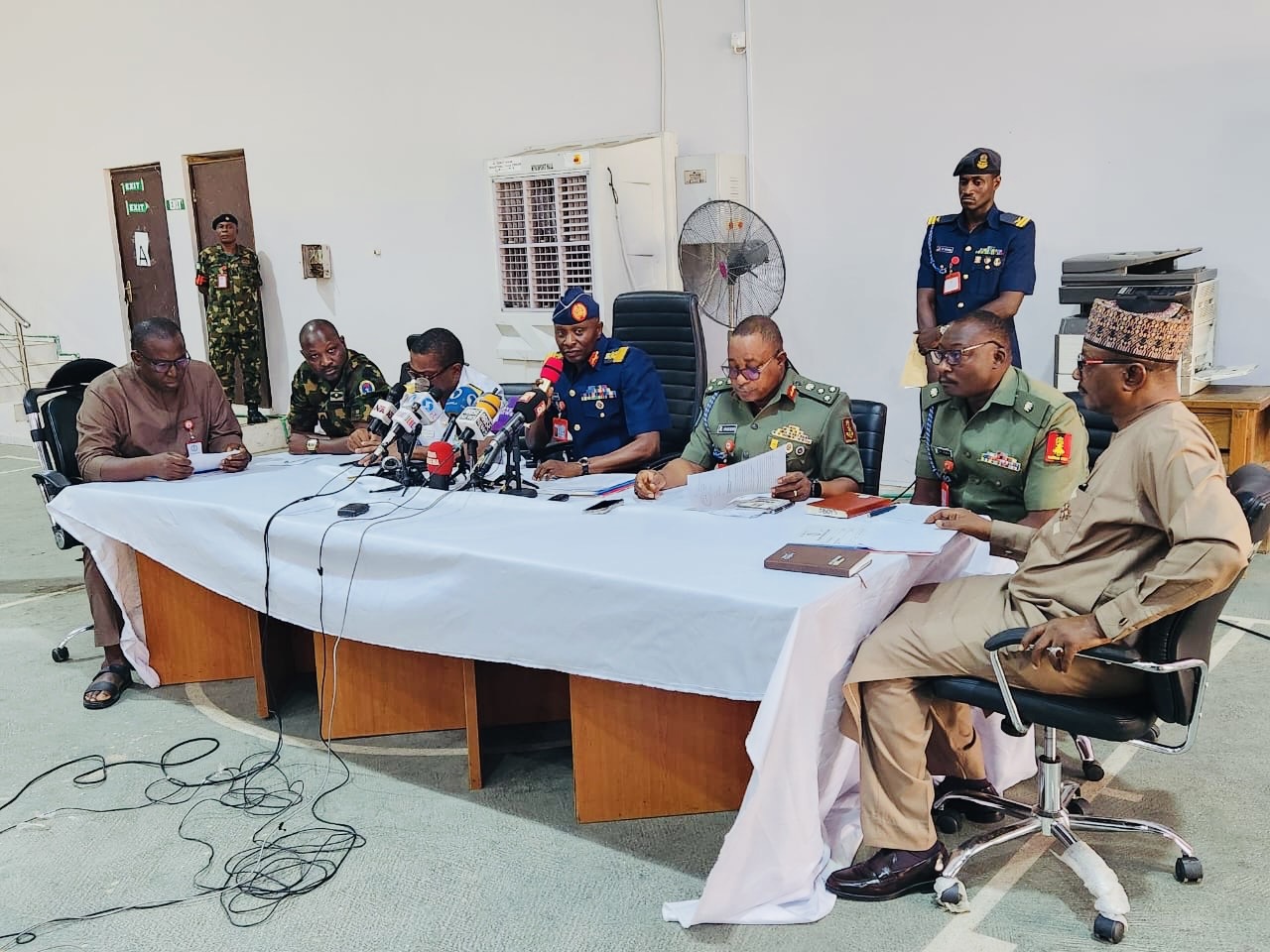
Abdulraheem spoke during an interaction with military veterans in Abuja on Tuesday, where he explained that the board does not independently determine pension rates but relies on the relevant structures and circulars issued by the National Salaries, Incomes and Wages Commission (NSIWC).
“The National Salaries, Incomes and Wages Commission develops the applicable salary structure and issues the relevant circulars. The board then uses that structure to compute pensions and gratuities,” he said.
The chairman explained that the revised structure followed the review of the Consolidated Armed Forces Salary Structure, which took effect on September 1, 2026. He noted that the commission had issued a separate circular for pension and gratuity purposes, distinct from the structure applicable to serving personnel.
According to him, the government-approved increases had been incorporated into the revised structure, while the board’s responsibility was to administer the applicable rates in line with the relevant provisions.
However, the explanation did not immediately resolve the concerns raised by the veterans, who questioned why some retirees appeared to have received increases below the percentages they expected.
One of the veterans, retired Major Jay Onje, asked whether the new pension rates were calculated by applying the announced increases to the amounts retirees previously received or by using a different computation formula.
Onje said veterans had observed differences during previous pension adjustments but maintained that the disparities being reported in the latest exercise appeared more significant.
His concern reflected the broader demand by retirees for a clear explanation of how the announced salary increases were translated into individual pension payments.
Responding, Abdulraheem said the issue required a careful comparison of the commission’s circulars, the board’s computation methods and the pension records of affected individuals.
He disclosed that the relevant authorities, including the NSIWC, had been invited to clarify the applicable rates and explain the basis of the figures used in the adjustments.
“We want everyone to see the applicable documents and understand the computation rather than rely on assumptions,” the chairman said.
The dispute was further highlighted by retired Master Warrant Officer Duru Augustine, who questioned the computation of pensions for personnel who had completed 35 years of service.
Augustine cited an annual total emolument of approximately N5.21 million, translating to about N434,211 monthly, and argued that applying a 90 per cent pension rate would produce a monthly figure of approximately N390,790.
He, however, alleged that some retired master warrant officers had received consequential adjustments of about N127,000, demanding clarification on the apparent difference between the amount he calculated and the adjustments reportedly received.
Abdulraheem cautioned that the total emolument figure cited by the veteran could not, on its own, establish the correct pension entitlement, explaining that the calculation must be based on the applicable pensionable emolument and the relevant pension-specific salary structure.
The chairman said the pension framework provided for an entitlement of 40 per cent of the relevant final emolument after 10 years of service, with the percentage increasing by two percentage points for every additional year until it reaches 90 per cent after 35 years.
He maintained that individual entitlements must be determined using the applicable provisions and records rather than calculations based solely on figures drawn from the salary structure for serving personnel.
Beyond explaining the formula, Abdulraheem urged veterans to ensure that complaints were supported by accurate information and relevant documentation, warning that discrepancies between claims and official pension records could make it difficult to establish the actual issues.
“Providing inaccurate information creates problems and makes it difficult to resolve these issues,” he said.
Using a medical analogy, the chairman explained that the board needed to examine individual pension files before determining whether a complaint was justified.
“Just as a doctor examines a patient’s history and medical records before reaching a conclusion, the board needs to examine the relevant pension files before determining whether a complaint is justified,” he said.
He nevertheless assured the veterans that the board was prepared to examine legitimate grievances, stressing that the process must be transparent and grounded in the applicable regulations.
The chairman also said the revised framework was intended to promote consistency between existing pensioners and personnel who would retire in the future, while ensuring that individual benefits reflected the relevant service conditions and previous entitlements.
The complaints were formally presented in a letter dated October 10, 2026, by the Coalition for Military Veterans Welfare, which questioned alleged disparities in arrears paid to warrant officers and master warrant officers and sought clarification on pension benefits for medically boarded personnel.
The coalition alleged that some warrant officers received approximately N147,000 in arrears, compared with N137,000 for master warrant officers in the 35-year service category. It called for an explanation of the figures and a review of the calculations.
The veterans are also seeking access to information on their gross pension entitlements and a breakdown of the computations used to determine their revised payments, arguing that greater transparency would help them understand the basis of the adjustments.
While the MPB has maintained that the disputed figures must be assessed against the applicable pension structure and individual records, the specific amounts cited by the veterans have not been independently verified. The engagement also ended without an established final resolution of the complaints.
The outcome of the proposed review and clarification by the relevant authorities is therefore expected to be central to addressing the concerns and establishing whether the reported disparities reflect differences in the applicable computation framework or errors requiring correction.