

By Nkechi Eze
The African Union (AU) Pre-Election Assessment Mission has commenced an assessment of Nigeria’s preparedness for the 2027 general elections, with particular focus on the readiness of the Independent National Electoral Commission (INEC) to manage the technological, logistical, security and administrative demands of the polls.
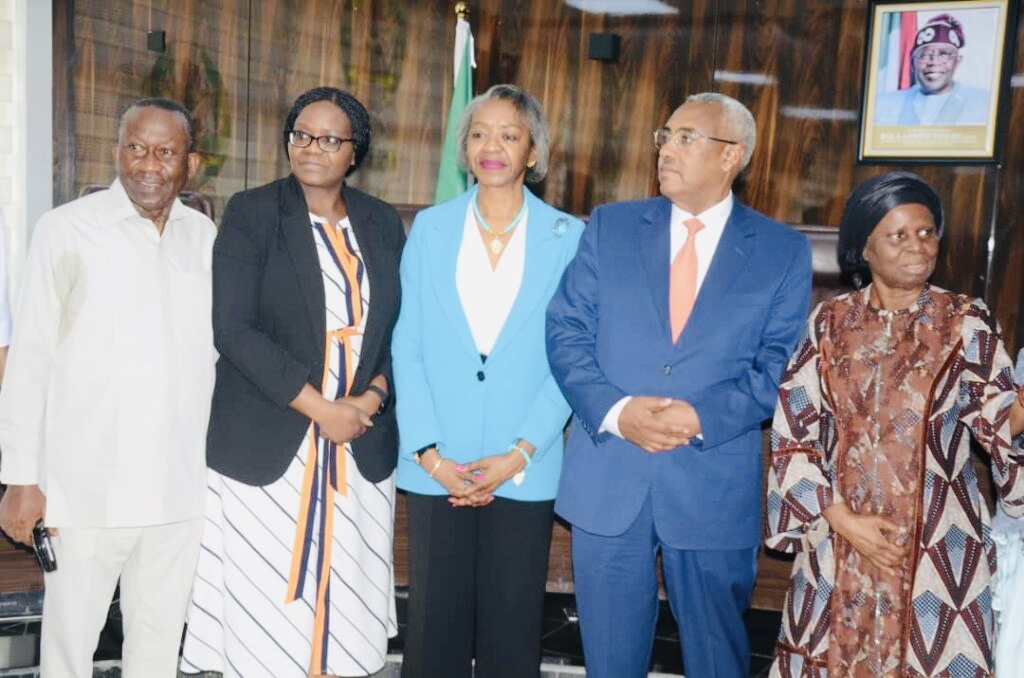
The mission, led by former Deputy Prime Minister and Minister of Foreign Affairs of Ethiopia, Demeke Mekonnen Hassen, visited the INEC headquarters in Abuja on Tuesday as part of its engagement with key stakeholders ahead of the elections.
Hassen said the AU delegation, which is in Nigeria from September 13 to 19, was deployed to identify potential risks in the electoral process and recommend measures to prevent them from undermining the credibility of the 2027 elections.
He said the mission would assess the pre-election, election and post-election phases, including the voter register, technology deployment, logistics, funding, inclusion, security, electoral disputes and results management.
“We are here to identify potential risks that may affect the electoral process and to recommend measures that can help prevent such risks from undermining the 2027 elections,” Hassen said.
The AU team also sought clarification on INEC’s preparedness to deploy and manage its electronic systems, particularly the electronic result management system, while raising questions about the level of finalisation and credibility of the voter register.
Responding on behalf of the INEC Chairman, Prof. Joash Amupitan, National Commissioner, Rhoda Gumus, said the commission was prepared to cooperate with the AU mission, describing the assessment as an opportunity to strengthen its preparations for the elections.
“We welcome this assessment because it provides an opportunity to further strengthen our preparations and identify areas where additional support may be required,” Gumus said.
She disclosed that INEC was preparing for a voter population of nearly 100 million, 176,846 polling units and more than 1.4 million ad hoc election personnel.
According to her, the scale of the exercise made the training of election personnel a critical component of the commission’s preparations, particularly in ensuring that procedures were applied uniformly across polling units nationwide.
Gumus said INEC had identified four key areas where it would require technical support from the AU, namely digital training for election personnel, combating disinformation, strengthening the Election Monitoring and Support Centre (EMSC), and enhancing inclusion and gender mainstreaming.
She said the commission was seeking AU assistance to expand interactive e-learning, digital simulation and standardised ICT training for its ad hoc staff.
“Our objective is to ensure that election personnel across the country receive standardised training and are able to apply the same procedures at every polling unit,” she said.
The National Commissioner also raised concerns over the increasing use of artificial intelligence to generate deepfakes and spread misinformation, saying INEC needed stronger capacity to identify and respond to coordinated information threats.
“Information integrity is critical to public confidence in the electoral process,” Gumus said, stressing the need for effective mechanisms to detect and counter disinformation before it undermines public trust.
She added that INEC required specialised support to strengthen its EMSC and improve electoral accessibility for persons with disabilities, internally displaced persons and other under-represented groups.
On the voter register, Gumus said the commission was collaborating with the National Identity Management Commission through the Continuous Voter Registration portal to verify voter information and clean up the register ahead of the polls.
She further said recent off-cycle elections had provided INEC with an opportunity to test some of the reforms introduced under the Electoral Act 2026, citing the August 15 Osun governorship election as an example of improved logistical and technological coordination.
However, she acknowledged that conducting a nationwide election on Nigeria’s scale would present significant technological, logistical and political challenges.
Gumus assured the AU delegation that INEC would provide the operational information required for the assessment while maintaining its independence and neutrality.
The 2027 presidential and National Assembly elections are scheduled for January 16, while the governorship and State Houses of Assembly elections will hold on February 6.