


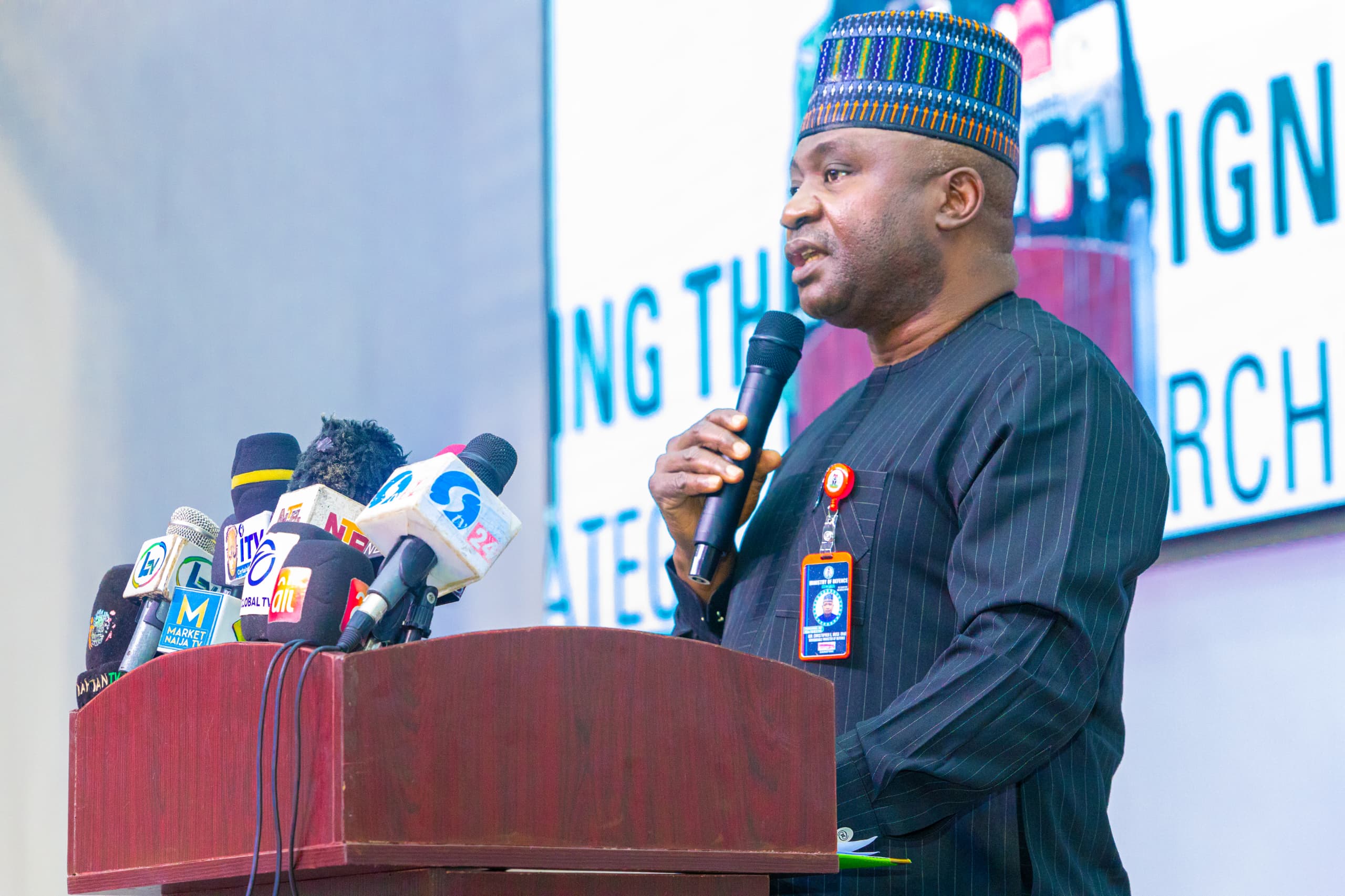
The Minister of Defence, Gen. Christopher Musa (Rtd.), has warned that motorcycles distributed to Nigerians as palliatives are being diverted to terrorists and bandits, providing them with greater mobility to carry out attacks across the country.
Musa gave the warning on Thursday when he appeared on Channels Television’s Politics Today, where he discussed ongoing efforts to tackle terrorism and the operational challenges confronting the nation’s security forces.
The Defence Minister appealed to state governors and lawmakers to reconsider the distribution of motorcycles as part of palliative and constituency programmes, noting that some of the motorcycles eventually find their way into the hands of terrorists.
According to him, the motorcycles provide terrorists with the mobility required to navigate difficult terrain, evade security forces and quickly move between locations.
“We try to appeal to even governors to stop giving motorcycles out as palliatives. Because these motorcycles are the same ones that still end up with these terrorists,” Musa said.
He advised that where motorcycles must be distributed, authorities should consider smaller-capacity models that would be less useful to criminal elements.
“Even if you have to give, don’t give them the big capacity motorcycles, give them the small capacity ones that they won’t be able to use to run around, because that gives them leverage. They can easily enter and then disappear,” he added.
Musa also cautioned lawmakers against distributing motorcycles through constituency projects without adequate mechanisms to monitor their eventual use, saying such motorcycles could similarly be diverted to bandits and terrorists.
“Those bikes… before you know it, it’s already get back to the bandits and that’s what they’re using. So we must stop that, we must be able to identify markets,” he said.
The minister further disclosed that security agencies had identified illegal markets and illicit motor parks as channels used by terrorists and other criminal groups to transport arms and ammunition to areas of operation.
“What we realize from experience is they establish illegal markets or illicit motor parks. They go to those motor parks, that’s where they move arms and ammunition into those areas,” Musa explained.
He called for stronger monitoring of markets, motor parks and other vulnerable points to prevent the movement of weapons, ammunition and illicit drugs.
“If we’re able to make sure that we man all the markets, all the motor parks, all these areas where drugs, weapons, ammunition will move, it will make it difficult for them. And once you’re able to apply that, they will fizzle out,” he said.
Musa also advocated greater involvement of local governments in the fight against insecurity, arguing that their proximity to communities puts them in a better position to identify criminals and respond quickly to emerging threats.
The minister said the effectiveness of local governments was critical to addressing insecurity, stressing that crime prevention and development were fundamentally local responsibilities.
“Failure of local government is what is aggravating what we’re dealing with, and if we want better solution, quick fix, our local governments must work,” he said.
He urged local government chairmen to hold regular security meetings, monitor developments within their jurisdictions and maintain close contact with security agencies.
According to Musa, local authorities have better knowledge of criminal elements operating within their communities and should use that advantage to strengthen intelligence gathering and crime prevention.