President Bola Ahmed Tinubu has called for stronger community intelligence-sharing and collaboration among stakeholders as part of efforts to tackle insecurity and build lasting peace in the North Central region.
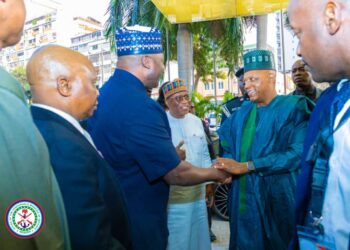
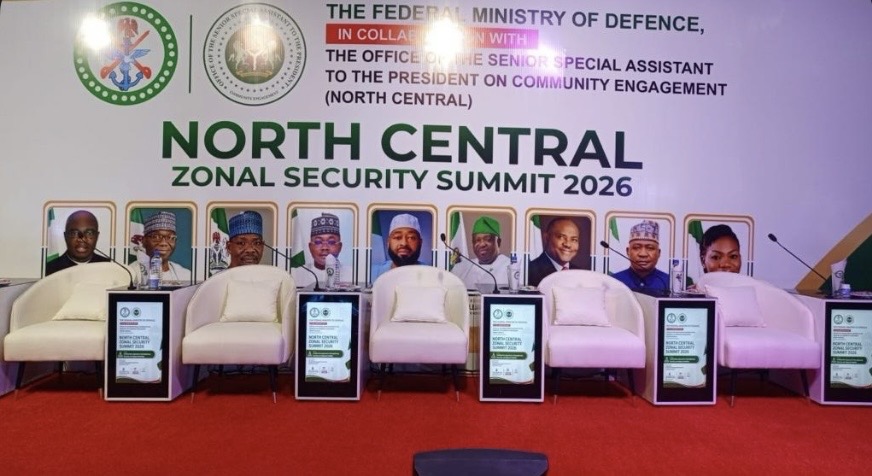
The President made the call at the 2026 North Central Regional Security Summit in Makurdi, Benue State, where he was represented by the Secretary to the Government of the Federation, Senator George Akume, CON.
Speaking on the theme, “Collaborative Approaches to Strengthening Security and Regional Stability,” President Tinubu stressed that no single security agency, tier of government or community could secure the region effectively without sustained cooperation.
He said the cross-border nature of insecurity required communities, security agencies and governments to share information and coordinate their responses rather than operate in isolation.
“No single agency, no single tier of government and no single community can secure this region acting alone. Insecurity does not respect state boundaries or agency mandates,” the President stated.
He noted that criminals often moved across local government and state boundaries, while security responses were sometimes weakened by rivalry, duplication of efforts and the withholding of critical information.
President Tinubu therefore urged citizens to take greater responsibility for security by providing timely and credible intelligence to security agencies and refusing to shield criminals because of kinship, ethnicity or other sentiments.
“Security begins with you. I call on every citizen to share information with the security agencies, to refuse to shield criminality out of kinship or sentiment,” he said.
The President placed particular emphasis on the role of traditional and religious leaders, describing them as strategically positioned to identify emerging threats because of their close relationship with communities.
He urged the leaders to serve as the “first line of early warning” and trusted voices of reconciliation, noting that they were often in a position to detect changes in their communities before such developments escalated into violence.
According to him, traditional rulers and religious leaders could identify when strangers entered their communities, when young people were becoming vulnerable to criminal influences and when local disputes were at risk of developing into broader conflicts.
President Tinubu also called on the leaders to reject inflammatory rhetoric and promote reconciliation, warning against statements capable of worsening ethnic, religious and communal tensions.
The President said his administration had continued to strengthen cooperation among the Armed Forces, Nigeria Police Force and intelligence services, alongside the acquisition of new military platforms and capabilities.
He commended the security forces for the gains recorded against terrorists and other criminal elements, including the neutralisation of terrorist commanders, surrender of fighters, rescue of captives and restoration of normalcy in several communities.
He also paid tribute to military personnel, police officers and other security operatives who had lost their lives in the line of duty.
However, President Tinubu cautioned that security operations alone could not deliver sustainable peace, stressing that community intelligence must be complemented by measures addressing the underlying causes of conflict.
He identified competition over land and water, climate change, desertification, unresolved land-use disputes, weak local dispute-resolution mechanisms and the proliferation of illicit weapons as factors contributing to insecurity in the region.
“Military action alone will not deliver lasting peace to the North Central. Force can suppress violence; it cannot resolve the grievances that produce it,” he said.
The President said the Federal Government would therefore continue to combine kinetic operations with developmental interventions, including efforts to transition from open grazing to modern, settled livestock production.
He said investments in irrigation, mechanised agriculture, rural roads and access to credit under the Renewed Hope Agenda were also aimed at addressing economic vulnerabilities and creating opportunities for communities across the region.
President Tinubu further called on women and youths to play central roles in peace-building, while urging the private sector and development partners to increase investments in the North Central.
He said economic development, employment and improved livelihoods were important components of sustainable security, stressing that every new investment and job created in the region would contribute to stability.
The President also directed the Minister of Defence, General Christopher Gwabin Musa (Rtd), OFR, to transmit the outcomes of the summit to him and report on the implementation of its recommendations.
He charged participants to ensure that the summit produced practical recommendations with clearly assigned responsibilities, timelines and measurable outcomes.
The North Central Regional Security Summit, he said, formed part of his administration’s broader effort to address Nigeria’s security challenges through regional and community-based engagement.
President Tinubu noted that the initiative followed the South East Regional Security Summit held in Umuahia on July 30, 2026, stressing that the engagements reflected his administration’s conviction that national security must be built from communities upwards.
He urged governors, ministers, Service Chiefs, traditional and religious leaders, civil society organisations, women, youths and private sector representatives to work collectively towards developing practical and sustainable solutions to insecurity in the North Central.
He thereafter declared the 2026 North Central Regional Security Summit open.