

The Nigerian Air Force (NAF) has intensified efforts to strengthen crisis communication and improve its capacity to counter misinformation and disinformation as part of measures to support military operations and sustain public confidence in the Service.
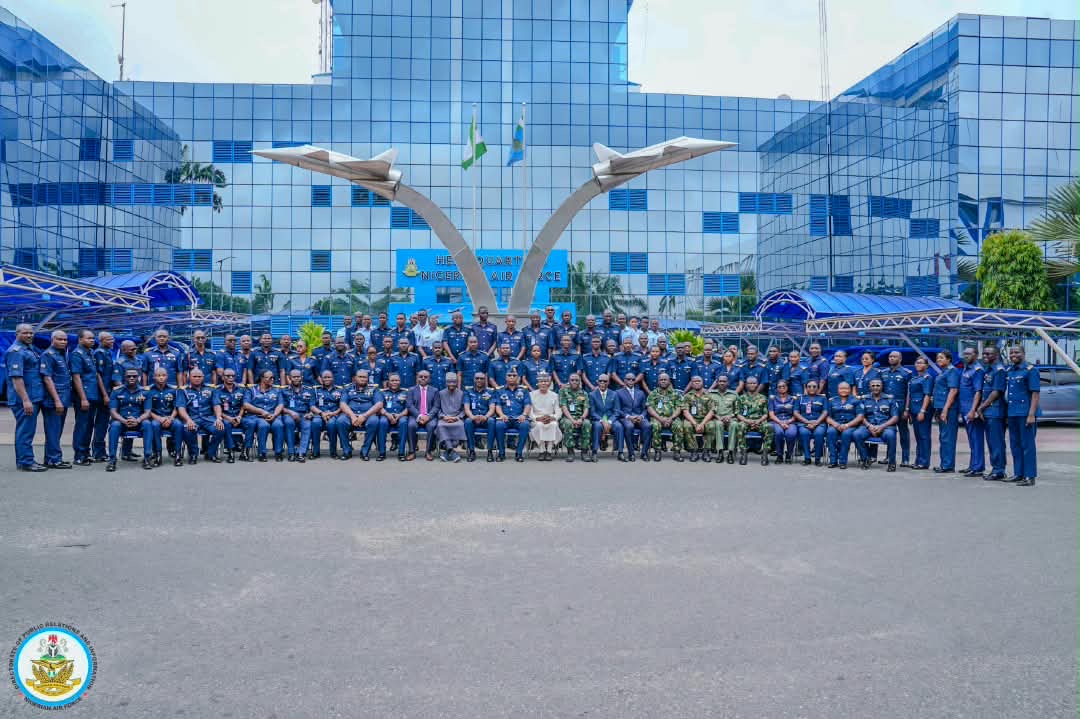
The initiative was highlighted at the 2026 Directorate of Public Relations and Information (DOPRI) Annual Media Workshop and Meeting with Information Officers, which commenced at Headquarters NAF, Abuja.
The two-day workshop, themed, “Enhancing Strategic Media Operations of NAF Public Relations and Information Personnel Through Capacity Building in Crisis Management Skills,” is focused on equipping NAF public relations personnel with the skills required to navigate an increasingly complex information environment.
Declaring the workshop open, the Chief of the Air Staff, Air Marshal Sunday Kelvin Aneke, represented by the Chief of Policy and Plans, Air Vice Marshal AY Abdullahi, described the theme as timely, given the rapid spread of news, misinformation, disinformation and hostile narratives.
Air Marshal Aneke said, “Effective public communication has moved beyond being merely supportive to becoming an operational necessity that contributes directly to mission success.”
He tasked Information Officers with recognising their responsibilities as strategic communicators who must shape public understanding of NAF operations, project professionalism, protect institutional credibility and strengthen public trust.
The Air Chief further stated, “Operational success must not only be achieved; it must also be communicated purposefully, responsibly and effectively to our internal and external audiences.”
He explained that strategic communication remained integral to his Command Philosophy, which emphasises professionalism, operational effectiveness and institutional excellence.
According to him, the workshop was designed to strengthen the competencies of NAF information personnel in strategic communication, crisis management, media relations, digital engagement and information management.
Earlier, the Director of Public Relations and Information, Headquarters NAF, Air Commodore Ehimen Ejodame, said continuous professional development had become imperative because of the rapidly changing media environment and increasing complexity of security operations.
Ejodame said, “Our responsibility goes beyond disseminating information; we must ensure that every communication builds understanding, reinforces confidence and supports the operational objectives of the Nigerian Air Force.”
He added that the workshop would enhance the ability of NAF information personnel to communicate effectively before, during and after crises, while ensuring that official communication remains credible, timely, coordinated and strategically aligned with operational objectives.
A major highlight of the opening session was a presentation by the Director-General of the Voice of Nigeria, Alhaji Baba Ndache, who provided insights into contemporary media operations, strategic communication and information management during crises.
The workshop also brought together former NAF spokespersons, including Air Commodore Yusuf Anas (Retired), Air Commodore Ozomina (Retired), Air Vice Marshal Olatokunbo Adesanya (Retired) and Air Vice Marshal Ibikunle Daramola (Retired), alongside Branch Chiefs, serving NAF spokespersons and Information Officers from formations and units across the country.
Their participation provided a platform for institutional knowledge transfer, professional interaction and experience-sharing on managing complex information environments and sensitive security communications.
The NAF said the workshop forms part of ongoing efforts by DOPRI to strengthen the professional capacity of its public relations and information personnel, particularly in countering misinformation, engaging stakeholders and managing communication during crises.
The Service said the initiative would further strengthen its communication architecture and enhance its ability to provide credible and timely information in support of operational effectiveness, institutional confidence and national security objectives.