

The Federal Government has intensified efforts to make housing more affordable by developing Building Materials Manufacturing Hubs across Nigeria’s geopolitical zones to increase local production and reduce construction costs.
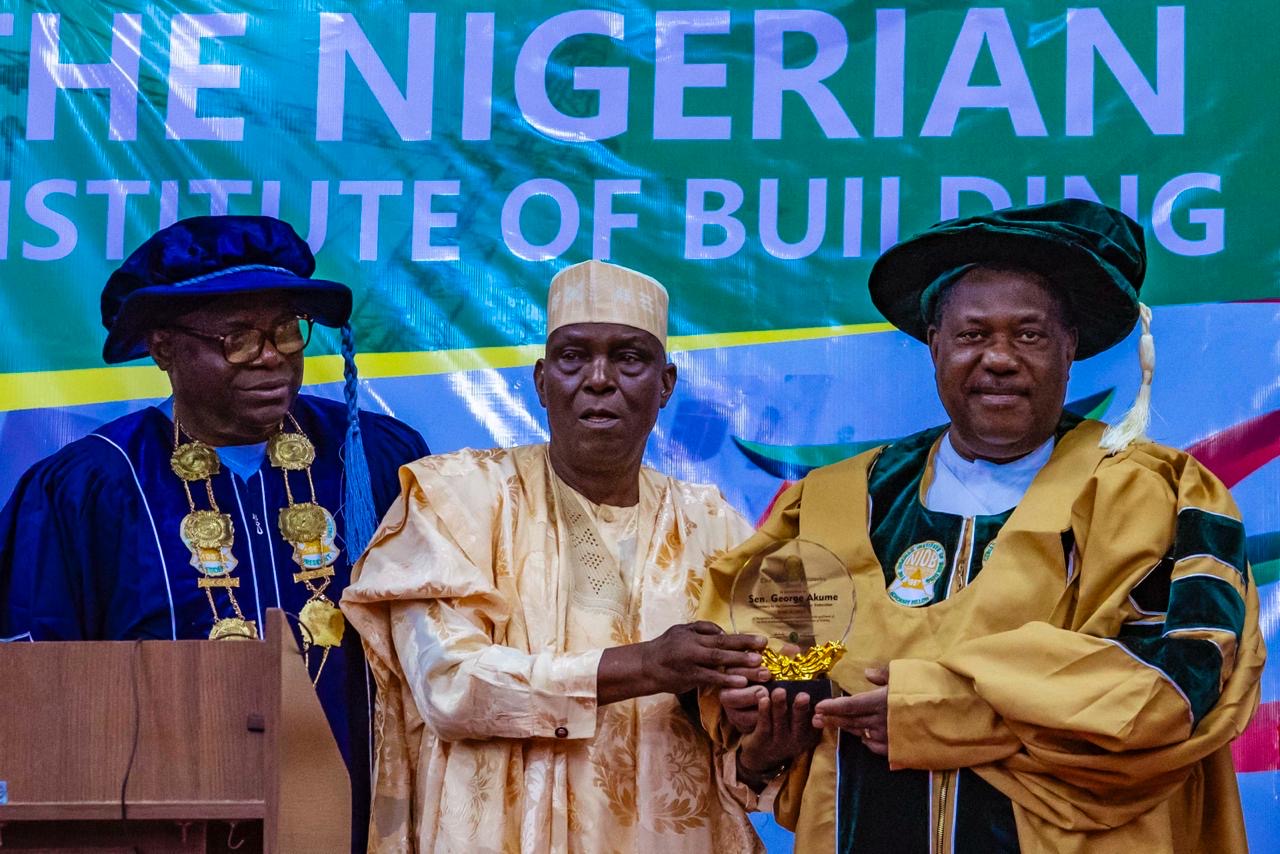
The Secretary to the Government of the Federation (SGF), Senator George Akume, CON, disclosed this on Wednesday in Abuja while declaring open the 56th Conference and Annual General Meeting of the Nigerian Institute of Builders (NIOB).
The conference was held under the theme, “Repositioning the Building Profession: Advocacy and Policy Influence on Housing Delivery for a Sustainable Built Environment.”
According to an official statement signed by Chris Ugbuegbulam, Head, Information & Public Relations, Akume said the planned hubs would strengthen domestic supply chains, support local manufacturing and improve access to affordable building materials.
He called on members of the NIOB to bring their technical expertise, research capacity and industry networks to bear on government policies and programmes aimed at transforming the housing sector.
“Government is pursuing the development of Building Materials Manufacturing Hubs across the geopolitical zones precisely to support local production and reduce construction costs,” Akume said.
He added that the initiative was aligned with the Renewed Hope Agenda of President Bola Ahmed Tinubu, GCFR, President and Commander-in-Chief of the Armed Forces, Federal Republic of Nigeria, particularly the administration’s commitment to expanding access to safe, durable, sustainable and affordable housing.
The SGF noted that housing was not merely about providing physical structures, but also about ensuring safety, dignity, family stability, wealth creation and improved quality of life.
He therefore charged the building profession to uphold high standards of competence, ethics and public trust, warning against poor supervision, substandard materials, construction shortcuts, corruption and the use of unqualified personnel.
Akume also urged the NIOB to intensify public awareness against quackery and ensure that certified builders do not lend their names or professional seals to projects they did not supervise.
On the rising cost of construction, the SGF acknowledged that increasing building costs were making home ownership increasingly difficult for many families.
He called for stronger collaboration among professionals in the built environment and advocated measures including better design-to-cost, increased use of local materials, bulk procurement, reduction of construction waste, modern building methods, transparent bills of quantities and stronger domestic supply chains.
Akume further urged builders to take advantage of the Federal Government’s ongoing infrastructure development, noting that more than 2,700 kilometres of highways and major roads were currently under construction, reconstruction or rehabilitation.
He cited the Lagos-Calabar Coastal Highway, Sokoto-Badagry Superhighway, Abuja-Kaduna-Zaria-Kano Road and the East-West Road among major projects being undertaken by the administration.
The SGF challenged builders to move beyond merely observing the scale of national development and position themselves to participate actively by forming professional consortia, establishing auditable quality-management systems, training and certifying artisans and competing for opportunities in housing, transportation infrastructure, public facilities and local-content projects.
He reaffirmed the administration’s commitment to making construction and housing development a national priority, irrespective of political considerations.
Akume also urged the NIOB to contribute to the realisation of President Bola Ahmed Tinubu’s vision of a Nigeria that is “secure, prosperous, inclusive, and respected worldwide.”
He challenged the institute to make the Renewed Hope Agenda tangible through a commitment to “one ethical professional, one safe site, one durable structure, and one affordable roof at a time.”
The SGF congratulated the NIOB on its 56th Conference and Annual General Meeting, expressing confidence that its deliberations would produce practical strategies for improving housing delivery, professional standards and the sustainability of Nigeria’s built environment.