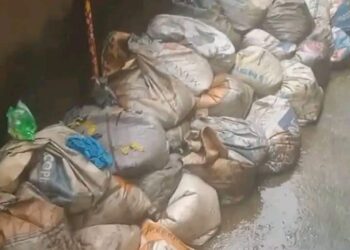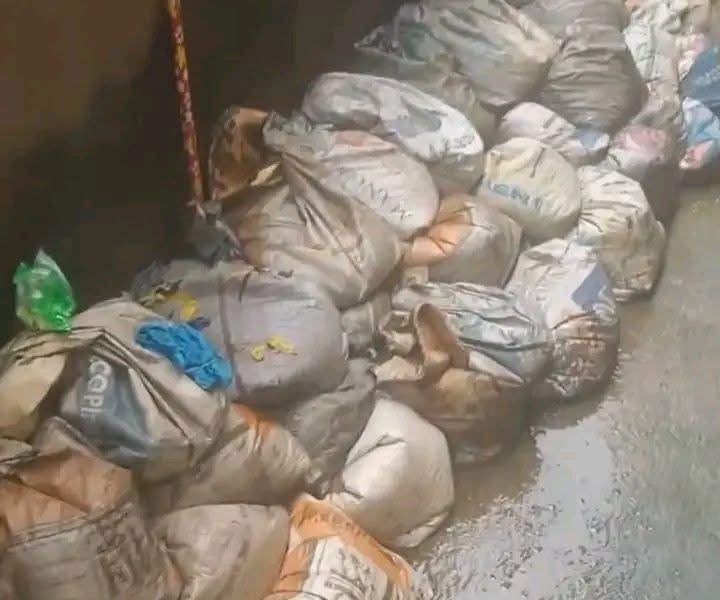
More than 100 bags of human faeces have been discovered inside a residential building at No. 16 Ibadan Street, Aba, Abia State, raising concerns over potential public health and environmental hazards.
The discovery was made on Tuesday, August 18, 2026, by officials of the Abia State Environmental Protection Agency (ASEPA), Aba Zone, during an inspection of the premises.
The agency reportedly found the bags of human faeces stored within the compound, alongside four basins containing human excreta placed in the corridor of the building.
ASEPA officials also discovered a sewage tank inside one of the downstairs rooms, directly beneath a bed where occupants reportedly sleep.
The agency warned that the situation posed a serious public health risk, with the improper storage and handling of human waste capable of creating conditions for the spread of diseases.
Following the discovery, ASEPA sealed the premises pursuant to a court order and commenced investigations while measures are being taken to address the environmental and sanitation concerns.
The agency said the building would remain sealed until the occupants meet the necessary requirements and implement the corrective measures prescribed by the relevant authorities.
ASEPA described the situation as more than an environmental violation, stressing that the conditions discovered at the premises could pose a significant threat to public health and potentially create an environment conducive to disease outbreaks.
The reason for storing such a large quantity of human faeces at the residential premises has not been officially established.
However, some residents who responded to ASEPA’s social media post alleged that the faeces were being sold to farmers for about ₦10,000 per bag for use as manure.
The allegation has not been independently verified, while ASEPA has not officially confirmed whether the human waste was being sold or intended for agricultural purposes.
The agency said further action would depend on the outcome of its investigations and compliance with the required environmental and public health measures.