Against the backdrop of efforts to deepen economic ties between China and Africa, a new zero-tariff policy introduced by China is beginning to reshape the continent’s export landscape, creating wider access to the world’s vast Chinese consumer market while encouraging African producers to move beyond the export of raw commodities.
Since May 1, when China fully implemented zero-tariff treatment for 53 African countries with which it maintains diplomatic relations, agricultural and processed products from across the continent have recorded increased access to Chinese markets, with businesses reporting growing demand for products ranging from avocados and coffee to wine, blueberries, chilies and other agricultural commodities.
The development is already reflected in trade figures. According to China’s General Administration of Customs, imports from Africa reached 193.8 billion yuan, equivalent to about $28.72 billion, in May and June 2026, representing a 23.5 per cent increase compared with the same period last year.
Imports of African avocados rose by 130 per cent, while apple and orange imports increased by 89.6 per cent and 27.9 per cent respectively.
The first shipment to benefit from the new arrangement crossed into China shortly after midnight on May 1, when 24 tonnes of fresh South African apples passed through the Shenzhen Bay Port.
Since then, Kenyan avocados, South African wines, Zimbabwean blueberries and other African products have increasingly appeared on Chinese supermarket shelves, providing producers with access to a market of enormous scale.
In Kenya, the impact is visible at a Chinese-invested avocado oil processing plant in the Athi River Export Processing Zone, where freshly harvested avocados are stored, ripened, sorted and cold-pressed into extra virgin avocado oil for export to China.
The development is significant because it goes beyond simply increasing the volume of African exports. It is also encouraging investment in processing, packaging, certification and other stages of the value chain that can help African economies retain a greater share of the value generated by their products.
In South Africa’s Cape Winelands, Diemersdal Wine Estate, which has a winemaking history dating back to 1698, has supplied the Chinese market for nearly two decades.
Steffi Layer, the estate’s international marketing and sales manager, said the zero-tariff policy had renewed interest among Chinese importers who had previously purchased South African wines.
She said the company was preparing shipments for China ahead of the end of the year, particularly in time for the Chinese New Year period, adding that the tariff concession would make the wines more competitively priced.
Zimbabwe has also recorded a major breakthrough, exporting its first consignment of blueberries to China in July.
Allan Majuru, chief executive officer of Zimbabwe’s national trade promotion body, ZimTrade, described the zero-tariff arrangement as one of the most significant trade openings offered to Zimbabwean exporters in recent years.
He noted that access to the Chinese market could stimulate increased production, strengthen cold-chain infrastructure, improve packaging and certification capacity, and generate employment across the horticultural value chain.
China’s efforts have also extended beyond tariff reductions. The country has expanded market access through trade facilitation measures, including “green channels” and unified regional quarantine arrangements for selected African products.
Since late April, China has granted unified regional quarantine market access for African dry chilies, coffee beans, cashew nuts and wild aquatic products, reducing the need for separate bilateral negotiations and easing entry into the Chinese market.
For Rwanda, the opportunities are already translating into higher-value exports.
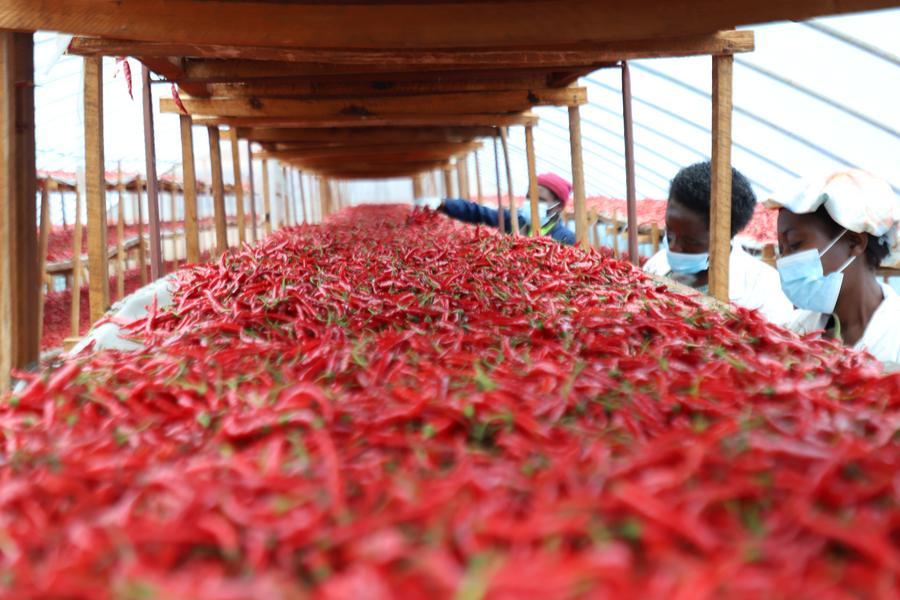
At Fisher Global’s chili processing plant in Rwamagana Industrial Park, rows of red chilies are processed for export. The company began exporting dried chili to China in 2022, but the new tariff regime has encouraged it to move further up the value chain.
In June, the company exported its first 550-kilogram consignment of pickled chili to a food company in China’s Shandong Province.
Fisher Global General Manager, Herman Uwizeyimana, said the policy had generated new interest from Chinese buyers, some of whom intend to use Rwandan chilies in hot-pot meals and instant-noodle seasonings.
He said the development was encouraging the company to raise its standards in product selection and quality while opening broader markets for processed Rwandan agricultural products.
Robert Rukundo, chairperson of the Horticulture Exporters Association of Rwanda, said the preferential treatment was creating a more competitive environment for Rwandan exporters, particularly small and medium-sized enterprises.
According to him, businesses are increasingly investing in quality improvement, packaging, certification and compliance with international standards to meet the demands of Chinese consumers.
The transformation is similarly evident in Ethiopia’s coffee industry.
At Awo Coffee’s processing facility on the outskirts of Addis Ababa, roasted Ethiopian Arabica is prepared for shipment to China. The company’s General Manager, Tesfaye Gebru, said approximately 90 per cent of its roasted coffee products are exported to China annually.
In 2024 alone, the company exported 140 tonnes of green coffee beans and 20 tonnes of processed coffee products to China, recording annual growth of about 10 per cent.
Gizat Worku, General Manager of the Ethiopian Coffee Exporters Association, described the zero-tariff arrangement as a “win-win approach”, predicting that China could become the largest destination for Ethiopian coffee within the next three years as demand, particularly for specialty coffee, continues to grow.
However, experts say the ultimate success of the policy should not be measured solely by the quantity of goods African countries export to China.
Paul Frimpong, executive director of the Ghana-based Africa-China Center for Policy and Advisory, said the more important question was whether African businesses would use the opportunity to improve production capacity, quality standards, packaging, certification and value addition.
For Ghana, he argued, the policy presented an opportunity to reduce dependence on exports of raw cocoa beans, cashew nuts and other unprocessed commodities by encouraging domestic processing, packaging and branding.
Such a shift, he said, would enable African countries to retain more economic value within their economies while creating jobs.
The same argument has been advanced by African Union Chairperson and Burundian President Evariste Ndayishimiye, who said the policy could generate higher incomes for African products, create sustainable employment for young people and promote local processing so that more added value remains on the continent.
Cabo Verdean President Jose Maria Neves also welcomed China’s continued opening to African products, saying the move could contribute positively to Africa’s economic growth at a time when international trade is facing increasing restrictions.
Kenyan economist James Shikwati described the arrangement as an opportunity for China and Africa to complement each other’s economic structures, with China providing access to a large market while African countries acquire industrial equipment and other inputs needed to modernise production.
Researchers similarly view the policy as part of a broader and more institutionalised phase of China-Africa economic cooperation.
Yu Jia, a research fellow at Peking University’s Institute of New Structural Economics, said the zero-tariff arrangement should not be regarded as a temporary concession, but as an indication of a new phase of institutional opening-up.
He stressed that predictability in market access was itself an important development resource for African businesses and multinational investors.
The growing trade in African products is also occurring alongside substantial Chinese exports of productive goods to the continent. Official data showed that China’s exports of electromechanical products to Africa reached 534.11 billion yuan, or about $79 billion, in the first half of 2026, representing a 28.8 per cent year-on-year increase.
About 75 per cent of China’s exports to Africa comprise capital and intermediate goods, including productive inputs that support industrialisation and agricultural modernisation.
For Charles Onunaiju, Director of the Center for China Studies in Nigeria, the emerging trade relationship offers Africa an opportunity to pursue transformation through production and industrialisation rather than relying primarily on aid.
He said the combination of zero-tariff access, the China International Import Expo and other China-Africa trade initiatives could further expand bilateral commerce and support a more balanced and sustainable economic partnership.
Humphrey Moshi, an economics professor at the University of Dar es Salaam in Tanzania, similarly said the preferential trade regime, combined with existing China-Africa trade platforms, could help deepen commercial ties and promote mutually beneficial economic development.
More than 100 days into the implementation of the zero-tariff arrangement, the early evidence suggests that its significance extends beyond cheaper access to the Chinese market. For African economies, the greater opportunity lies in using expanded market access to stimulate production, strengthen industrial capacity and process more commodities locally.
If sustained, the policy could therefore help shift the China-Africa trade relationship from one centred largely on the exchange of raw materials and manufactured goods towards a more integrated partnership built around value addition, industrialisation, employment and expanded market opportunities for African businesses.