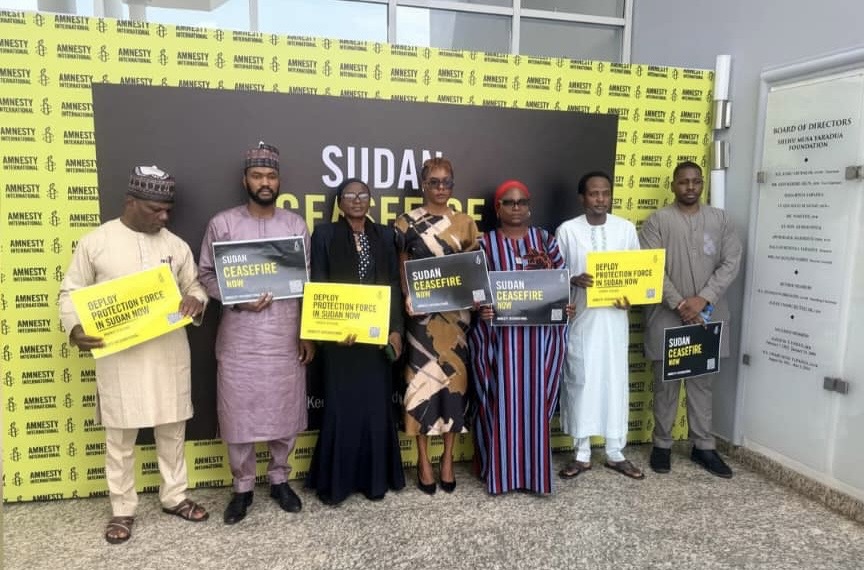
As the conflict in Sudan continues to trigger one of Africa’s worst humanitarian crises, Amnesty International has called on the Federal Government of Nigeria, the African Union (AU), the United Nations and the wider international community to take urgent and coordinated action to halt the violence, protect civilians and hold perpetrators of atrocities accountable.
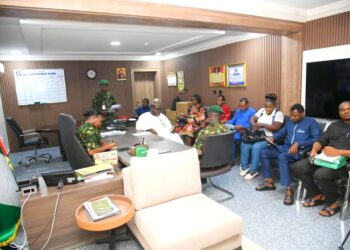
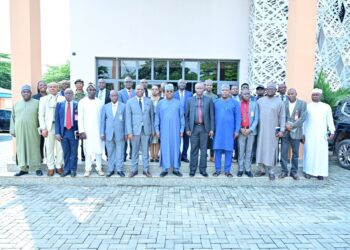
The call was made in Abuja during the presentation of Amnesty International’s latest report, “City Under Siege, Children Under Fire: Rapid Support Forces’ Crimes against Humanity in North Darfur,” which documents alleged widespread human rights violations committed against civilians, particularly children, in Sudan’s North Darfur region.
Speaking at the event, Chairman of the Board of Trustees of Amnesty International Nigeria, Auwal Rafsanjani, said the findings of the report reveal evidence of deliberate attacks on civilians, unlawful killings and other grave violations allegedly perpetrated by the Rapid Support Forces (RSF).
“The report provides credible evidence of serious violations of international human rights and humanitarian law. Civilians, especially children, continue to bear the brunt of this conflict, and urgent intervention is needed to prevent further atrocities,” Rafsanjani said.
He noted that the crisis extends beyond Sudan’s borders, affecting millions of people, including Nigerians living in the country, and stressed that Nigeria has both a moral responsibility and strategic interest in supporting efforts to restore peace.
Rafsanjani warned that the unchecked proliferation of armed militias in Sudan could deepen insecurity across Africa, drawing parallels with Nigeria’s experience of terrorism and banditry.
“Our experience with terrorism has shown that allowing armed groups to operate unchecked creates long-term regional security threats. Instability in one African nation can quickly spread across the continent if decisive action is not taken,” he added.
Also addressing participants, Amnesty International Nigeria’s Country Director, Isa Sanusi, described the conflict as one of the continent’s gravest humanitarian emergencies, alleging that the RSF had carried out widespread killings, sexual violence, abductions and the destruction of civilian communities, amounting to crimes against humanity.
“We cannot continue to watch as innocent people are killed and entire communities destroyed. African countries must lead efforts to end this conflict, and Nigeria should not remain a passive observer while these atrocities continue,” Sanusi said.
He called for an immediate ceasefire and urged African leaders to pursue African-led solutions capable of delivering lasting peace.
Sanusi also criticised what he described as the inadequate response of the international community, arguing that despite years of violence and its escalation since 2023, global actors had failed to take meaningful steps to stop the bloodshed.
He warned that continued inaction could further destabilise the Sahel and West Africa, making the Sudan crisis an even greater regional security challenge.
The Regional Director for East and Southern Africa at Amnesty International, Tigere Chagutah, urged Nigeria to leverage its leadership role within the African Union to champion stronger measures for civilian protection.
“Nigeria should use its influence within the African Union to mobilise support for the deployment of an AU protection force capable of safeguarding civilians and helping to secure a sustainable ceasefire,” Chagutah said.
Former Nigerian Ambassador to Sudan, Suleiman Dahiru, commended Amnesty International for consistently bringing global attention to human rights violations and giving a voice to victims of persecution.
While advocating sustained diplomatic engagement, Dahiru acknowledged that Nigeria’s prevailing economic and security challenges would make any large-scale military intervention difficult.
He recalled Nigeria’s historic peacekeeping contributions in Liberia and Sierra Leone but maintained that current realities demand a more cautious approach.
“Lasting peace in Sudan will ultimately require sustained diplomatic engagement and stronger African cooperation rather than military solutions alone,” he said.
Participants at the event equally urged Nigeria to deploy its diplomatic influence as Africa’s largest economy and a regional leader to support initiatives aimed at ending the conflict and addressing the worsening humanitarian situation in Sudan.