

The worsening security situation, deepening poverty, collapsing agricultural productivity and rising unemployment across Northern Nigeria took centre stage on Wednesday as the Arewa Broadcast Media Practitioners Forum (ABMPF) called for urgent and decisive action to halt what it described as an existential threat to the region’s future.
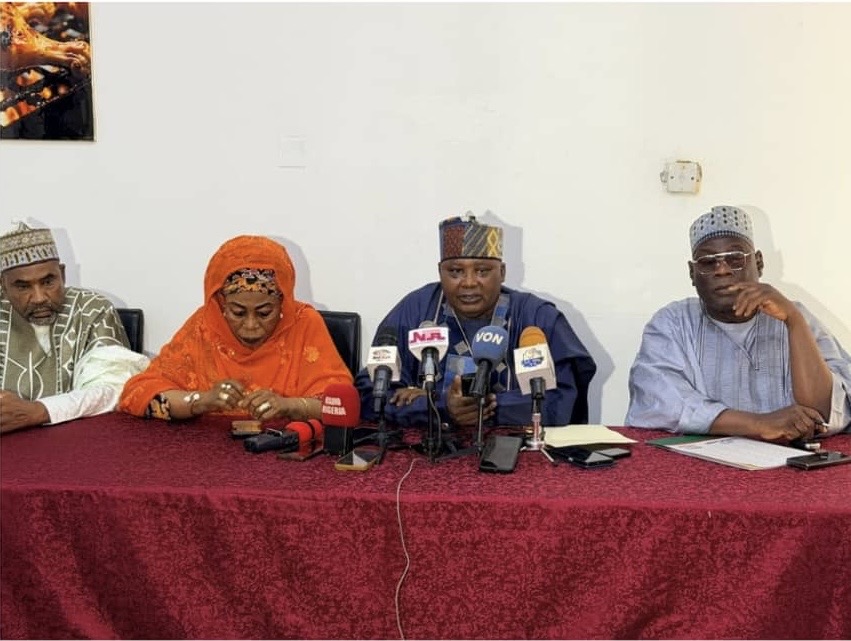
Addressing journalists in Abuja, Chairman of the Forum, Alhaji Abdullahi Yelwa, said Northern Nigeria was facing unprecedented challenges that required coordinated intervention from government, community leaders and citizens to avert further deterioration.
Speaking during a press conference at Statement Hotel, Abuja, Yelwa noted that the region had endured years of terrorism, banditry, kidnappings and economic decline, with security challenges worsening significantly since the beginning of 2026.
He paid tribute to members of the Armed Forces and intelligence community for their sacrifices in defending the country, while lamenting recent incidents including the abduction of pupils and teachers in Oyo State and the death of Major General Abubakar Rabe while in the custody of bandits.
According to him, recurring attacks on communities, widespread displacement, growing humanitarian crises and the destruction of livelihoods have left many communities devastated, with countless families forced into internally displaced persons camps where they face hunger, disease and uncertainty.
Yelwa observed that journalists across the North witness the realities of insecurity daily, often arriving at attack scenes as first responders and documenting the human cost of terrorism and banditry.
He recalled that the Forum had earlier raised concerns during its Security Summit held in Kebbi State in November 2025, warning that the escalating wave of violence posed a serious threat to national unity and development.
The ABMPF Chairman noted that attacks on military formations in the North-East, killings in the North-Central region and persistent bandit activities across the North-West had exposed the limitations of existing security measures.
He therefore called on President Bola Ahmed Tinubu’s administration to declare a state of emergency on security in Northern Nigeria, backed by clearly defined operational strategies, measurable targets and implementation timelines.
The Forum also urged traditional rulers, political leaders and community stakeholders across the region to take greater responsibility for combating insecurity by identifying informants and collaborators who aid criminal groups.
Yelwa stressed that communities must become more involved in protecting themselves, arguing that the prevailing culture of waiting helplessly for security agencies to respond to attacks was no longer sustainable.
While commending the establishment of state police structures and forest guard initiatives, he maintained that only sustained and large-scale deployment of conventional military forces could effectively clear criminal elements from forests and other strongholds.
Beyond security concerns, the Forum expressed serious worries over the state of agriculture in Northern Nigeria, attributing declining productivity to insecurity, climate-related challenges and policy shortcomings.
According to the Forum, available studies indicate that crop yields in parts of the region have fallen by between 25 and 50 per cent, while millions of children remain out of school due to insurgency, poverty, low literacy levels and gender disparities.
The group further noted that a significant proportion of Nigerians living in multidimensional poverty reside in Northern Nigeria, underscoring the urgent need for comprehensive socio-economic interventions.
On political leadership, the Forum warned against divisive politics based on ethnic and religious sentiments, urging Northern voters to reject politicians who exploit differences for personal gain.
Yelwa lamented the decline of the region’s once celebrated political culture, describing contemporary politics as increasingly driven by selfish interests rather than collective development objectives.
Addressing economic challenges, the Forum called on governments at all levels to develop a comprehensive development blueprint for the North, capable of tackling poverty, unemployment and industrial decline.
The group specifically commended the Benue State Government for promoting agro-processing industries, particularly in orange production, and encouraged other states to leverage their comparative advantages to stimulate economic growth and job creation.
It also urged governors to prioritise investments in education and human capital development over prestige projects, warning that the growing number of out-of-school children poses a major threat to the region’s future stability and prosperity.
The Forum further advocated the development of a functional railway network across Northern Nigeria to enhance transportation, trade and regional integration.
Contributing to the discussion, Chairman of Optimal Image Media, Alhaji Shu’aibu Mungadi, described the Forum as a platform dedicated to amplifying the voices of ordinary Nigerians affected by insecurity, poverty and poor governance.
He said many citizens across the North continue to suffer in silence, stressing that the Forum would continue to advocate policies that promote peace, development and accountability.
Mungadi also highlighted the enormous mineral wealth spread across Northern states, including Zamfara, Kebbi, Katsina, Niger and Nasarawa, expressing concern that local communities have not benefited sufficiently from the exploitation of these resources.
He called on the Federal Government to establish stronger regulatory frameworks to monitor mining activities, curb illegal exploitation and ensure that revenues generated from mineral resources contribute meaningfully to regional and national development.
The media executive further advocated tougher sanctions against individuals and groups involved in the illegal diversion and theft of the region’s mineral resources.
The Forum concluded by reaffirming its readiness to collaborate with governments, development partners and relevant stakeholders in addressing the numerous challenges confronting Northern Nigeria and promoting sustainable development across the region.