

By Nkechi Eze
Nigeria’s anti-narcotics architecture received a major boost on Monday as the Nigeria Customs Service and the National Drug Law Enforcement Agency agreed to establish a joint operational committee aimed at strengthening enforcement, accountability, and inter-agency coordination in the fight against illicit drug trafficking.
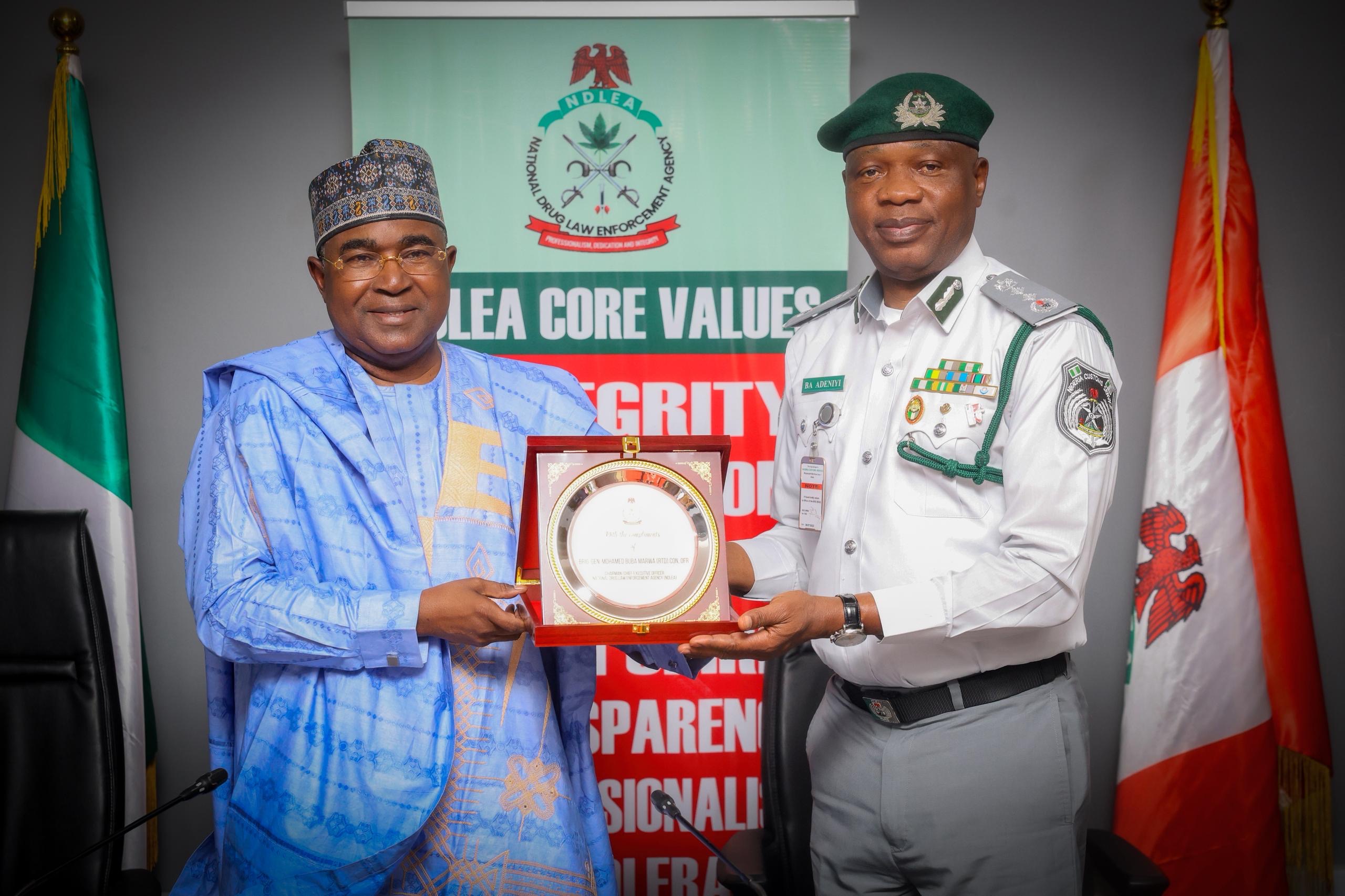
The decision was reached during a high-level strategic meeting held at the NDLEA Headquarters in Jahi, Abuja, between the Comptroller-General of Customs, Adewale Adeniyi, and the NDLEA Chairman/Chief Executive Officer, Mohamed Buba Marwa.
According to officials familiar with the deliberations, the meeting focused on tightening existing collaboration frameworks, improving post-seizure accountability, and building a more seamless enforcement chain from interception to prosecution and final disposal of narcotics.
Adeniyi, who led a delegation of senior Customs officers, stressed that Nigeria’s effectiveness in combating drug trafficking is increasingly under global scrutiny, particularly as the West African corridor remains a focal point for international narcotics control efforts. He noted that while the Customs Service has sustained high-volume seizures, especially through key formations such as Apapa, there is an urgent need to ensure that such efforts translate into credible prosecution outcomes and transparent destruction processes.
He emphasized that enforcement must not end at interception, warning that lapses in case tracking, delayed destruction of seized substances, and weak feedback mechanisms could undermine Nigeria’s standing with international partners and weaken the overall justice chain.
To address these gaps, the Customs boss proposed a structured framework that would institutionalize joint destruction exercises for unclaimed seizures, periodic case status reporting, coordinated court processes, and dedicated liaison channels across operational commands.
Responding, Marwa acknowledged the concerns raised by Customs, describing them as both legitimate and necessary for institutional strengthening. He reiterated the NDLEA’s commitment to transparency and disclosed that the agency is prepared to transition from ad hoc handover practices to a more formalized reporting system that guarantees updates on investigations, prosecutions, and disposal of narcotics received from partner agencies.
He announced the immediate constitution of a joint committee tasked with reviewing grey areas in the existing Memorandum of Understanding between both agencies. The committee is expected to recommend clearer operational procedures and, where necessary, develop a supplementary agreement to enhance efficiency and accountability.
The development signals a renewed push by Nigeria’s frontline enforcement agencies to close operational gaps, strengthen institutional synergy, and present a more unified and credible front in the global fight against drug trafficking and organised crime.