

By Nkechi Eze
The Chairman of the Independent National Electoral Commission (INEC), Professor Joash Amupitan, has urged broadcast organisations across Nigeria to uphold professionalism, fairness and factual reporting as the country prepares for the 2027 general elections, warning that elections are increasingly contested within the information space.
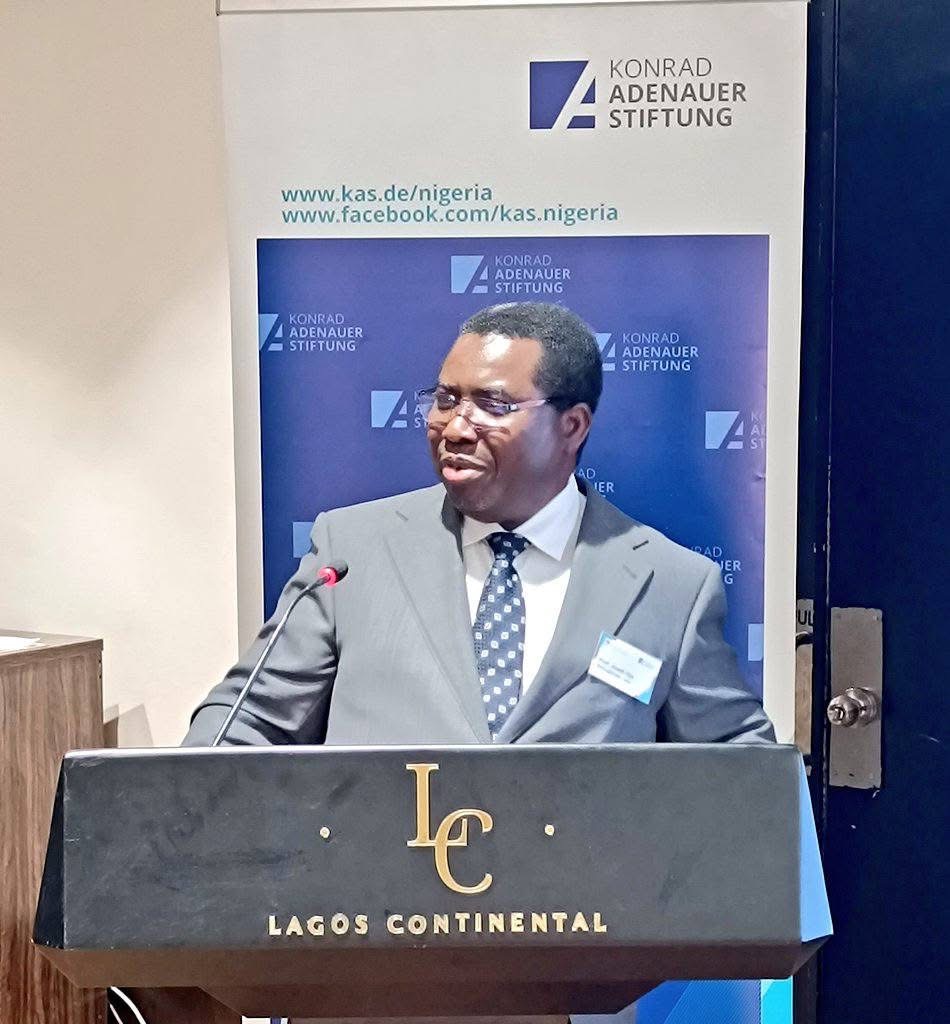
Prof. Amupitan made the call while delivering a paper titled “The Management of the Airwaves: An Assessment of the 2026 Nigerian Electoral Act on Broadcast Media Coverage of Elections” at the 81st General Assembly of the Broadcasting Organisations of Nigeria (BON), where he examined the role of broadcast media in ensuring credible elections under the Electoral Act 2026.
Addressing chief executives and leaders of broadcast organisations, the INEC chairman described the information environment as a decisive arena for democratic competition, noting that the credibility of elections now depends not only on the conduct of voting but also on the integrity of media coverage.
He commended BON member stations for their professionalism during the 2025 governorship election in Anambra State and the 2026 area council elections in the Federal Capital Territory, stating that the media served as a crucial bridge between electoral processes and public trust.
“Your airwaves have become the primary infrastructure of our democracy. If they are clear, the nation sees the truth; if they are clouded by misinformation, the sovereign will of the people is threatened,” he said.
According to him, broadcast media remain the most influential platforms for political communication in Nigeria, shaping public opinion, framing electoral narratives and influencing voter behaviour. However, he noted that the growing influence of the media has also heightened concerns about unequal access, misinformation, hate speech and potential manipulation by political actors.
Prof. Amupitan explained that the Electoral Act 2026 represents a significant milestone in Nigeria’s electoral reform journey, introducing provisions designed to regulate political advertising, guarantee equitable access to broadcast platforms and curb the dissemination of harmful or inciting content.
He highlighted key provisions of the law, particularly Section 99, which mandates equal allocation of airtime among political parties and candidates at similar hours of the day. The law also prohibits the use of state apparatus, including publicly owned media, to favour or disadvantage any political party or candidate during elections.
“With 23 registered political parties, the Act mandates fairness and balance. You must provide a level playing field, ensuring that no single interest group monopolises the airwaves,” he said.
The INEC chairman explained that violations of the provisions on equal airtime constitute criminal offences, attracting fines of up to ₦2 million for media organisations on first conviction and ₦5 million for subsequent offences. Principal officers of defaulting media houses may also face fines of ₦1 million or imprisonment for six months.
He further noted that the Act regulates the content of political broadcasts by prohibiting hate speech, abusive language and inflammatory rhetoric capable of provoking ethnic, religious or sectional tensions, stressing that such measures are necessary to preserve electoral integrity and encourage issue-based campaigning.
Prof. Amupitan also drew attention to provisions introducing a “media blackout period” that prohibits political campaign broadcasts within 24 hours before polling day, explaining that the measure is designed to create a calm environment for voters to reflect and make independent decisions.
Despite these reforms, the INEC chairman identified several structural challenges affecting airwaves management during elections, including the dominance of incumbents in state-owned media, the commercialisation of political airtime and weak enforcement of regulatory provisions.
He also highlighted institutional overlaps between regulatory bodies such as INEC and the National Broadcasting Commission (NBC), as well as emerging challenges arising from the convergence of traditional broadcasting with digital and social media platforms.
According to him, these issues create gaps between legal provisions and actual practice, making it difficult to fully guarantee equitable media coverage during elections.
To address these challenges, Prof. Amupitan proposed a number of reforms, including clearer legal definitions of equal media access, stronger coordination between regulatory institutions and greater independence for broadcast regulators.
He also urged media organisations to adopt stronger editorial guidelines, strengthen fact-checking mechanisms and ensure transparency in political advertising.
With preparations for the 2027 elections underway, the INEC chairman warned that misinformation amplified through broadcast platforms could pose a significant threat to democratic stability.
“As we sit here today, the countdown has begun. There are 283 days until the Presidential and National Assembly elections on January 16, 2027, and 304 days until the governorship and state assembly elections on February 6, 2027,” he said.
Prof. Amupitan called for stronger collaboration between INEC, BON, security agencies and the judiciary to safeguard the information space during the electoral cycle.
He also challenged broadcast executives to prioritise professionalism over profit, cautioning that the temptation to prioritise lucrative political advertisements over balanced reporting could undermine democratic accountability.
“In the 2027 general election, the most dangerous weapon will not be a ballot snatcher’s gun, but a smartphone user’s lie amplified by an uncritical broadcast station,” he warned.
The INEC chairman concluded by urging broadcasters to promote accurate reporting at all times and support voter mobilisation efforts, stressing that credible elections depend not only on transparent voting processes but also on a fair and responsible media environment that enables citizens to make informed political choices.