By Nkechi Eze
The National Drug Law Enforcement Agency (NDLEA) and the United States Drug Enforcement Administration (DEA) have reaffirmed their commitment to strengthening collaboration to combat drug trafficking networks and disrupt the financial pipelines that fuel terrorism and other forms of organised crime.
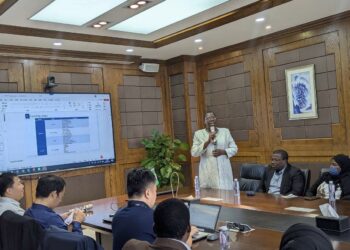
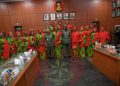
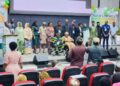
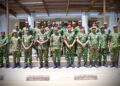
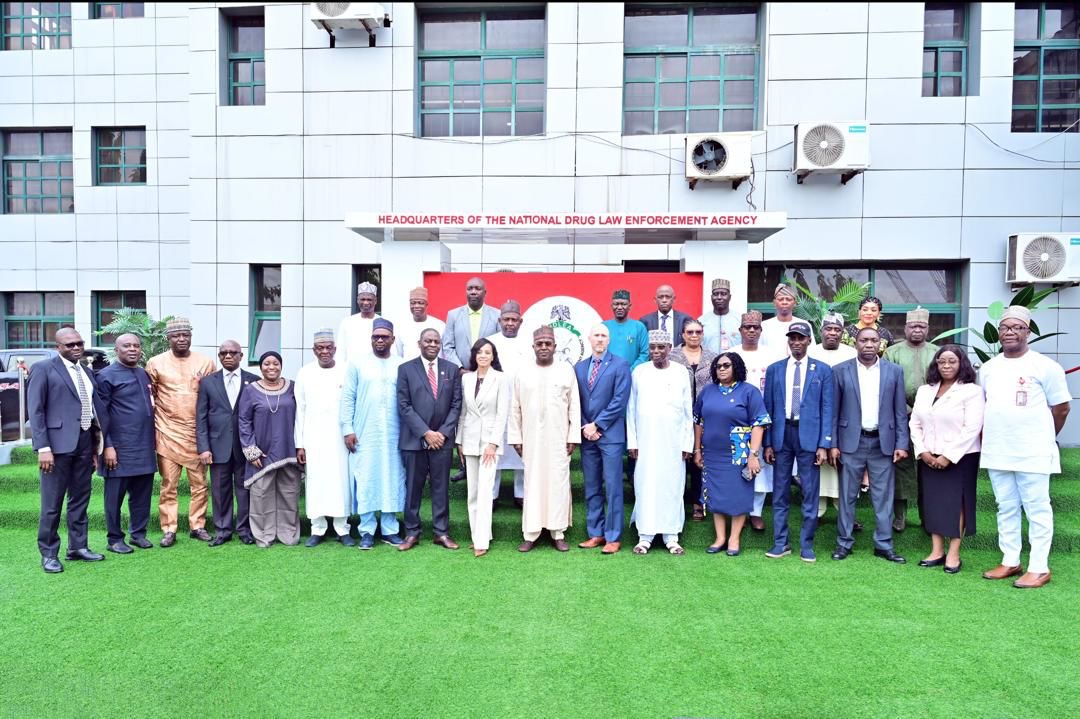
The pledge was made during a bilateral strategic counter-narcotics workshop held at the NDLEA headquarters in Abuja on Tuesday, March 31, 2026.
According to a statement by the NDLEA Director of Media and Advocacy, Femi Babafemi, the workshop brought together senior law enforcement officials from Nigeria and the United States to align strategies for tackling evolving drug-related threats.
Speaking at the opening session, the Chairman and Chief Executive Officer of the NDLEA, Mohamed Buba Marwa, described the engagement as both strategic and timely, noting that it was designed to align law enforcement leadership from both countries on the most pressing drug threats affecting their nations and the wider international community.
“This workshop is to align law enforcement leadership from Nigeria and the United States on the most significant drug-related threats affecting our two countries, as well as the wider international community. Our shared objective is to engage in frank, solution-driven discussions that will culminate in a joint declaration of shared priorities and a coordinated action plan for the next twelve months,” Marwa said.
He warned that the global drug problem continues to evolve in complexity and scale, particularly with the growing nexus between drug trafficking and terrorism.
“Of particular concern is the well-established nexus between illicit drug trafficking and terrorism. Drug proceeds have become a major source of financing for terrorist networks and violent extremist groups around the world. This dangerous linkage, rightly described by the United States as narco-terrorism, poses a grave threat to global peace, security, and stability,” he stated.
Marwa added that the funds generated from the illegal drug trade are often used to procure weapons that destabilise regions and fuel violent conflicts.
“The proceeds from the poison sold on our streets are the same funds used to purchase the weapons that destabilise our regions. By attacking the drug trade, we are simultaneously starving the engines of terrorism,” he said.
The NDLEA boss also warned that Nigeria’s strategic geographic location has made it increasingly attractive to international drug trafficking organisations.
He explained that as enforcement pressure intensifies on drug cartels in Latin America, particularly under policies implemented by Donald Trump’s administration, criminal networks are shifting operations towards Africa, with Nigeria becoming a key transit hub.
“Today, a significant proportion of illicit drugs entering Nigeria are not intended for local consumption alone; rather, they are destined for onward trafficking to Europe, North America, and Asia. This underscores the transnational nature of the threat we face and reinforces the urgency of coordinated international action,” Marwa noted.
He stressed that the workshop provides a critical opportunity to deepen collaboration, strengthen intelligence-driven operations and build a unified front against drug cartels and their associated criminal networks.
“The NDLEA is fully committed to this partnership. We are excited about the prospects it holds and confident that through sustained cooperation with the DEA and the broader support of the United States Government, we can achieve meaningful and measurable outcomes,” he said.
According to him, the key outcome of the workshop will be a clearly defined framework for cooperation, with Nigeria taking leadership in executing agreed action points within its jurisdiction, while the United States ensures alignment with its national interests and reinforces coordinated efforts against shared threats.
“This partnership is not merely symbolic, it is operational, practical, and results-oriented. In essence, we are here to synchronize our intelligence, our tactics, and our vision. As such, this is not merely a diplomatic exercise; it is a strategic necessity,” he added.
Marwa urged participants to approach the discussions with openness and a strong sense of responsibility, stressing that success would ultimately be measured by the effectiveness of actions taken after the workshop.
“Together, we can disrupt trafficking networks, dismantle criminal enterprises, and safeguard our societies from the devastating impact of illicit drugs,” he said.
In her remarks, the DEA Country Attaché in Nigeria, Daphne Morrison, commended the NDLEA for hosting the workshop and praised the agency’s achievements under Marwa’s leadership.
“I would like to start by acknowledging the tremendous strides NDLEA has made under the leadership of Chairman Marwa. The record-breaking seizures, arrests, and convictions over the past few years are a testament to his dedication and the successes of his war against drug abuse,” she said.
Morrison explained that strengthening cooperation between the DEA and NDLEA was one of her top priorities upon assuming her role in Nigeria.
“When I was posted here almost a year ago, one of my top priorities was to meet with Chairman Marwa to reaffirm the US DEA’s commitment to this critical partnership. This workshop is not merely a meeting—it is a declaration of our unified stand against transnational criminal organisations that seek to turn Nigeria into a drug trafficking hub,” she stated.
She added that the workshop would help align both agencies’ operational strategies for 2026, particularly in the areas of intelligence sharing, joint operations and training.
“Our goal is to ensure that the collaboration between the DEA and NDLEA is proactive and geared toward results, disrupting drug financial networks and taking down high-level targets,” Morrison said.
According to her, the partnership between both agencies is anchored on shared responsibility and collective action.
She therefore urged participants to use the workshop to develop innovative and actionable strategies that would strengthen law enforcement capacity, protect communities and secure a safer future for both Nigeria and the United States.