

By Nkechi Eze
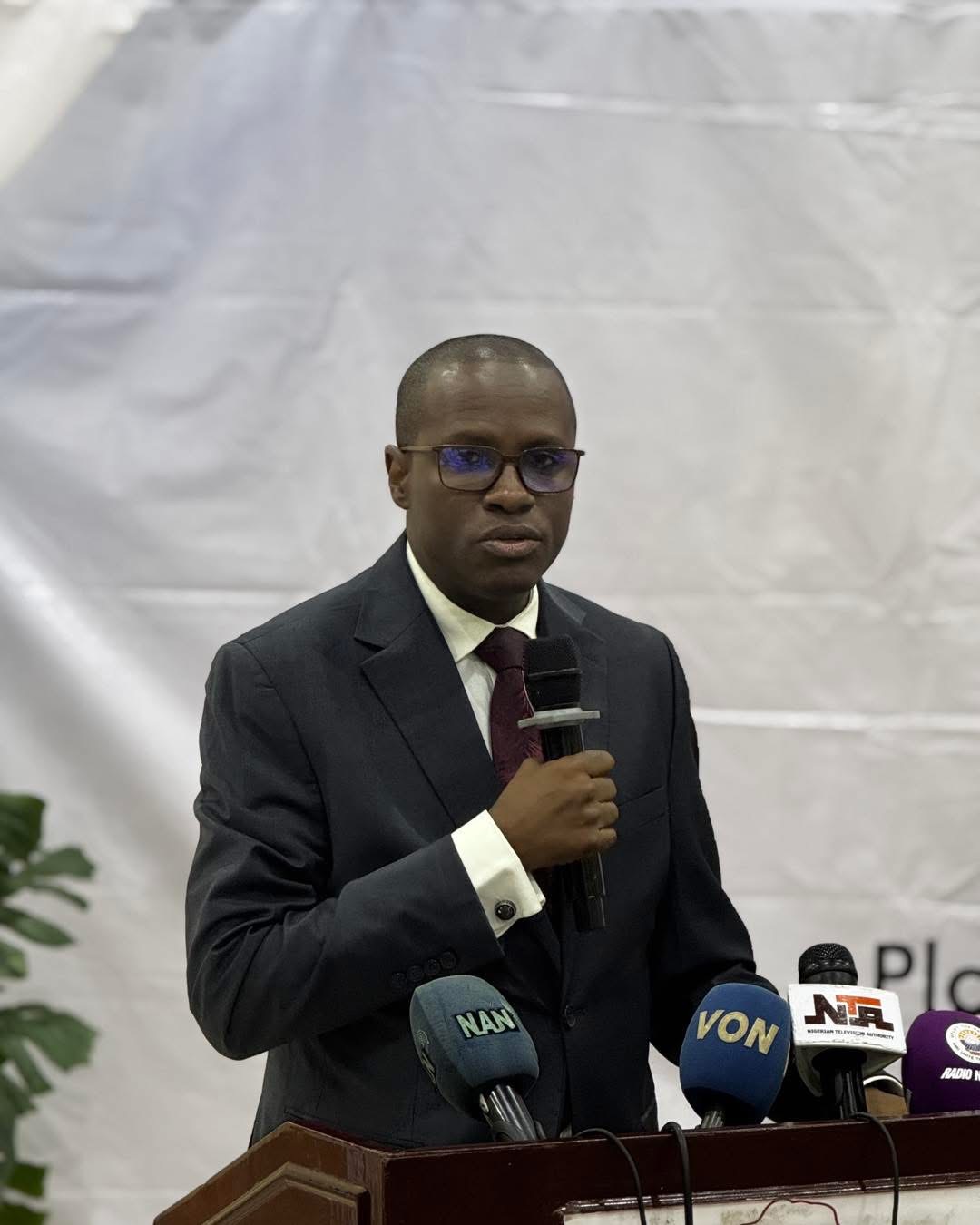
Nigeria’s anti-corruption war received renewed momentum on Thursday in Abuja as the Chairman of the Independent Corrupt Practices and Other Related Offences Commission, Dr. Musa Adamu Aliyu, SAN, called for stronger collaboration between the media and anti-graft institutions, stressing that the press remains one of the most powerful forces in holding leaders accountable and safeguarding transparency in governance.
Aliyu made the call during a strategic workshop between the ICPC and the Nigerian Union of Journalists, where journalists, government officials and media stakeholders gathered to deliberate on the theme “Reinvigorating the National Anti-Corruption Strategy (2022–2026): A Post-Assessment Roadmap for the Fourth Estate.”
In his welcome address, the ICPC chairman described the meeting as a continuation of institutional dialogue aimed at strengthening the partnership between anti-corruption agencies and the media. He recalled that the workshop followed an earlier engagement held in October 2024 and commended the NUJ for its sustained commitment to professionalism and truth in journalism.
“It is my honour and privilege to welcome you to this important engagement between the ICPC and the Nigerian Union of Journalists,” he said. “Today’s theme is both timely and forward-looking. It challenges us not only to reflect on progress made but, more importantly, to chart a clear and practical path for the future, one that fully integrates the media as a central partner in anti-corruption efforts.”
Aliyu emphasized that the workshop was designed not merely as a discussion forum but as a strategic platform for generating practical ideas and strengthening institutional cooperation ahead of the next phase of Nigeria’s National Anti-Corruption Strategy.
He stressed that journalists occupy a pivotal position in shaping national accountability and civic responsibility.
“The media remains one of the most powerful instruments in the fight against corruption. As journalists, you are not merely observers, you are watchdogs, agenda-setters and catalysts for reform,” he said.
“Your role in investigating and exposing corruption, amplifying citizens’ voices and holding public officials accountable is indispensable. Indeed, without a vibrant, responsible and ethical press, the anti-corruption fight risks losing one of its strongest pillars.”
The ICPC chairman, however, stressed that credibility and ethical responsibility remain central to the media’s effectiveness, noting that accurate and fair reporting helps build public trust and strengthens institutional integrity.
Highlighting the commission’s prevention-focused strategy, Aliyu disclosed that ICPC has intensified oversight of government projects through its Constituency and Executive Projects Tracking Initiative.
He revealed that under recent phases of the initiative, the commission monitored about 950 projects across 26 states and the Federal Capital Territory, with a combined value of approximately ₦415.25 billion.
In addition, projects under the Federal Ministry of Works valued at over ₦21.23 trillion were also tracked as part of the commission’s preventive oversight efforts.
According to him, the initiative has already produced tangible results by exposing abandoned projects, compelling contractors back to construction sites and ensuring improved accountability in public service delivery.
“Project tracking is not just an oversight function, it is a preventive tool that ensures value for money and deters corruption before it occurs,” he said.
Aliyu further stressed that corruption cannot be defeated by government institutions alone, calling for deeper collaboration between anti-corruption agencies and the media to strengthen investigative reporting and public awareness.
“The fight against corruption is a shared responsibility. It requires stronger collaboration between institutions and the media,” he noted, urging journalists to actively contribute ideas and perspectives toward strengthening Nigeria’s anti-corruption framework.
Declaring the workshop open on behalf of the Minister of Information and National Orientation, Mohammed Idris Malagi, the Director-General of the Voice of Nigeria, Jibrin Baba Ndace, emphasized that modern leadership requires strategic engagement with the media.
Ndace, who represented the minister as Special Guest of Honour, commended the ICPC chairman for strengthening transparency and institutional visibility through media partnership.
“In the 21st century, no modern leader can afford not to lead from the front, and no modern leader can afford to lead without partnering with the media,” he said.
He described journalists as some of the most loyal partners any institution could have, stressing that their commitment to professional reporting helps counter misinformation and strengthen national discourse.
He also warned against the growing challenge of fake news and misinformation, urging professional journalists to uphold their standards in an era where social media platforms enable unverified information to circulate widely.
“We are in an age of noise, misinformation and disinformation,” he said. “But professionals like those gathered here remain the buffers who ensure that credible information prevails.”
Ndace further explained that the Federal Ministry of Information’s five-pillar communication agenda focuses on restoring public trust, amplifying government policies, reorienting national values, modernising technology and building innovation within the media ecosystem.
He assured participants that Voice of Nigeria would continue to partner with anti-corruption institutions to amplify messages promoting transparency and accountability both within Nigeria and internationally.
In a goodwill message delivered on behalf of the Managing Director of the News Agency of Nigeria, Ali Muhammad Ali, the Special Assistant on Editorial Matters, Ephraim Sheyin, said the theme of the workshop was particularly significant given Nigeria’s corruption challenges.
He noted that journalists occupy a strategic position in the anti-corruption struggle, both through their historical role in national development and their constitutional mandate as the Fourth Estate.
Sheyin referenced global corruption indices showing that Nigeria ranked 140th out of 180 countries in 2024 and dropped further to 142nd in 2025, underscoring the scale of the challenge confronting the country.
He added that corruption in Nigeria manifests in multiple forms, from public procurement fraud to political patronage and resource mismanagement, and stressed that journalists remain central to exposing these abuses.
However, he also highlighted several risks faced by investigative reporters, including threats to personal safety, inadequate whistleblower protections and restricted access to information from government institutions.
“These systemic roadblocks hinder journalists from doing their job of exposing corruption and bringing culprits to book,” he noted.
Also delivering a goodwill message, Chairman of the Senate Committee on Anti-Corruption and Financial Crimes, represented by the clerk of the committee, Emmanuel Udende, described corruption as a direct threat to national development and institutional credibility.
He warned that corruption erodes public trust, distorts economic growth and deprives citizens of basic services such as healthcare, education and infrastructure.
According to him, the media possesses enormous influence not only to inform the public but also to mobilize citizens and inspire accountability through investigative journalism and public enlightenment.
Udende reaffirmed the commitment of the 10th National Assembly to strengthening legislative frameworks and oversight mechanisms that promote transparency and accountability across all sectors.
He urged participants at the workshop to leverage the engagement to develop actionable strategies that would transform public awareness into sustained national momentum against corruption.
The ICPC chairman concluded by urging journalists and anti-corruption institutions to renew their collective commitment toward building a transparent and accountable society.
“The Nigeria we all desire, one defined by transparency, accountability and equitable development can only be achieved through sustained collaboration between institutions and the media,” Aliyu said. “As we move forward in reinvigorating the National Anti-Corruption Strategy, let us remember that the Fourth Estate is not just a stakeholder, it is a cornerstone of the process.”