

By Nkechi Eze
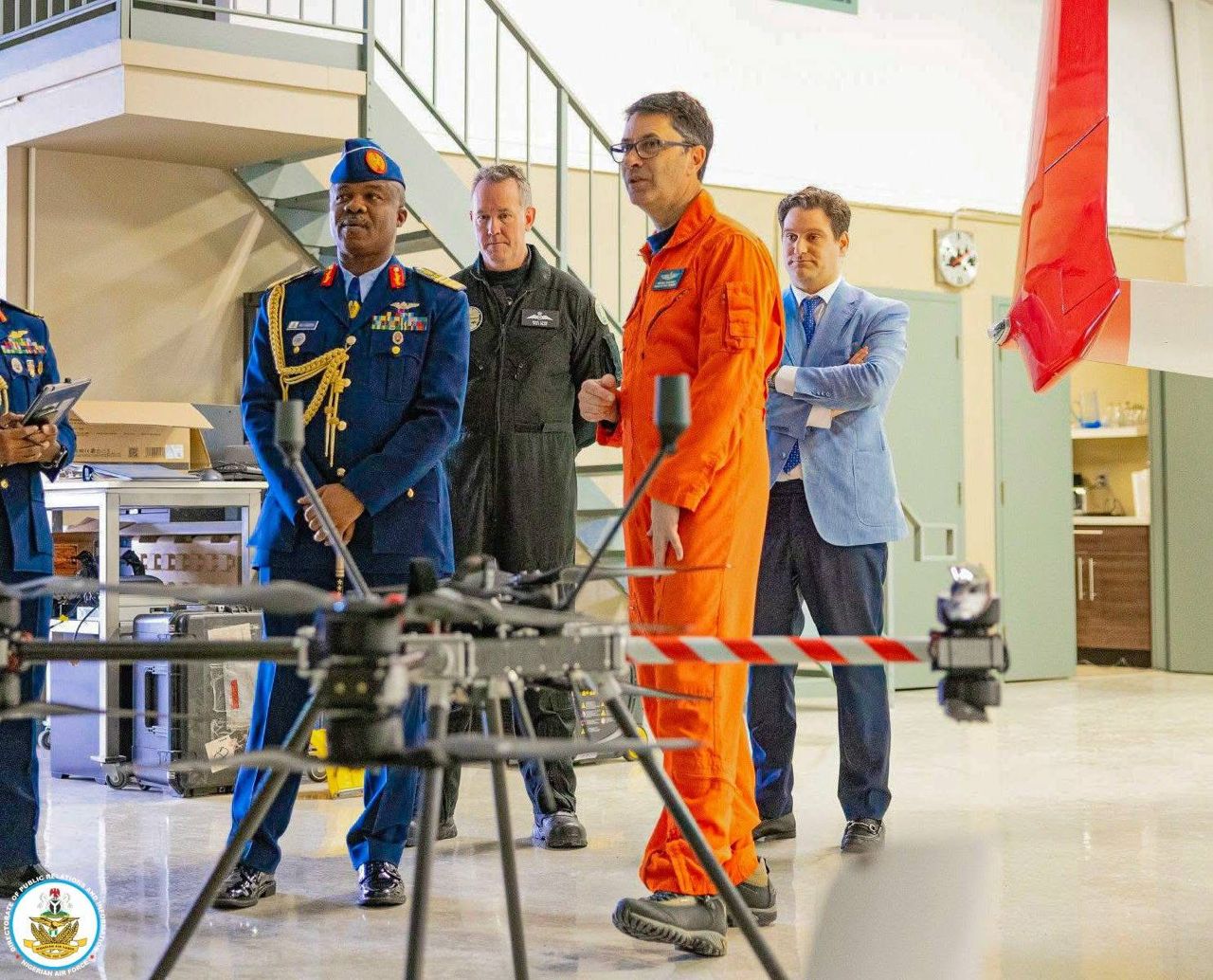
The Chief of the Air Staff, Sunday Kelvin Aneke, has led a high-level delegation of the Nigerian Air Force on a strategic facility visit to leading aviation training institutions in London, in a move aimed at advancing the Service’s operational capability development and strengthening international defence collaboration.
The visit, which took the delegation to the International Test Pilots School and the International Tactical Training Centre, forms part of ongoing efforts by the Nigerian Air Force to adopt global best practices and enhance mission effectiveness through specialised training and technological partnerships.
During the engagements, key areas of cooperation were explored, including fighter lead-in training, helicopter tactical training, Unmanned Aerial Systems operator development, technical training support, as well as flight test training and collaborative research initiatives. The discussions also extended to potential collaboration in the overhaul and upgrade of NAF aircraft, alongside the development of advanced flight simulator systems tailored to the Service’s evolving operational requirements.
Air Marshal Aneke emphasised the strategic importance of building enduring international partnerships that would accelerate the professional development of NAF personnel and strengthen the Service’s technological edge. He stated that the Nigerian Air Force remains resolute in its pursuit of operational excellence through deliberate collaboration with globally recognised institutions.
“The Nigerian Air Force remains resolute in its pursuit of operational excellence through strategic collaboration with globally recognised training institutions. This visit reflects our deliberate effort to strengthen capacity development, enhance airpower effectiveness, and ensure the sustained modernisation of our platforms and human capital,” he said.
He noted that such engagements are critical to sustaining the Service’s modernisation drive, particularly in an era defined by rapidly evolving security challenges and technological advancements in airpower operations.
In their response, representatives of the host institutions commended the Nigerian Air Force for its proactive and forward-looking approach to capability enhancement, expressing readiness to support the Service’s transformation agenda. They highlighted the importance of structured cooperation in specialised aviation training and technological integration, noting that such partnerships would not only strengthen operational capacity but also promote mutual growth and knowledge exchange.
The visit further underscores the Nigerian Air Force’s broader strategic vision under Air Marshal Aneke’s leadership to build a technologically driven, highly professional, and globally connected force capable of effectively addressing contemporary and emerging security threats.
Defence observers note that the engagement signals a deepening of international military cooperation and reflects Nigeria’s commitment to leveraging global expertise in strengthening its airpower capabilities, particularly in areas of advanced training, simulation, and aircraft maintenance systems.