By Nkechi Eze
The Independent Corrupt Practices and Other Related Offences Commission (ICPC) has reaffirmed its commitment to forging a formal partnership with the National Commission for Almajiri and Out-of-School Children Education (NCAOOSE) as part of broader national efforts to reintegrate millions of vulnerable children into the education system and strengthen transparency in educational interventions.
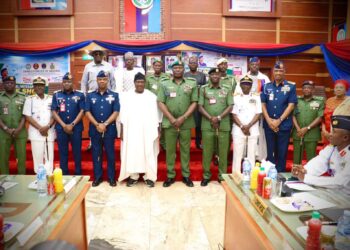
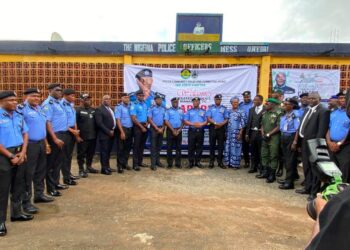
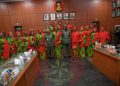
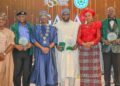
The assurance was given by the ICPC Chairman, Musa Adamu Aliyu, SAN, when he received the Executive Secretary of NCAOOSE, Mohammed Sani Idris, and his delegation during a courtesy visit to the Commission’s headquarters in Abuja, according to an official statement signed by the Commission’s spokesperson, J. Okor Odey.
Welcoming the delegation, Dr. Aliyu framed the engagement within the larger context of national survival and leadership continuity, describing NCAOOSE as a critical institution in safeguarding Nigeria’s future. Drawing from his experience as Attorney-General in Jigawa State, he noted that keeping children in school remains a difficult but essential task.
He stressed that children must remain under responsible parental guidance while receiving quality education in order to preserve the nation’s future leadership, cautioning against burdening young persons with responsibilities beyond their years.
“The issues raised by the Executive Secretary are not merely administrative; they are fundamental to the preservation of our nation’s future leadership,” Dr. Aliyu stated.
In a move aimed at translating commitment into measurable outcomes, the ICPC Chairman proposed the swift finalisation of a Memorandum of Understanding between both agencies. He explained that the formal framework would enable the Commission to deploy strategic anti-corruption mechanisms, including Corruption Risk Assessment tools, to proactively block financial leakages and strengthen transparency within NCAOOSE’s education intervention structures.
Dr. Aliyu also highlighted the role of the Anti-Corruption Academy of Nigeria in driving behavioural change and building institutional integrity. He pledged that the Commission would leverage its public education and capacity-building platforms to support NCAOOSE in delivering its mandate effectively and transparently.
To fast-track the collaboration, he directed the heads of ICPC’s Public Education, External Cooperation, and the Academy departments to immediately engage their counterparts in NCAOOSE to identify operational synergies and advance the proposed partnership.
Earlier in his remarks, Dr. Idris painted a grim picture of the scale of the crisis, citing UNICEF statistics which indicate that over 18.3 million children are out of school in Nigeria. He noted that Almajiri and other vulnerable children are not only deprived of education but are also exposed to serious risks, including sexual abuse, medical neglect and other societal dangers.
He lamented what he described as a growing abdication of parental responsibility, stressing that child neglect and street begging run contrary to moral values and religious teachings. It is within this context of deep vulnerability, he argued, that a robust partnership with ICPC becomes indispensable.
According to him, corruption-related factors—particularly in advocacy, funding allocation and programme implementation—must be addressed decisively to close the education gap and protect vulnerable children.
Dr. Idris was candid about the operational constraints facing NCAOOSE. He revealed that although the Commission currently operates about 200 learning centres and has identified over 700,000 out-of-school children for intervention, its activities are hampered by inadequate funding, lack of office infrastructure and insufficient operational vehicles.
To scale its impact and meet the magnitude of need across the country, he stressed that substantially increased financial backing is non-negotiable.
In a direct appeal, he urged the ICPC Chairman to leverage his office to advocate for improved budgetary support for NCAOOSE from the relevant authorities responsible for funding Ministries, Departments and Agencies.
The meeting ended with both institutions expressing firm commitment to sustained collaboration, united by a shared vision of promoting transparency, protecting vulnerable children and confronting systemic drivers responsible for Nigeria’s alarming out-of-school population.