By Nkechi Eze
After more than six decades of broken promises and difficult isolation, communities on the Mambila Plateau in Taraba State are witnessing a historic transformation as the Federal Government pushes forward with strategic road projects designed to reconnect the region to the rest of Nigeria and neighbouring Cameroon.
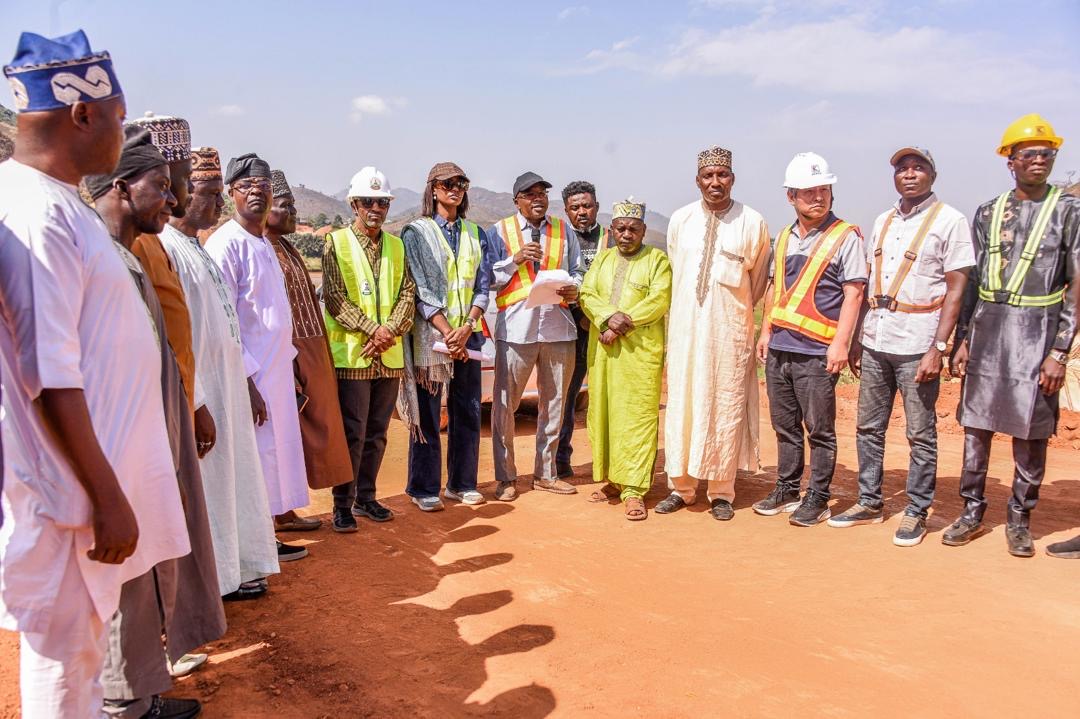
This development came to the fore as the Federal Ministry of Works concluded its National Media Tour of the North-East, inspecting key ongoing projects in Sardauna Local Government Area, including the reconstruction and rehabilitation of the Bali–Serti (Gashaka)–Gembu Road and the construction of the Gembu–Mbamnga–Yang (Lip) Road.
According to a statement signed by the Ministry’s Director of Information and Public Relations, Mohammed A. Ahmed, the Gembu–Mbamnga–Yang Road, which links Nigeria directly to the Cameroon border, represents more than an infrastructure project, it symbolises the fulfilment of a historic commitment dating back to 1961 when communities in the former Northern Cameroons voted in a United Nations plebiscite to join Nigeria.
One of the key conditions for their integration into Nigeria at the time was the construction of a functional road network to connect the area to the rest of the country, a promise that remained unfulfilled for generations until now.
The Mbondua of Mbamnga Chiefdom, His Royal Highness Alhaji Sale Mbondu, expressed profound appreciation to President Bola Tinubu and the Minister of Works, Senator David Umahi, for what he described as a life-changing intervention.
“This road has changed our story. For decades, we were cut off. People crossed rivers with canoes and ferries, and a journey of barely 15 kilometres could take up to six hours. Today, that suffering is coming to an end. We now feel that we truly belong to Nigeria,” the monarch declared.
He noted that the ongoing project has already begun to stimulate trade, tourism, investment, and social interaction, while significantly reducing travel time and improving access to healthcare and other essential services.
The royal father added that President Tinubu’s approval of the road project has fulfilled a promise made even before the communities formally became part of Nigeria.
“He just awarded the contract, not knowing that he has also fulfilled one of the promises made in 1961, before we joined Nigeria. So we are so happy and full of praise,” he said.
He also commended the contractor for completing one of the bridges along the route and praised the adoption of Continuous Reinforced Concrete Pavement technology, describing it as a wise and durable innovation that many residents were witnessing for the first time in their lives.
Earlier, the Federal Controller of Works in Taraba State, Engr. Ibrahim Usman, explained that the Gembu–Mbamnga–Yang Road project commenced on January 13, 2025, and is scheduled for completion on July 12, 2027.
He described the road as a critical transport corridor linking the Mambila Plateau to Cameroon and disclosed that overall progress had reached 20.76 per cent as of January 2026, with some components already between 25 and 30 per cent completed.
“One bridge has been completed, while work continues on a second bridge along the corridor,” Usman said.
A representative of the contracting firm, Mr Mathew Legacy, assured that despite challenges posed by difficult terrain and heavy rainfall common in the region, which experiences double rainfall maxima annually, the company remains committed to delivering the project to the highest standards.
Also speaking, the Vice Chairman of Sardauna Local Government Area, Hon. Paul Ngantem, described the road as transformative, noting that it would significantly improve daily life and economic activities across the plateau.
The Ministry’s media team also inspected the reconstruction and rehabilitation of the Bali–Serti (Gashaka)–Gembu Road, a 235-kilometre strategic highway being handled by S.C.C Nigeria Limited under the Federal Government’s infrastructure renewal programme.
The project, funded under the NNPCL Tax Credit Scheme, begins at Bali Roundabout and stretches across lowland and mountainous terrain to Gembu, serving as a major access route linking Taraba State to neighbouring Cameroon.
Although the Federal Government has suspended NNPCL funding for new road projects, President Tinubu has approved the continuation of ongoing works under alternative financing arrangements.
Officials said the Bali–Serti stretch has largely been asphalted, with road markings and finishing works ongoing, while other sections are receiving retaining walls, crash barriers, and slope protection measures to guard against landslides and falling rocks.
Engr. Usman disclosed that approximately 12 kilometres of wearing course and 18 kilometres of binder course have already been completed, alongside over four kilometres of asphalt shoulders to enhance durability and safety.
The Zonal Manager of S.C.C Nigeria Limited, Engr. Michael Rolbin, highlighted the technical complexity of working in mountainous terrain but expressed confidence that the project would ultimately unlock the region’s economic potential and improve connectivity.
In addition to the Mambila Plateau projects, the Federal Government also commissioned emergency intervention works on failed sections of the Jalingo–Mutum Biyu–Tella–Wukari Road, which had been severely damaged by flooding.
The Federal Controller of Works described the road as a vital transport artery linking the North-East to the North-Central, Southern states, and the Federal Capital Territory through Makurdi, and noted its importance to agricultural and commercial activities.
Representing the Minister of Works at the commissioning, the Chairman of the Nigerian Union of Journalists, Taraba State Council, Comrade Mathew Jen, praised President Tinubu and the Ministry for prioritising infrastructure development in the state.
The ongoing projects are expected to deliver far-reaching economic and social benefits, including reduced travel time, lower transportation and vehicle maintenance costs, improved safety, and greater integration of previously isolated communities.
For residents of the Mambila Plateau, however, the roads represent something even more profound—the end of decades of neglect and the beginning of a long-awaited connection to the rest of the nation they chose to join more than 60 years ago.