

By Nkechi Eze
The Nigeria Immigration Service (NIS) has taken a decisive step toward reinforcing transparency, accountability, and financial discipline by formally seeking technical support and capacity building on audited financial reporting from the Fiscal Responsibility Commission (FRC).
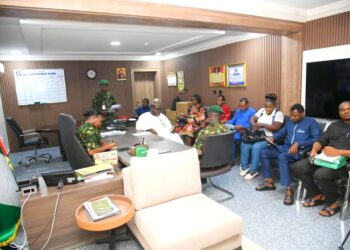
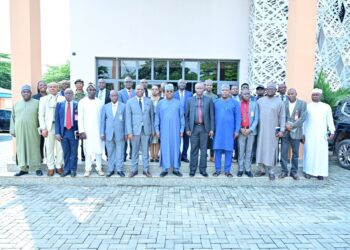
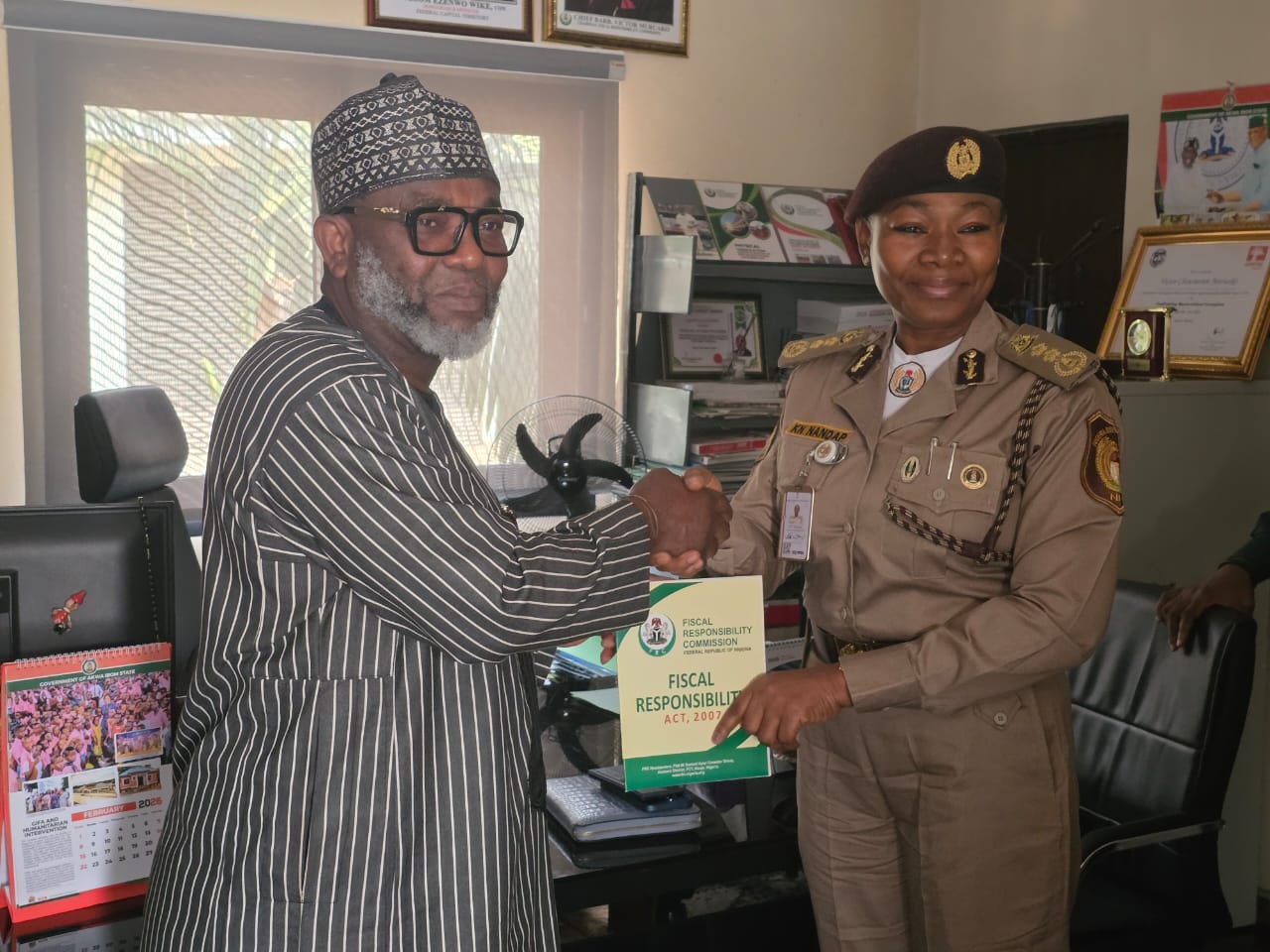
This move was disclosed during a one-day working visit by the Comptroller-General of the NIS, Kemi Nanna Nandap, to the Executive Chairman of the FRC, Victor Muruako, at the Commission’s headquarters in Asokoro, Abuja.
Welcoming the NIS delegation, Muruako commended the Service for its strategic role in securing Nigeria’s borders and facilitating lawful migration. He lauded the dedication and professionalism of NIS personnel, noting that effective border management remains a cornerstone of national security and economic stability.
The FRC Chairman underscored the importance of sound financial governance in public institutions, stressing that the preparation of annual audited financial reports is not merely a statutory obligation under the Fiscal Responsibility Act but also a global best practice that strengthens institutional credibility. According to him, consistent and transparent financial reporting enables agencies to track resource utilization more effectively, enhance decision-making processes, and build public trust.
“For an agency such as the Nigeria Immigration Service, which interfaces with international partners and multilateral organizations, the production of credible audited financial statements will significantly boost its international profile and reputation,” he stated. He added that robust financial accountability frameworks are critical for attracting international cooperation, technical assistance, and donor confidence.
To support the Service in achieving these objectives, Muruako directed the Director of Monitoring and Evaluation at the Commission, Bello Gulmare, to work closely with the NIS. He tasked the department with providing guidance, technical assistance, and institutional support aimed at strengthening the Service’s capacity to prepare and sustain high-quality audited financial reports in line with approved standards.
In her response, Nandap explained that the visit formed part of the Service’s broader reform agenda to deepen collaboration with key government institutions in promoting transparency, accountability, and fiscal responsibility. She emphasized that the NIS leadership recognizes the strategic importance of financial discipline in driving efficient service delivery and contributing meaningfully to Nigeria’s economic growth.
The Comptroller-General formally requested technical support and capacity-building programmes from the Commission to train relevant NIS personnel on the processes, standards, and requirements for preparing audited financial reports. She noted that such training would equip officers with the skills and knowledge necessary to meet statutory obligations while strengthening internal financial management systems.
Nandap further disclosed that since assuming office on March 1, 2024, she has remained committed to institutional reforms aimed at enhancing professionalism, accountability, and performance across the Service. She expressed confidence that strengthening staff capacity in financial reporting would improve operational efficiency and further reinforce the integrity of the Nigeria Immigration Service.
She also reaffirmed the Service’s readiness to collaborate with the Fiscal Responsibility Commission and other oversight institutions in advancing good governance and sustainable national development.
Other officials present at the meeting included Barrister Charles C. Abana, Director of Legal Investigation and Enforcement at the Fiscal Responsibility Commission; Alhaji Bello Gulmare, Director of Monitoring and Evaluation; Saidu Bashir Daura, Deputy Comptroller General, Finance and Accounts; and Azeez Gbolagade, Deputy Director, Revenue, Nigeria Immigration Service.
The meeting concluded with both agencies reiterating their shared commitment to fostering stronger inter-agency cooperation, promoting fiscal discipline, and ensuring that public resources are managed transparently and responsibly in the overall interest of Nigeria’s development.