

By Nkechi Eze
Nigeria’s long and troubled battle with corruption once again came under sharp international scrutiny as the 2025 Corruption Perceptions Index (CPI) revealed a worrying picture of stagnation, underscoring how deeply entrenched governance and accountability challenges continue to undermine public trust, democratic development and economic progress in Africa’s most populous nation.
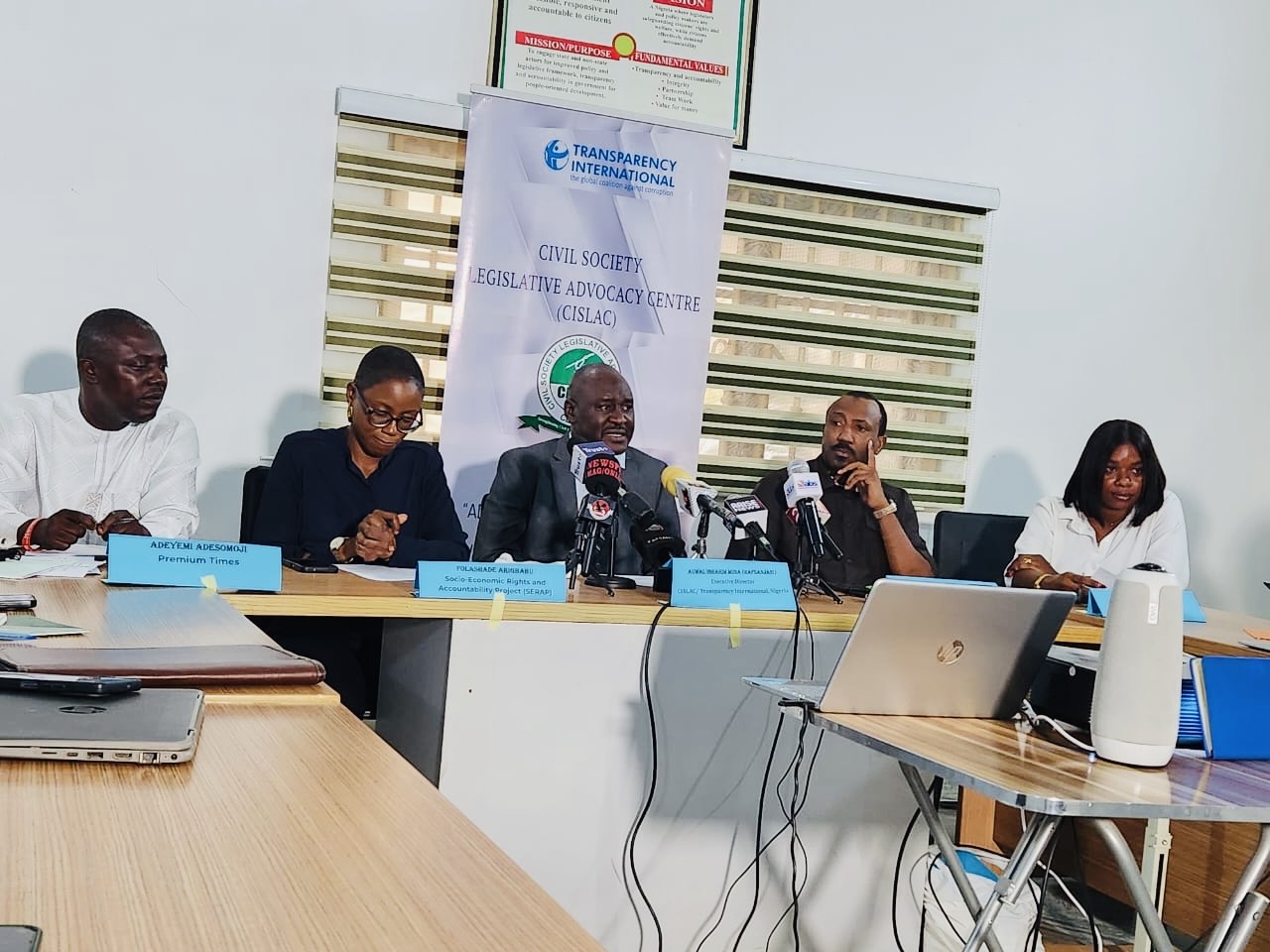
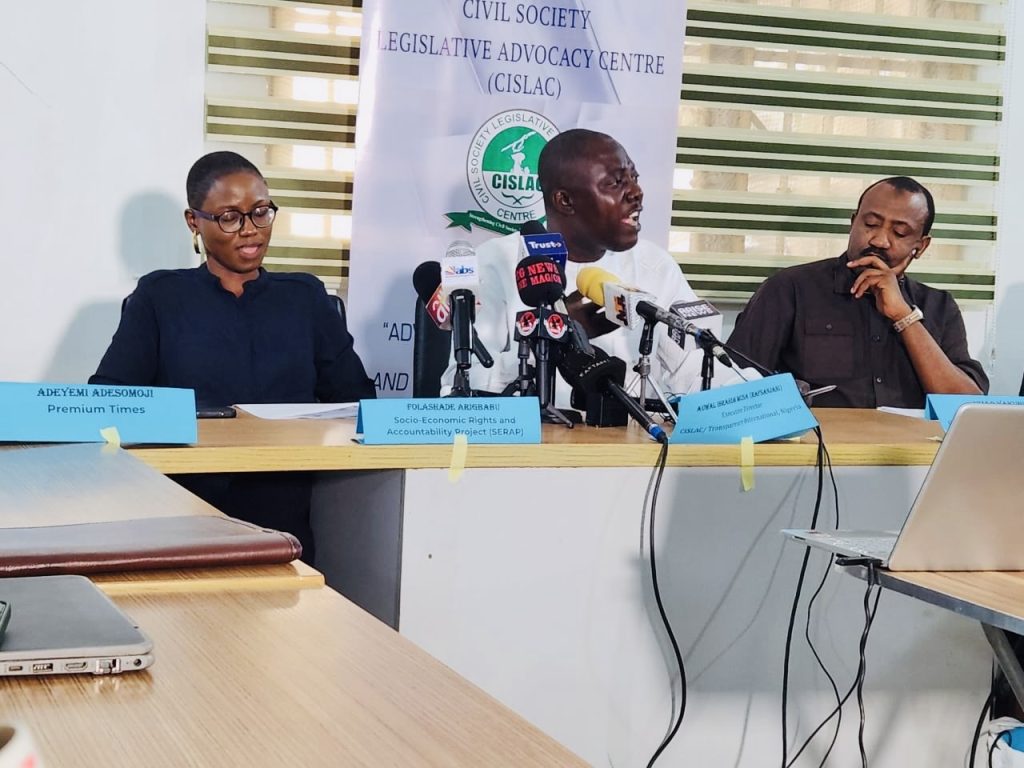
Issued by Transparency International and localised in Nigeria by the Civil Society Legislative Advocacy Centre (CISLAC/TI-Nigeria), the 2025 Corruption Perceptions Index was unveiled at a press conference by CISLAC’s Executive Director, Auwal Ibrahim Musa (Rafsanjani). He revealed that Nigeria scored 26 out of 100 in the 2025 assessment, unchanged from its 2024 performance. More concerning, however, is the country’s drop on the global rankings, falling from 140th place in 2024 to 142nd out of 180 countries surveyed in 2025. The result underscores a troubling stagnation in Nigeria’s fight against corruption, even amid sustained efforts by anti-corruption agencies, civil society groups, investigative media and committed citizens.
While the CPI does not document specific corruption cases, it remains the world’s most widely used and globally recognised indicator of public sector corruption, measuring how corruption is perceived by country experts and businesspeople. CISLAC/TI-Nigeria emphasised that the index is impartial, objective and based on rigorous methodologies applied by independent and reputable institutions, not Transparency International itself. As such, governments, private sector actors, development partners and civil society rely heavily on the CPI to shape policies, investments and strategic decisions.
Importantly, CISLAC clarified that Nigeria’s CPI performance should not be misconstrued as a direct evaluation of the country’s anti-corruption agencies. Bodies such as the Economic and Financial Crimes Commission (EFCC), the Independent Corrupt Practices and Other Related Offences Commission (ICPC) and the Nigeria Financial Intelligence Unit (NFIU) continue to demonstrate commitment and effort in addressing corruption. However, the broader governance environment and systemic weaknesses continue to dilute the impact of enforcement actions.
Against this backdrop, CISLAC/TI-Nigeria identified notable areas of progress that partly explain why Nigeria’s score did not deteriorate further. Chief among these is the improvement in asset recovery and repatriation efforts. In 2025, Nigeria recorded significant recoveries linked to domestic and international anti-corruption cooperation. The EFCC announced recoveries amounting to over ₦566 billion and approximately $411 million, alongside the recovery of 1,502 properties between October 2023 and September 2025. These figures point to sustained progress in combating illicit financial flows and reclaiming stolen public assets. Similarly, the ICPC reported the recovery of ₦37.44 billion and $2.353 million in 2025 through seizures and forfeitures arising from its enforcement activities.
On the international front, Nigeria secured a major boost in January 2026 when the UK Crown Dependency of Jersey agreed to repatriate over $9.5 million in assets linked to corruption to the Federal Republic of Nigeria. The funds are earmarked for critical infrastructure projects, including the Abuja–Kano Road. While these developments underscore Nigeria’s resolve to reclaim illicit wealth, CISLAC stressed the urgent need for transparent and effective management of recovered assets to ensure they translate into tangible benefits for ordinary citizens.
Another major positive development was Nigeria’s exit from the Financial Action Task Force (FATF) grey list in October 2025. After two years of enhanced monitoring, Nigeria was delisted following the successful implementation of a comprehensive 19-point action plan designed to address deficiencies in its financial monitoring systems. The removal signals measurable progress in strengthening the country’s Anti-Money Laundering and Countering the Financing of Terrorism (AML/CFT) frameworks and enhances Nigeria’s standing within the global financial system.
CISLAC also highlighted the continued strength of civil society and the media as a critical pillar in Nigeria’s anti-corruption architecture. Investigative journalism and sustained advocacy by civil society organisations have remained central to exposing corruption, promoting transparency and holding public officials accountable. Through persistent engagement, these actors continue to shine a light on practices that undermine the national interest, often compelling official responses. CISLAC/TI-Nigeria commended these efforts and urged journalists, activists and citizens to sustain their vigilance in defence of democracy and accountability.
Despite these gains, the CPI findings laid bare deep and systemic weaknesses that continue to drag Nigeria’s score downward. Judicial corruption emerged as a major concern, with persistent allegations of bias, nepotism and undue influence eroding public confidence in the justice system. Even the Chief Justice of Nigeria has publicly acknowledged such allegations, while the Nigerian Bar Association has warned that corruption within the judiciary poses a grave threat to democracy and social justice. Claims of favouritism in judicial appointments, often privileging political connections and family ties over merit, further compound the crisis.
The legislature also came under intense scrutiny. Over the years, Nigeria’s National Assembly has been dogged by recurring allegations of bribery and extortion. An investigative report published by Premium Times in January 2025 revealed an alleged bribery scheme in which federal lawmakers reportedly targeted federal universities and other tertiary institutions, demanding ₦8 million per institution to approve their allocations and 2025 budgets. The investigation implicated both senators and members of the House of Representatives. Further allegations surfaced in August 2025 when Hon. Ibrahim Usman Auyo of the APC, Jigawa State, alleged that lawmakers were required to pay bribes ranging from ₦1 million to ₦3 million to present motions, bills and petitions on the floor of the House. CISLAC described these scandals as shameful, corrosive and deeply damaging to Nigeria’s image at home and abroad.
In the oil and gas sector, oil theft and subsidy fraud continue to bleed national revenue with little accountability. The 2022 audited report of the Auditor-General of the Federation, published on 9 September 2025, revealed that the Nigerian National Petroleum Company Limited (NNPCL) failed to account for ₦22.3 billion, $49.7 million, £14.3 million and €5.2 million in oil-related funds. The audit cited weak internal controls, questionable transactions, payments for abandoned or undocumented projects and irregular contract expenditures, highlighting deep-seated mismanagement and opacity in the sector.
Political corruption and democratic decline also featured prominently. As Nigeria approaches the 2027 general election, observers have raised alarm over the weakening of opposition parties, driven by rising defections motivated by patronage, political incentives and perceived pressure rather than ideology. Compounding these concerns, the National Assembly rejected a proposed amendment to Clause 60(3) of the Electoral Act Amendment Bill that sought to make electronic transmission of election results mandatory. CISLAC described this rejection as a setback to democratic development and a direct affront to citizens’ long-standing demands for credible and transparent elections, raising questions about the legislature’s commitment to genuine electoral reform.
Corruption in the power sector further illustrates the scale of governance failure. Despite heavy investments and rising electricity tariffs, power generation remains stagnant, while the national grid continues to collapse. The Auditor-General’s 2025 report revealed the alleged misappropriation of ₦128 billion by the Ministry of Power and the Nigerian Bulk Electricity Trading Plc, pointing to corruption-driven inefficiencies in procurement and oversight.
Equally troubling is the shrinking civic space. CISLAC noted an intensifying pattern of government suppression targeting journalists, activists and whistleblowers who expose corruption. Repressive laws, including the Cybercrime Act, alongside strategic lawsuits against public participation, are increasingly deployed to silence dissent. According to Media Rights Agenda’s 2025 annual report, at least 86 incidents of attacks against journalists, media organisations and citizens were documented, further weakening democratic accountability and enabling corruption to thrive.
Corruption within the security sector was also flagged as a critical weakness. Persistent waste, lack of transparency and politicisation of security agencies continue to undermine responses to insurgency, banditry and communal violence. CISLAC warned that without urgent reforms to ensure accountability and strategic use of resources, increased security spending alone will not address Nigeria’s deepening insecurity or support broader development objectives.
The CPI analysis further raised red flags over procurement fraud and budgetary corruption. CISLAC expressed concern over constitutional breaches surrounding the repeal and re-enactment of the 2024 and 2025 Appropriation Acts, carried out through collaboration between the executive and the National Assembly. The lack of transparency and public participation in the budgeting process was highlighted, particularly the failure of the Budget Office of the Federation and the National Assembly to upload budget documents online weeks after presentation. BudgIT’s 2025 revelation that ₦6.93 trillion worth of questionable projects had been inserted into the national budget further shook public confidence.
Finally, the persistent opaqueness of public institutions remains a major obstacle. Many agencies have failed to comply fully with the Freedom of Information Act 2011, the Open Government Partnership and other transparency commitments. CISLAC stressed the need for anti-corruption agencies to publish comprehensive data on arrests, investigations, prosecutions and recovered assets, and to conduct asset disposal transparently in line with the Proceeds of Crime (Recovery and Management) Act 2022.
Drawing from these findings, CISLAC/TI-Nigeria issued a broad set of recommendations, including safeguarding the independence of anti-graft agencies, strengthening judicial integrity mechanisms, ensuring transparent oil revenue management, protecting civic freedoms, passing the Whistleblower Protection Bill, mandating electronic transmission of election results, and enforcing strict constitutional compliance in budgeting and procurement processes. The organisation reaffirmed its readiness to work collaboratively with government institutions and stakeholders to advance Nigeria’s national interest.
The CPI for Nigeria aggregates data from ten independent sources, including the African Development Bank, Bertelsmann Foundation, Economist Intelligence Unit, World Bank, World Justice Project and World Economic Forum, among others. Present at the CPI event were representatives of Accountability Lab, Premium Times and the Socio-Economic Rights and Accountability Project (SERAP), reflecting the strong civil society and media engagement underpinning the ongoing fight against corruption.
Taken together, Nigeria’s 2025 CPI performance sends a stark message: while isolated gains exist, systemic corruption, democratic backsliding and institutional opacity continue to hold the country back. Without bold, sustained and transparent reforms, the promise of accountability and good governance will remain elusive for millions of Nigerians.