

By Nkechi Eze
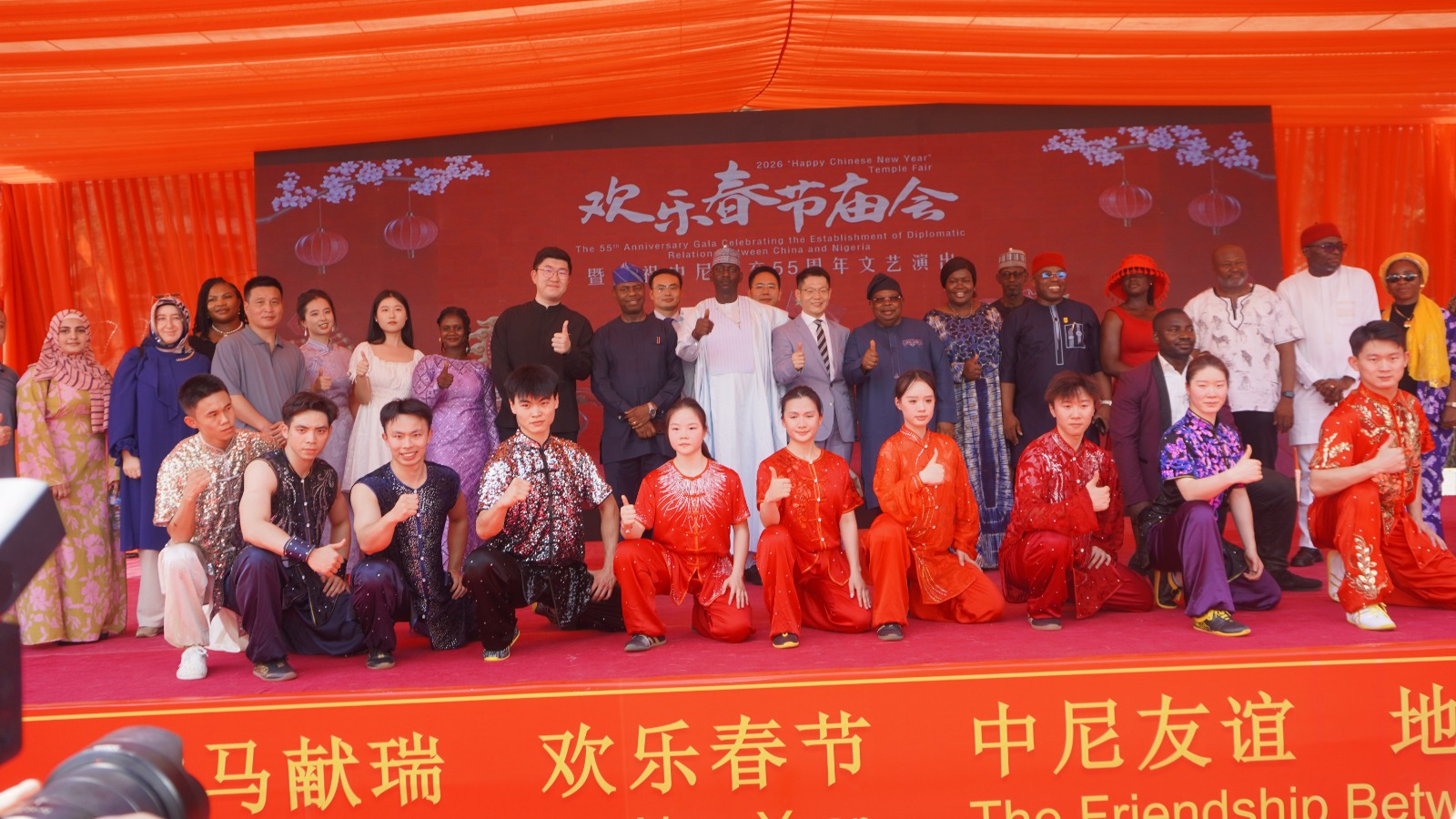
Nigeria and China on Saturday reaffirmed their enduring friendship and expanding strategic partnership as diplomats, government officials, cultural leaders and business executives gathered at the Chinese Cultural Centre, Abuja, for the 2026 “Happy Chinese New Year” Temple Fair, marking the Year of the Horse and the 55th anniversary of diplomatic relations between both countries.
The colourful celebration, rich in cultural symbolism and forward-looking commitments, underscored the depth of China–Nigeria relations, which have evolved over five decades from cordial diplomatic engagement into a comprehensive strategic partnership with growing impact on infrastructure, trade, education, food security and people-to-people exchanges.
Delivering a keynote address, the Director General and Global Liaison of the Nigeria–China Strategic Partnership (NCSP), Mr Joseph Tegbe, described the anniversary as both a moment of reflection and a call to action. Drawing symbolic parallels, he noted that the horse celebrated in Chinese tradition for strength, endurance and progress also features prominently on Nigeria’s Coat of Arms as a symbol of dignity, courage and forward movement.
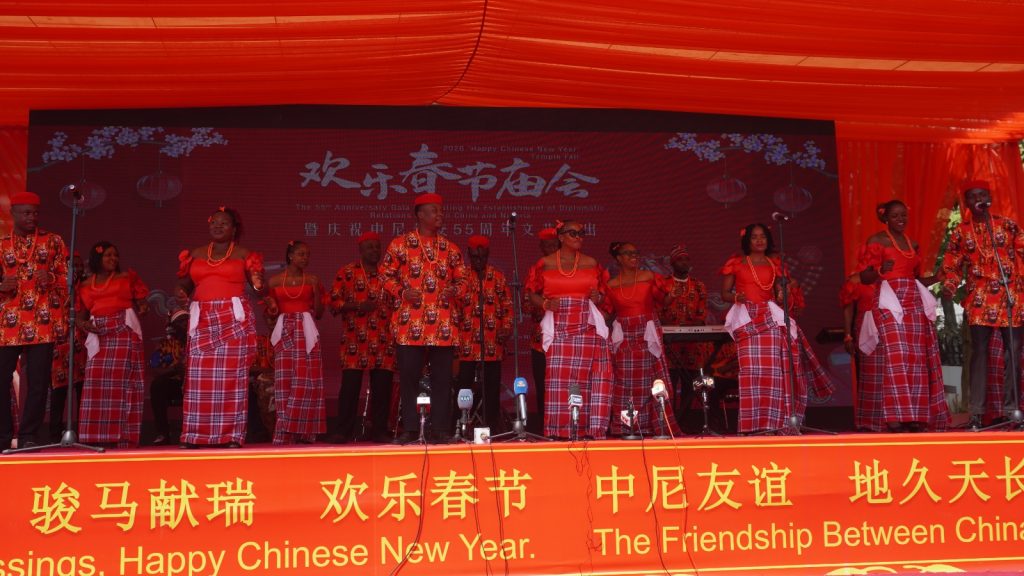
“As we welcome the Year of the Horse, we are reminded that Nigeria and China share a spirit of resilience and determination as we gallop forward into a future of deeper cooperation and shared prosperity,” Tegbe said. He reaffirmed Nigeria’s unwavering commitment to the One-China Principle, describing it as “the bedrock of our enduring friendship and the compass guiding our Comprehensive Strategic Partnership.”
Highlighting tangible outcomes of the relationship, Tegbe praised China’s contributions to Nigeria’s infrastructural rebirth, citing the ongoing rail revolution and landmark projects such as the Lekki Deep Sea Port. He also unveiled progress on the National Integrated Poultry Project, inspired by China’s success in food security and driven by NCSP engagements.
“This project is not merely about food security; it is about jobs, dignity and opportunity for Nigerians,” he said, explaining that the $1 billion pilot phase launching in Kaduna, Oyo and Enugu States will produce six million eggs daily, support millions of birds, cultivate over 60,000 hectares of maize and soybeans, and provide subsidised feedstock to local farmers.
On industrialisation, Tegbe described the planned revitalisation of Ajaokuta Steel Complex as “the dawn of a new industrial era,” noting that with an expected output of 10 million metric tonnes per annum, the project would power industries, create jobs and reposition Nigeria as a leading manufacturing hub in Africa. He added that education and knowledge exchange remain central to the partnership, with expanded scholarships, joint research and industrial parks envisioned to deepen cooperation.
Speaking earlier, China’s Chargé d’Affaires in Nigeria, Mr Zhou Hongyou, described the celebration as a powerful symbol of cultural harmony and strategic trust built over 55 years. He noted that the Spring Festival, recently inscribed on UNESCO’s Representative List of the Intangible Cultural Heritage of Humanity, has become “a global celebration that conveys the values of peace and harmony.”
“Regardless of changes in the international landscape, China and Nigeria have always upheld mutual respect, equality and win-win cooperation,” Zhou said. He recalled the elevation of bilateral relations to a Comprehensive Strategic Partnership during the 2024 Beijing Summit of the Forum on China–Africa Cooperation (FOCAC), adding that recent high-level engagements, including the visit of China’s Foreign Minister Wang Yi, have accelerated cooperation across sectors.
Zhou highlighted growing collaboration in trade, infrastructure, culture, education and technology, citing zero-tariff consultations, the launch of the Chinese-language radio programme ‘Ni Hao! China’ on Nigeria’s national radio, expanding student exchanges, joint scientific research and the establishment of “China Corners” in schools. “These achievements are vivid reflections of the strategic mutual trust and profound friendship between our two countries,” he said.
He further described 2026 designated the China–Africa Year of People-to-People Exchanges as a historic opportunity to deepen cultural dialogue and shared development. “Standing at this new historical starting point, we look forward to building a high-level community with a shared future that delivers even greater benefits to our peoples,” Zhou stated.
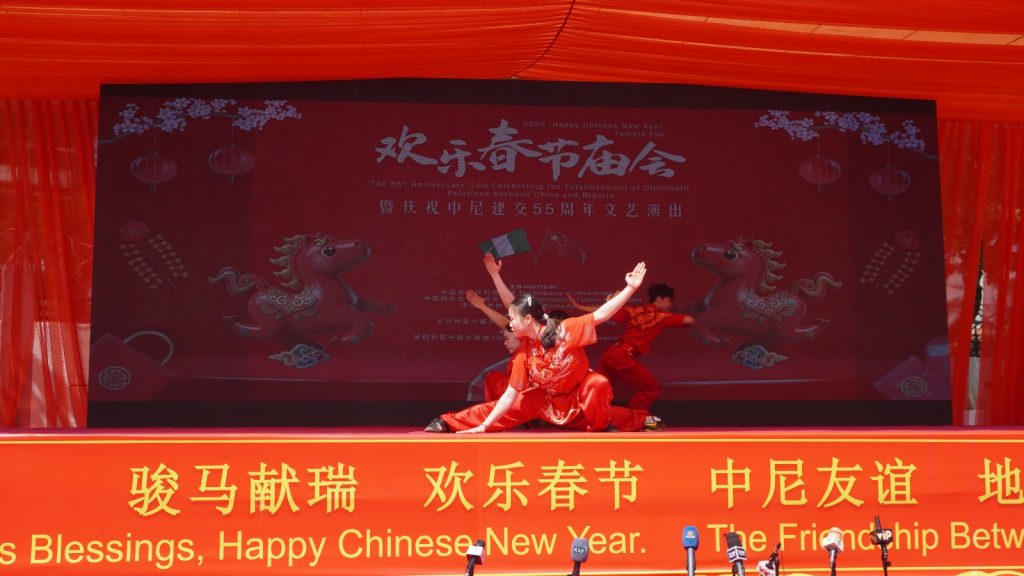
Adding a cultural dimension, the Deputy Secretary-General of the Chinese Wushu Association, Mr Fu Bo, said the Temple Fair and anniversary gala demonstrated how culture can connect hearts across borders. “Through wushu, we celebrate Chinese New Year and honour 55 years of diplomatic relations between China and Nigeria,” he said, describing martial arts as a philosophy of harmony, self-improvement and peaceful coexistence.
“Wushu belongs not only to China but to the world,” Fu Bo added, noting Africa’s growing role in its global promotion and expressing confidence that Nigeria would continue to play a leading role, especially as wushu prepares to debut as an official sport at the 4th Youth Olympic Games in Dakar later in the year.
The event featured high-level wushu performances, cultural dances, music, Chinese cuisine, exhibitions on Spring Festival traditions, interactive games and exchanges that reflected the warmth of China–Nigeria relations. Beyond the festivities, the gathering sent a clear message of shared resolve: that the partnership between Africa’s most populous nation and one of the world’s leading economies is firmly anchored in mutual respect, people-centred development and a shared vision for the future.
As Tegbe aptly concluded, “For our partnership to thrive sustainably, it must deliver real benefits to Nigerians and Chinese alike.” In the spirit of the Year of the Horse, both nations pledged to keep moving forward, strong, dignified and united in purpose.