

By Nkechi Eze
The Nigerian Meteorological Agency has taken a decisive step towards the future of weather and climate services with the inauguration of its Artificial Intelligence Research and Integration Team, a move aimed at deepening innovation, accelerating digital transformation and enhancing service delivery across Nigeria’s meteorological landscape.
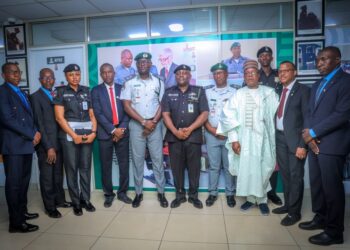
The Director General and Chief Executive Officer of NiMet, Prof. Charles Anosike, inaugurated the team as part of the Agency’s broader strategy to modernise weather forecasting and climate services through the adoption of emerging technologies. The initiative reflects NiMet’s resolve to complement its long-established physics-based forecasting systems with cutting-edge, AI-driven approaches that can respond more effectively to the growing demand for timely, accurate and accessible weather information.
The inauguration aligns with the Federal Government’s digital transformation agenda and underscores NiMet’s commitment to remaining at the forefront of meteorological innovation in Nigeria. By integrating artificial intelligence into its operational framework, the Agency aims to significantly improve forecasting speed, enhance predictive accuracy and expand the reach of weather and climate information to critical sectors of the economy.
The newly constituted AI Research and Integration Team has been tasked with identifying practical opportunities for the application of artificial intelligence in meteorology, while also establishing standards and best practices to guide its deployment. A key component of its mandate is the integration of AI-based tools into NiMet’s existing forecasting systems, creating hybrid models that blend traditional scientific methods with advanced data-driven technologies to better address Nigeria’s complex weather and climate challenges.
Speaking on the significance of the initiative, Prof. Anosike stressed that developing strong internal capacity in artificial intelligence is essential to sustaining NiMet’s leadership in technological innovation among public sector institutions. He noted that the responsible and strategic use of AI will play a vital role in supporting aviation safety, boosting agricultural productivity, strengthening disaster risk reduction efforts and contributing to overall national development.
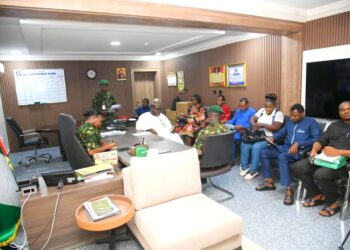
Members of the AI Research and Integration Team were drawn from various units within the Agency, reflecting a deliberate multidisciplinary approach designed to harness diverse expertise and perspectives. The composition of the team underscores NiMet’s belief that innovation thrives at the intersection of science, technology and collaborative problem-solving.
The inauguration of the AI Research and Integration Team marks another milestone in NiMet’s ongoing transformation journey, as the Agency continues to leverage research-driven and digital solutions to deliver world-class meteorological services and support informed decision-making across Nigeria.