

By Nkechi Eze
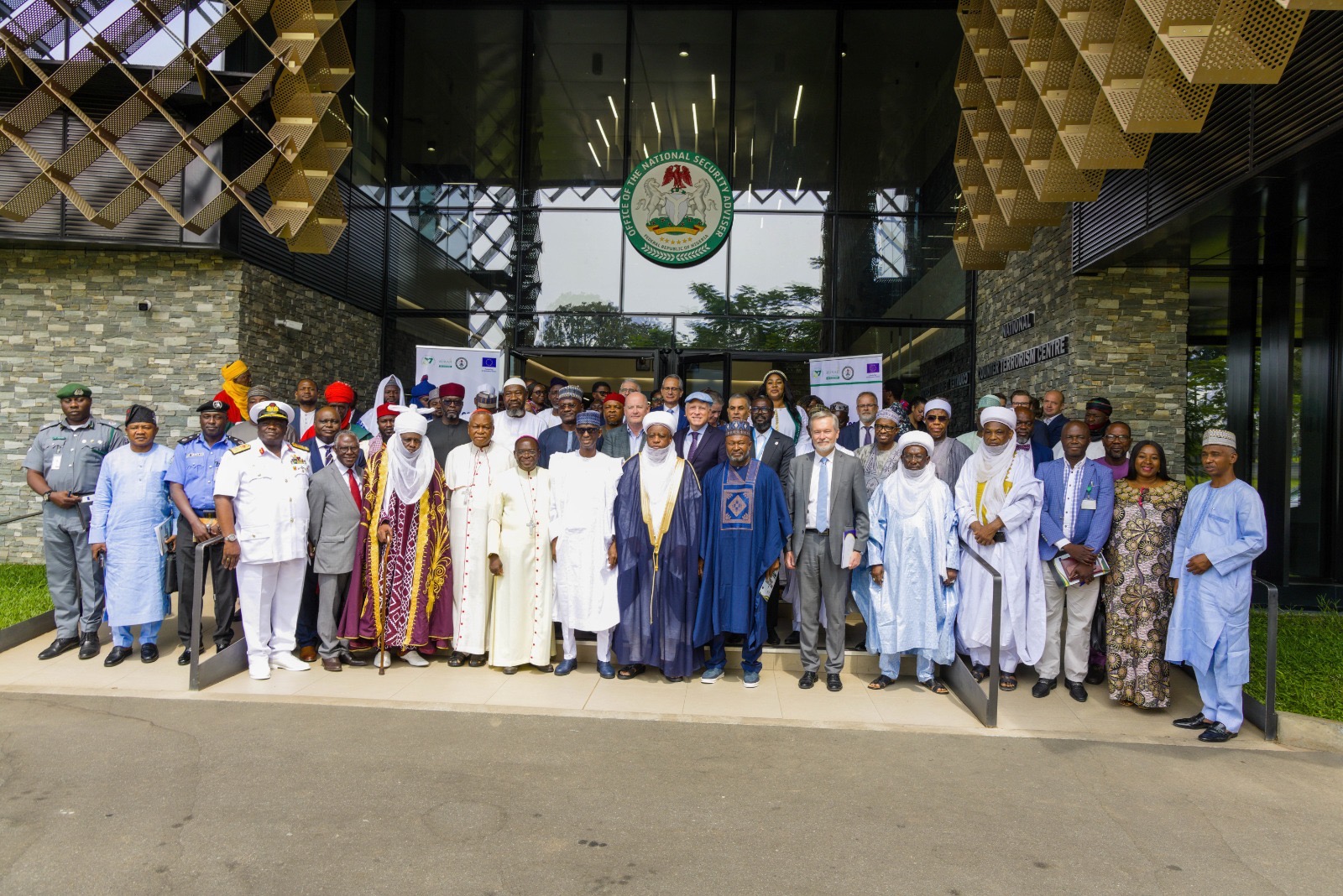
Amid growing concerns over persistent insecurity across the North, Abuja on Thursday hosted one of Nigeria’s most consequential peace dialogues in recent years as the National Peace Committee (NPC) convened a high-level national forum calling for a united, whole-of-society mobilisation to end violence and rebuild trust in Northern Nigeria. The gathering, held in collaboration with the Kukah Centre and the Office of the National Security Adviser, brought together senior government officials, traditional and religious leaders, security chiefs, members of the diplomatic community, civil society actors, and development partners in a powerful display of collective resolve.
Opening the dialogue, the National Security Adviser, Mallam Nuhu Ribadu, said the engagement could not have come at a more critical time in Nigeria’s security journey. He emphasised that the nation must reject the belief that security is the exclusive responsibility of the government or armed forces. “Security is everybody’s business,” he said, stressing that no military effort, no matter how well-resourced, can achieve lasting peace without the active involvement of local communities. Ribadu highlighted the Renewed Hope Agenda of President Bola Ahmed Tinubu, grounded in inclusive governance, accountability, and institutional strengthening. He noted that intelligence-driven campaigns and de-radicalization programs have already resulted in thousands of insurgent surrenders, and over 775 terrorism convictions. While acknowledging the continued support of international partners including the European Union, he affirmed that “real peace must be built locally,” insisting that traditional rulers, religious leaders, and communities remain Nigeria’s first line of defence.
NPC Convener, Bishop Matthew Hassan Kukah, delivered a reflective and deeply emotional address, lamenting the persistent suffering across Northern communities. “The tears of widows, mothers, and children have not yet dried,” he said, describing violence in the North as a complex entanglement of poverty, exclusion, historical grievances, environmental stress, and extremist ideologies. Bishop Kukah warned that Nigeria’s diversity, though a blessing, has too often been weaponised by political and ideological actors. He reminded participants that “guns and uniforms alone cannot restore trust. Peace cannot be outsourced. It is the responsibility of all of us.” Highlighting the NPC’s longstanding role in mediating political tensions and strengthening social cohesion, he called for honest dialogue, accountability, and cross-sector collaboration to rebuild trust between citizens and the state.
The Sultan of Sokoto, His Eminence Muhammadu Sa’ad Abubakar III, also offered a stirring charge, commending the NPC for sustaining efforts to promote unity and mutual understanding. He urged sincerity, truthfulness, and respect for one another, emphasising that while external partners can assist Nigeria, the responsibility for peace rests primarily on Nigerians themselves. “Coming together is important. Talking to one another is important. We must be honest and sincere, knowing that God sees our actions,” he said. The Sultan reiterated that conflicts in Nigeria are frequently mischaracterised as religious, cautioning against interpreting personal disputes as clashes between Islam and Christianity. He underlined the importance of education as a powerful antidote to extremism.
Delivering the goodwill message of the Chief of Defence Staff (CDS), General Olufemi Oluyede, ably represented by Rear Admiral Saburi Lawal, the Chief of Defence Civil–Military Relations. He conveyed the military leadership’s appreciation to the NPC for its unwavering commitment to promoting peace, dialogue, and democratic resilience. The CDS reaffirmed that the Armed Forces under his stewardship has adopted a people-centred security philosophy anchored on prevention, community partnership, interagency synergy, and strengthened civil–military cooperation. He explained that enduring peace depends on communities being treated as partners rather than bystanders, with the protection of civilians and improved coordination among security agencies standing as key priorities. “No single actor can prevent or resolve the drivers of conflict. A whole-of-society framework is essential, not optional,” he stressed, pledging the Armed Forces’ full support for all initiatives that promote peace, dialogue, and national cohesion.
In another compelling goodwill message, the Director General of the Nigeria Governors’ Forum (NGF), Dr. Abdullatif Shittu, emphasised that the dialogue could not have come at a more crucial time. Representing the collective position of the 36 governors, Dr. Shittu described Nigeria’s security landscape as increasingly complex, especially in the northern region where localised criminality in the North West has evolved into hardened banditry networks fueled by economic exclusion, arms proliferation, weak governance, and deepened community vulnerabilities. He noted that while significant gains have been made in the North East, pockets of insurgency, radicalisation pathways, and humanitarian pressures continue to destabilise daily life. He further connected these realities to broader national dynamics, from separatist tensions in the South East to militancy and criminal bunkering in the South-South emphasising that Nigeria’s security challenges are diverse yet interconnected.
Dr. Shittu underscored the NGF’s full alignment with the NPC’s advocacy of a whole-of-society approach grounded in resilient communities, inclusive governance, and sustained civic engagement. He disclosed that the Forum has established a dedicated Department of Peace and Inclusive Security, appointing senior security expert Dr. Obadiah Ciala as its Director. This, he explained, strengthens the capacity of states to drive evidence-based reforms, shape long-term security architecture, and domesticate resolutions arising from national dialogues such as the NPC gathering. He affirmed that NGF teams of peacebuilding and conflict management professionals were present at the dialogue to ensure that its outcomes are translated into actionable frameworks across the states. “If we succeed in stabilising Northern Nigeria, we lay the foundation for stabilising the entire federation,” he noted, pledging the Forum’s readiness to collaborate with the NPC to support community resilience, address root causes of conflict, reduce gender-based vulnerabilities, and rebuild trust between citizens and state institutions.
Ambassador Gautier Mignot, Head of the Delegation of the European Union to Nigeria and ECOWAS, delivered a poignant solidarity message, acknowledging the recent wave of killings and kidnappings across the North. He expressed deep concern for victims, including abducted schoolchildren in Niger and Kaduna States, and reaffirmed the EU’s commitment to supporting Nigeria in addressing the complex drivers of violence, from terrorism and banditry to climate pressures and governance deficits. He emphasised that security remains the primary responsibility of the government, but must be supported by local communities, civil society, religious leaders, traditional rulers, and international partners in a coordinated and inclusive process.
With senior security chiefs, diplomats, traditional leaders, faith authorities, civil society organisations, women’s groups, youth networks, and development actors in attendance, the dialogue reinforced a singular message: the path to peace in Northern Nigeria lies in local ownership, community-driven solutions, and the translation of dialogue into measurable action.
Participants concluded that rebuilding trust, strengthening resilience, and addressing root causes of conflict must form the basis of a new national security approach, one that sees every Nigerian as both a stakeholder and a partner in building a peaceful, united, and stable nation.
The Abuja dialogue thus stands as a powerful national call-to-action, renewing hope that with collective resolve, coordinated leadership, and sustained community engagement, Nigeria can chart a more secure future for generations to come.