By Nkechi Eze
The Nigerian Air Force (NAF) has deepened its contribution to national development and strengthened civil–military relations in Kwara State with the successful execution of a series of Special Intervention Projects (SIP) initiated by the Chief of the Air Staff (CAS), Air Marshal Sunday Kelvin Aneke. The projects, delivered across Ilorin and Babanloma, underscore the Service’s commitment to supporting education, advancing research, and enhancing community welfare as strategic pillars of national security.
In an official statement, the Director of Public Relations and Information, Air Commodore Ehimen Ejodame, said the interventions were coordinated and facilitated by Air Vice Marshal Lanre Ibrahim Oluwatoyin (rtd) and executed in honour of the senior officer within his host communities. The projects were implemented in two major clusters: the establishment of an Advanced Space Composite Laboratory (ASCO LAB) at the University of Ilorin (UNILORIN) and the delivery of critical infrastructure upgrades at JNI College (JNIC), Babanloma.
The ASCO LAB, developed through a technical partnership between NAF and the National Space Research and Development Agency (NASRDA), stands as a state-of-the-art facility for space science, composite materials research, and applied aerospace innovation. Designed as a national hub for training, experimentation, and industry-relevant research, the centre is expected to expand Nigeria’s capability in harnessing space technologies for economic growth, defence preparedness, and scientific progress. To further support accessibility and ease of movement, the NAF also constructed a 700-metre tarred access road linking the surrounding community to the new facility.
The second phase of the intervention focused on foundational education and community welfare in Babanloma. Here, the NAF delivered substantial upgrades at JNI College, including a fully furnished modern nursery and primary school complex, the refurbishment and solar-powered ICT enhancement of the school’s digital learning centre, and the renovation and equipping of the Corpers’ Lodge for the benefit of National Youth Service Corps members deployed to the area. Collectively, these projects aim to improve early childhood education, strengthen digital literacy, and promote a conducive environment for learning, service, and community development.
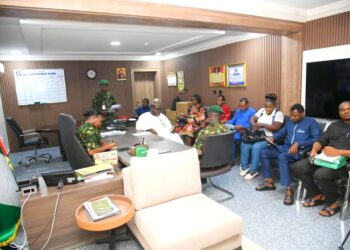
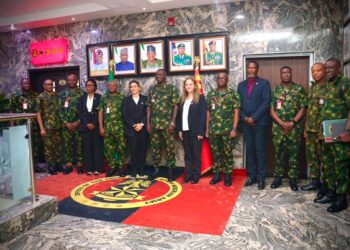
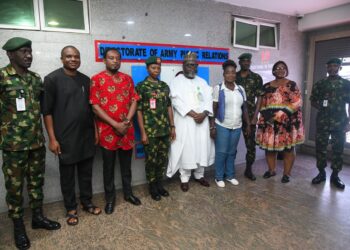
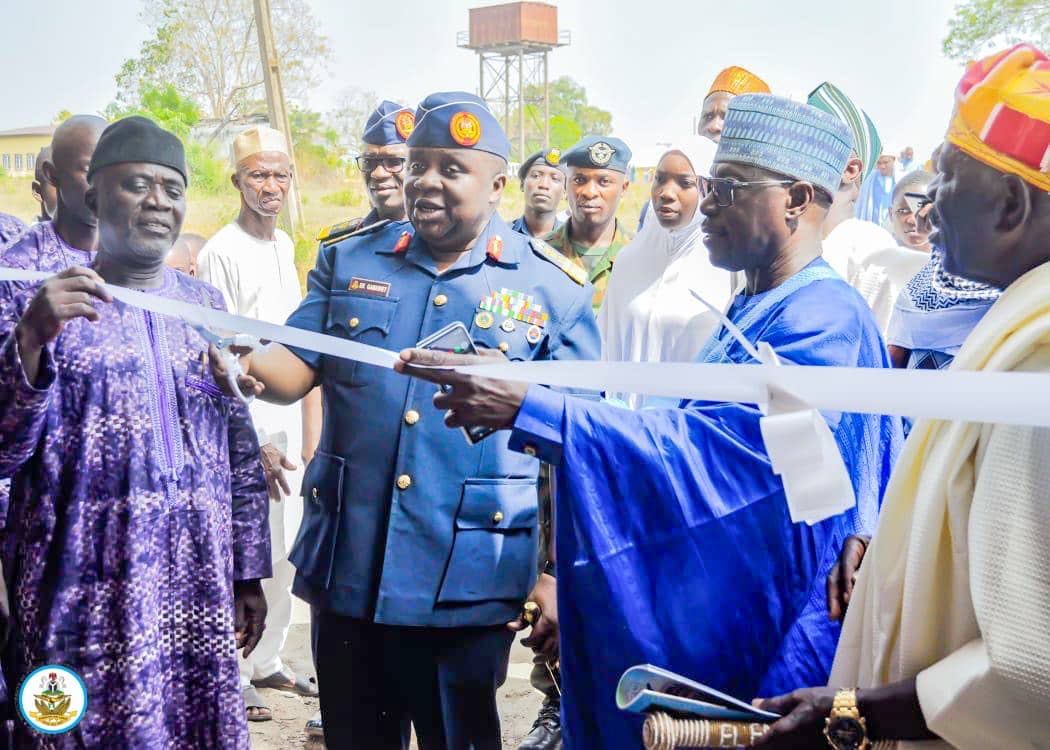
The ASCO LAB was commissioned on 25 November 2025, followed by the unveiling of the Babanloma school and community projects on 26 November 2025. The events were coordinated by the Civil-Military Relations (CMR) Branch in fulfilment of its mandate to implement CAS Special Intervention Programmes nationwide. Dignitaries present included the Honourable Minister of State for Defence (represented), the Chief of Defence Staff (represented by the CDSA), retired senior officers, and the Vice-Chancellor of UNILORIN alongside principal officers of the University. At Babanloma, the Executive Governor of Kwara State, represented by members of the State Cabinet, served as Special Guest of Honour, joining the Loma of Babanloma and his Council of Chiefs.
Speaking on behalf of the CAS, the Chief of Civil-Military Relations, Air Vice Marshal Edward Gabkwet, said the projects reflect the NAF’s growing focus on non-kinetic operations designed to build trust, strengthen partnerships, and uplift host communities. He explained that the interventions align with the CAS’s vision to leverage education, innovation, and grassroots engagement as complementary pillars of airpower and national resilience. He reaffirmed the Service’s commitment to supporting Federal Government initiatives in science, technology, and sustainable development.
In his remarks, AVM Lanre Ibrahim Oluwatoyin (rtd) expressed gratitude for the opportunity to facilitate the projects in honour of his service and family legacy. He thanked the CAS for the confidence reposed in him and commended all stakeholders whose dedication ensured the timely and high-quality delivery of the interventions. Community leaders and beneficiaries described the projects as transformative, noting that they would significantly enhance learning outcomes, improve welfare, and reinforce the bond between the military and civilian population. The CMR Branch concluded that sustaining such initiatives for deserving senior officers across the country would continue to yield far-reaching benefits for national development and civil–military cooperation.