

By Nkechi Eze
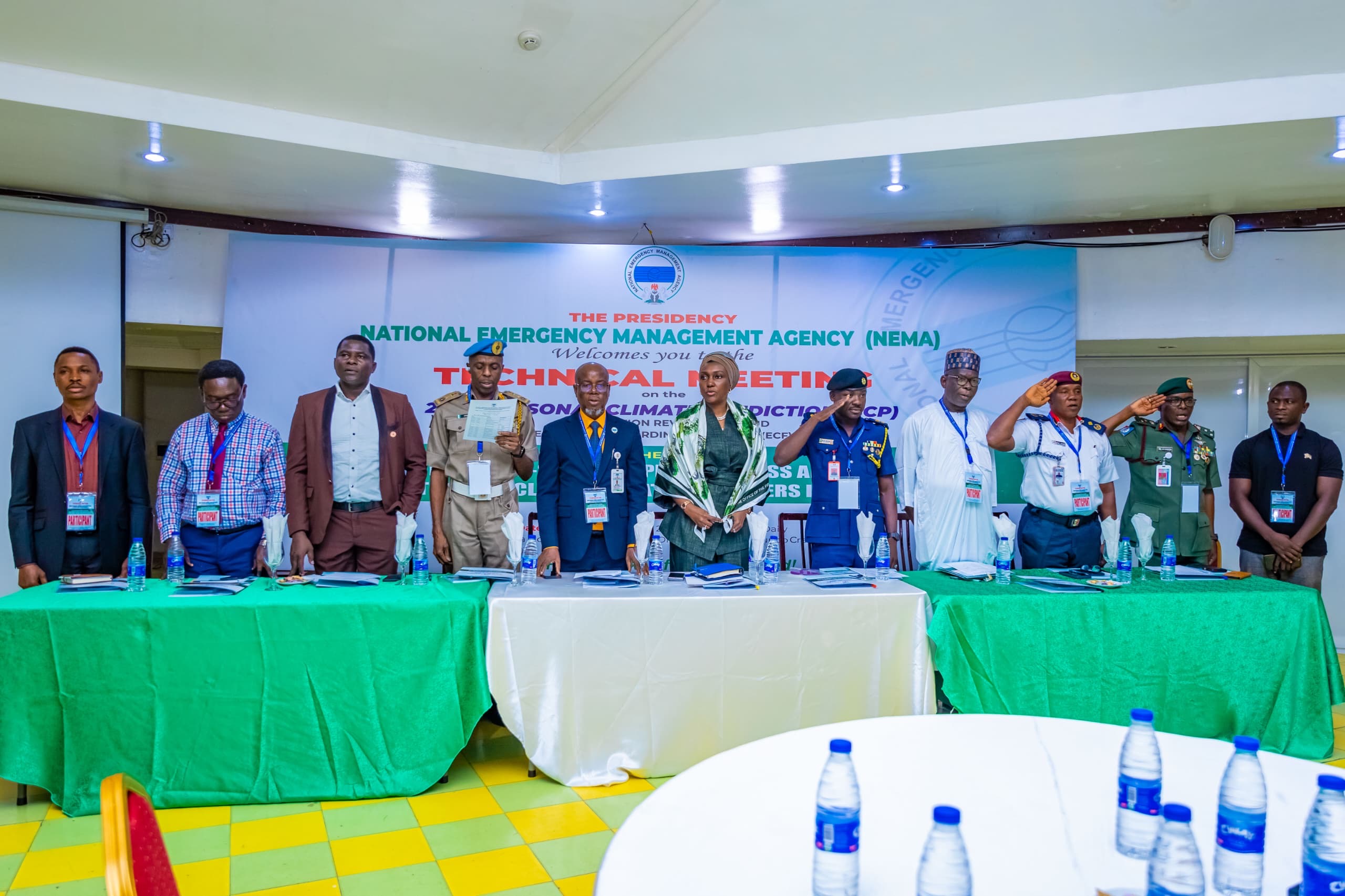
In a renewed effort to strengthen Nigeria’s disaster preparedness framework, the National Emergency Management Agency (NEMA) has convened a high-level technical meeting to analyse the 2026 Seasonal Climate Prediction and develop strategies aimed at mitigating the risks of climate-related disasters, particularly flooding.
The meeting, which brought together representatives from federal ministries, security agencies, humanitarian organisations, and development partners, focused on enhancing national readiness through coordinated planning and early action in response to projected climate patterns.
Speaking at the meeting, the Director-General of NEMA, Zubaida Umar, stressed the importance of proactive and data-driven disaster management, noting that climate variability continues to pose significant threats to communities across the country.
She described the Seasonal Climate Prediction as a critical decision-making tool that guides preparedness efforts at federal, state, and local levels, adding that effective disaster management requires early planning, strong coordination, and clearly defined responsibilities among relevant institutions.
According to the NEMA Director-General, the theme of the meeting, “Strengthening Multisectoral Preparedness and Early Action for Climate-Related Disasters in Nigeria,” reflects the urgent need for timely and collaborative responses to emerging environmental risks.
Umar noted that recent experiences with recurring floods have exposed gaps in coordination, preparedness, and early action, underscoring the need for stronger partnerships among government agencies and humanitarian actors.
She urged participants to carefully analyse the climate projections and translate them into practical preparedness measures capable of reducing the impact of disasters on vulnerable communities.
Also speaking at the meeting, NEMA’s Director of Planning, Research and Forecasting, Godwin Tepikor, explained that the inclusion of the 2025 After Action Review was intentional. According to him, the review was designed to draw lessons from past emergency responses and incorporate them into future disaster management strategies.
Representatives of the Nigerian Meteorological Agency and the Nigeria Hydrological Services Agency also highlighted improvements in weather and flood forecasting systems. They noted that the forthcoming 2026 Annual Flood Outlook will provide further guidance for early warning and preparedness across the country.
Other participants at the meeting, including officials from the Nigerian Red Cross Society, Defence Headquarters, and the Nigeria Security and Civil Defence Corps, reaffirmed their commitment to strengthening collaboration in disaster response, improving early warning dissemination, and ensuring coordinated interventions during emergencies.
The engagement also featured the presentation of the 2025 After Action Review, which assessed previous disaster response operations and identified key areas for improvement.
Overall, the meeting reinforced the need for a multi-sectoral approach to disaster risk management in Nigeria, with emphasis on early warning systems, proactive preparedness, and effective coordination among stakeholders to safeguard lives and livelihoods.