

By Nkechi Eze
The Nigerian Air Force (NAF) and the International Committee of the Red Cross (ICRC) have signed a Memorandum of Understanding (MoU) aimed at strengthening humanitarian compliance and improving operational effectiveness in Nigeria’s air operations, particularly within ongoing counter-insurgency campaigns.
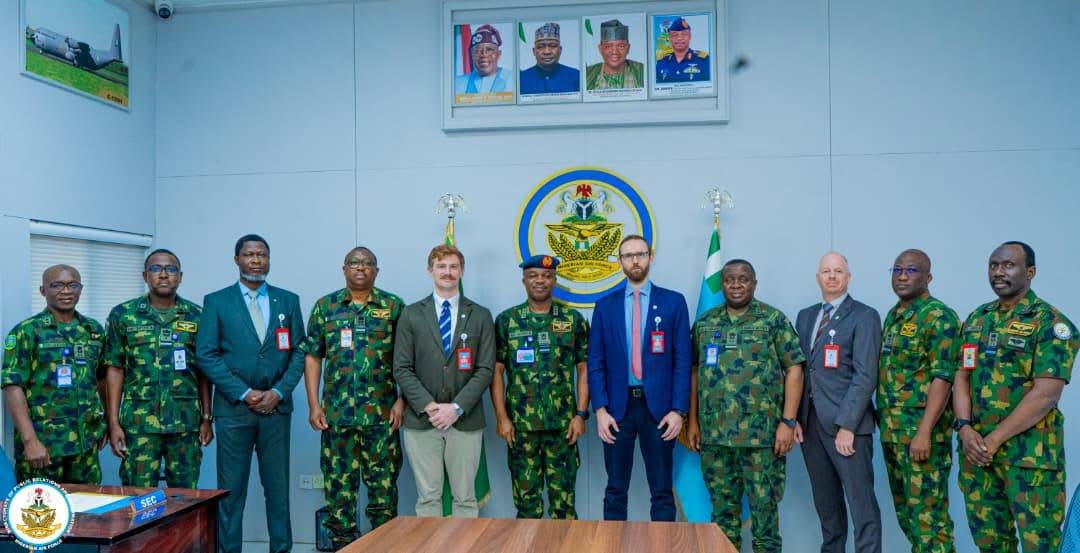
The agreement was formalised on 11 March 2026 when the Chief of the Air Staff, Sunday Kelvin Aneke, received the Head of Delegation of the ICRC in Nigeria, James Matthews, at the Headquarters of the Nigerian Air Force in Abuja.
Speaking during the meeting, Air Marshal Aneke described the MoU as a strategic milestone that reinforces the Nigerian Air Force’s commitment to professionalism, accountability and adherence to globally recognised ethical standards in the conduct of air operations.
He explained that the partnership will play a critical role in institutionalising training in International Humanitarian Law across NAF operational and training establishments, thereby strengthening the service’s capacity to conduct lawful and responsible military operations.
According to the air chief, the collaboration will support the development of a pool of qualified legal advisers within the Nigerian Air Force while improving awareness and understanding of humanitarian law among pilots, commanders, intelligence officers and other personnel involved in operational planning and execution.
Aneke emphasised that the integration of humanitarian principles into operational frameworks will further enhance the precision and effectiveness of airpower in combating terrorist threats while minimising risks to civilian populations.
He noted that improved knowledge and application of international humanitarian standards will contribute to better targeting processes, stronger civilian harm mitigation measures and greater protection of critical civilian infrastructure during military operations.
The Chief of the Air Staff stressed that the initiative would ultimately strengthen the Nigerian Air Force’s ability to apply decisive and purposeful force against hostile elements while ensuring that innocent citizens are protected.
Responding, Matthews commended the Nigerian Air Force for its proactive efforts to embed the principles of International Humanitarian Law into its doctrine, training programmes and operational procedures.
He noted that integrating humanitarian standards into military structures enhances accountability and contributes to more effective and responsible security operations.
The ICRC delegation head also reaffirmed the organisation’s commitment to supporting the Nigerian Air Force through technical expertise, training assistance and other capacity-building initiatives aimed at strengthening sustainable in-house competencies.
Both leaders expressed confidence that the partnership would deepen professional standards within the Nigerian Air Force while also supporting humanitarian considerations in conflict environments.
They further noted that the collaboration would contribute to ongoing national and international efforts aimed at restoring stability and security in areas affected by insurgency and other security challenges.