

By Nkechi Eze
The Federal Ministry of Works has reaffirmed the Federal Government’s commitment to strengthening road infrastructure across the country as part of efforts to boost economic growth, improve connectivity and ease the movement of people and goods.
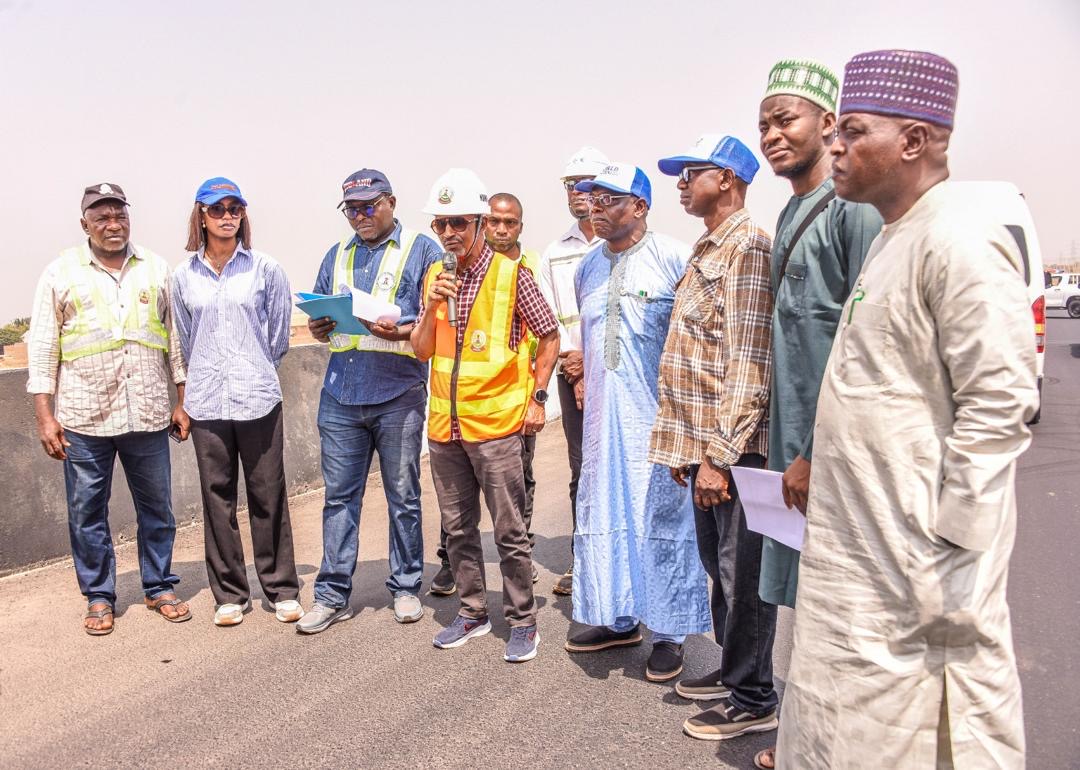
The assurance was given during the continuation of the nationwide media tour and commissioning of emergency and special intervention projects in Nasarawa State.
According to the Director of Information and Public Relations of the ministry, Mohammed A. Ahmed, the projects form part of strategic measures by the administration of Bola Ahmed Tinubu to rehabilitate critical sections of the nation’s road network.
Ahmed explained that when the current administration assumed office in May 2023, it inherited 2,064 ongoing road projects nationwide, many of which had stalled due to funding constraints, alongside an estimated debt burden of about ₦13 trillion.
To address the situation, the Federal Government prioritised 260 emergency and special intervention projects across the country aimed at fixing failed sections of federal roads and repairing routes affected by flooding and other natural disasters.
“These projects were initiated to quickly restore critical road and transport links to ensure seamless movement of people, goods and services across the country,” he said.
He added that the intervention projects are being executed under the leadership of the Minister of Works, David Umahi, as part of the administration’s broader infrastructure development programme under the Renewed Hope Agenda.
One of the projects commissioned during the media tour was a six-kilometre stretch of road linking Agyaragu to Sabon Kwara in Keana Local Government Area of Nasarawa South Senatorial District. The project, executed by A.A. Albasu Nigeria Limited, forms part of a 10.5-kilometre corridor serving surrounding communities.
Construction works included excavation and replacement of culverts, earthworks, installation of pipe culverts and lined drains, a 200mm lateritic sub-base, 100mm crushed stone base course, asphaltic concrete wearing course, surface dressing on shoulders and lane markings.
Providing technical details of the project, the Federal Controller of Works in Nasarawa State, Ishaku Mamri, explained that the road had previously been in a deplorable condition, causing hardship for commuters, traders and residents who depend on the route for economic activities.
He noted that the rehabilitated road was constructed to a width of 7.3 metres with shoulders and about four kilometres of drainage infrastructure to ensure durability and effective water management.
“The road was awarded in November 2022 and completed in 2023. It has since been in use by the community and has significantly improved movement within the area,” he said, adding that residents have appealed for the completion of the remaining four kilometres of the corridor.
As part of the media tour, officials also inspected the ongoing 15.8-kilometre Lafia Bypass project designed to ease traffic congestion in Lafia by providing a faster route for commuters travelling between Abuja, Makurdi and other eastern parts of the country.
The Project Engineer for China Harbour Engineering Company, Tijani Olalekan, disclosed that the project, which had earlier stalled after being awarded by a previous administration, resumed fully in February 2024 and has now reached over 80 percent completion, with delivery expected before the end of the year.
The project involves site clearance, earthworks, hydraulic structures, stone base construction, drainage works, asphaltic concrete binder course and relocation of electrical poles along the corridor.
Also speaking, the Commissioner for Works, Housing and Transport in Nasarawa State, Mu’azu A. Gosho, commended the contractor for the quality of work executed on the project.
The media team also visited rehabilitation works along the Keffi–Nasarawa–Toto–Abaji road corridor, a strategic route expected to strengthen connectivity between the Federal Capital Territory and neighbouring states.
According to officials, the project, originally awarded in 2018, experienced delays due to funding challenges but has regained momentum following renewed commitment from the Federal Government.
The project has been restructured into phases, with Phase One nearing completion under the 2025–2026 budget provisions, while Phase Two involving concrete pavement construction is expected to commence soon.
The Federal Government recently approved the second phase of the project covering approximately 129.3 kilometres at a cost of about ₦203 billion.
Ahmed further explained that road infrastructure development remains a key pillar of the Renewed Hope Agenda, with several legacy projects underway across the country.
These include the Lagos–Calabar Coastal Highway, the Sokoto–Badagry Super Highway, the Calabar–Abuja Super Highway and the dualisation of the Akwanga–Jos–Bauchi–Gombe Road, all designed to transform connectivity and stimulate economic growth across Nigeria’s six geopolitical zones.
He noted that the nationwide media tour was designed to promote transparency, enable journalists and professional bodies to verify project quality and allow Nigerians to see firsthand the progress being made in delivering critical infrastructure.
The Federal Government reaffirmed its commitment to sustaining the momentum in road construction, reconstruction and rehabilitation across the country to promote national integration, economic development and improved quality of life for citizens.