

By Nkechi Eze
At a time when global security partnerships often attract scrutiny and speculation, the Nigerian military has moved to firmly reassure citizens that the nation’s sovereignty remains untouched, even as it deepens operational cooperation with the United States in the fight against terrorism.
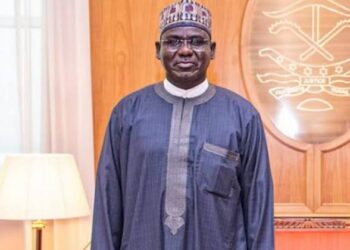
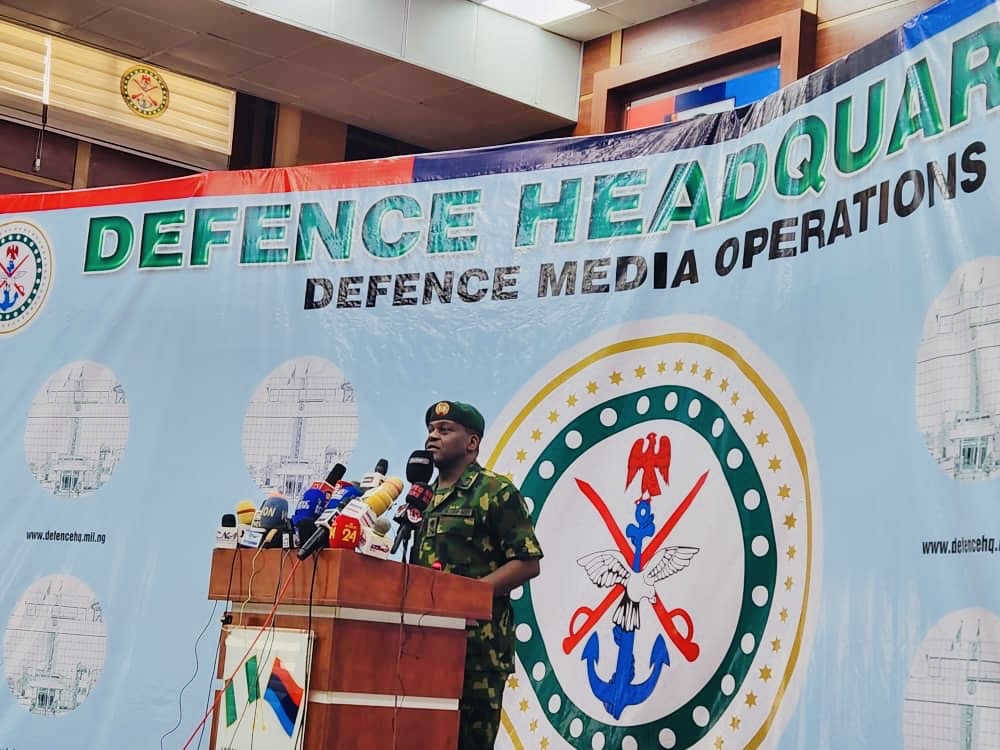
Major General Michael Onoja, Director of Defence Media Operations, used his monthly operational briefing with Defence Correspondents in Abuja not only to provide updates on ongoing counterterrorism campaigns across Nigeria’s theatres of operation, but also to directly address public concerns surrounding the reported deployment of additional United States military personnel to the country.
His message was unambiguous: Nigeria’s sovereignty and territorial integrity are intact.
“Our sovereignty is intact. Our territorial integrity is intact. Nobody is giving away our sovereignty,” he declared, setting the tone for a broader clarification of the nature and scope of the collaboration.
The reassurance follows reports attributed to the Commander of the United States Africa Command (AFRICOM), General Dagvin Anderson, indicating that approximately 200 additional U.S. troops had been deployed to Nigeria to support counterterrorism efforts. The disclosure came after high-level engagements in Abuja involving President Bola Tinubu, National Security Adviser Nuhu Ribadu, Defence Minister Christopher Musa, and senior military and intelligence officials.
For a country that has battled insurgency for more than two decades, such developments inevitably spark debate. Nigeria’s security landscape has been shaped by the prolonged violence of Boko Haram and its splinter faction, ISWAP, particularly in the North-East. At the same time, armed groups operating in parts of the North-West, including Sokoto, Zamfara, and Katsina States have escalated attacks, with kidnapping for ransom becoming a persistent threat to communities.
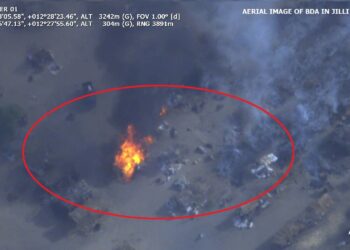
Against this backdrop, the Armed Forces of Nigeria have sustained coordinated offensives aimed at degrading insurgent capabilities and reclaiming territories once held by terrorist elements. The evolving threat environment has also necessitated enhanced intelligence sharing, tactical innovation, and international collaboration.
Onoja emphasized that the current engagement with the United States must be understood within this broader strategic context. According to him, the American personnel in Nigeria are not conducting independent or isolated combat missions. Rather, they are involved strictly in training and capacity-building roles, a practice common in global military cooperation.
“There is no basis for concern. We go for training abroad all the time. This is simply a training programme,” he explained.
In drawing parallels, he noted that Nigerian officers frequently travel overseas for professional military education and specialised courses. In such instances, host nations do not question Nigeria’s intentions or demand media interaction with visiting personnel. The same perspective, he argued, should apply domestically.
“Regarding U.S. personnel offering training, they are here strictly for training purposes. There is no basis for media interaction with them. It is simply a training programme,” he said, urging a measured and informed interpretation of the partnership.
At the heart of the cooperation, Onoja noted, lays a shared security priority. The United States maintains a longstanding policy of confronting terrorist threats globally in defence of its national interests. Nigeria, as Africa’s most populous nation and a key regional actor, represents a strategic partner in stabilising West Africa and countering extremist networks.
“First, we must appreciate the assistance the United States government is providing to the Nigerian military to ensure that insecurity comes to an end. The ultimate goal of that assistance is to create an environment that is conducive for all Nigerians to live in peace, free from the threats of terrorism,” he stated.
He also addressed speculation over the number of foreign personnel present in the country, cautioning against an overemphasis on figures.
“What we should focus on is the value they are adding,” he remarked, adding that within a short period, the collaboration has already strengthened ongoing operations.
Importantly, Onoja clarified that the assistance comes at no financial cost to Nigeria. According to him, the U.S. government’s interest in combating terrorism underpins the support being extended, and the Federal Government bears no direct financial burden for the training initiative.
“The American government is interested in combating terrorism and is providing this assistance at no financial cost to Nigeria,” he affirmed.
Beyond the operational specifics, the briefing reflects a broader narrative about Nigeria’s evolving security diplomacy, one that balances international cooperation with a firm assertion of national independence. In an era where misinformation can easily fuel suspicion, the military’s leadership appears keen to reinforce public confidence.
For the Armed Forces, the ultimate objective remains unchanged: restoring lasting peace, securing communities, and preserving the country’s unity. As counterterrorism operations continue across multiple theatres, officials insist that partnerships are tools, not concessions and that Nigeria’s sovereignty remains firmly in Nigerian hands.