

By Nkechi Eze
The Federal Government of Nigeria has reaffirmed its commitment to deepening its strategic partnership with the Republic of India, underscoring the principles of mutual respect, reciprocity and shared prosperity as the foundation of bilateral relations.
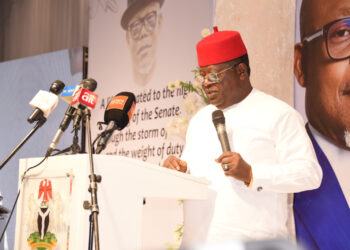
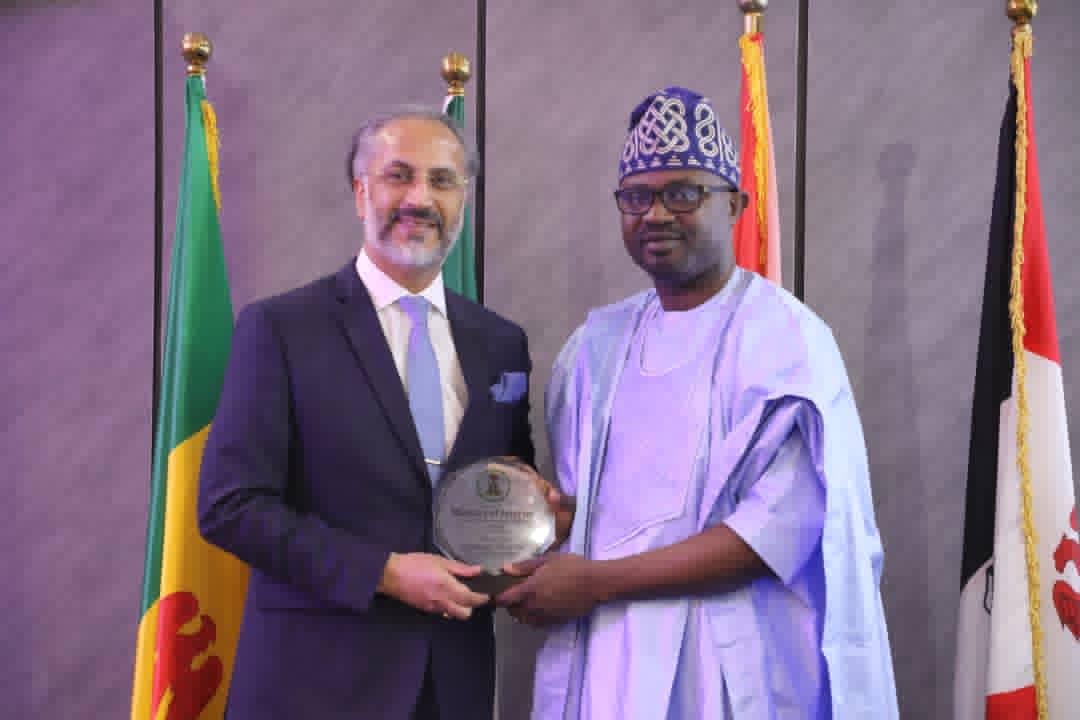
The Honourable Minister of Interior, Olubunmi Tunji-Ojo, made this known while receiving the Indian High Commissioner to Nigeria, Abhishek Singh, during a courtesy visit in Abuja. The engagement focused on strengthening cooperation in migration management, correctional and fire services, as well as broader institutional capacity-building initiatives between both countries.
In an official signed statement, the Head of Press and Public Relations at the Ministry of Interior, Mary Ali, disclosed that the meeting provided an opportunity for both sides to review ongoing collaborations and explore new areas of partnership.
Tunji-Ojo commended the positive contributions of the Indian community to Nigeria’s economic development and reaffirmed Nigeria’s long-standing tradition of hospitality and openness to lawful enterprise. He, however, stressed that issues relating to migration data and identity management are matters of national sovereignty.
The Minister noted that the Migration Information and Data Analysis System (MIDAS) continues to strengthen Nigeria’s migration governance architecture, enhancing transparency, accountability and national security.
On expatriate employment, Tunji-Ojo clarified that the Combined Expatriate Residence Permit and Aliens Card (CERPAC/SEPAC) remains a legal requirement under the Nigeria Immigration Service Act. According to him, while individuals under the age of 18, students and naturalized citizens are exempt, the responsibility for compliance rests squarely with employing companies.
He emphasized that expatriate engagement in Nigeria must generate measurable value and contribute meaningfully to job creation for Nigerians. The Minister further stated that Nigeria cannot continue to shoulder the financial burden of repatriating foreign nationals who engage in legal infractions within the country.
In his remarks, Singh expressed appreciation for Nigeria’s transparency, particularly in relation to consular access and the fair treatment of Indian nationals residing in the country. He reaffirmed India’s commitment to strengthening bilateral ties and expanding cooperation in mutually beneficial sectors.
Both parties reiterated their resolve to advance people-to-people connections and deepen the Nigeria–India strategic partnership through sustained dialogue, fairness, reciprocity and mutual economic benefit.
The Minister concluded by reaffirming that the current administration remains open to constructive engagement, stressing that the Federal Government’s doors remain open to discussions aimed at ensuring balanced and mutually rewarding outcomes in the bilateral relationship.