

By Nkechi Eze
The Chairman and Chief Executive Officer of the National Drug Law Enforcement Agency, Brigadier General Mohamed Buba Marwa (rtd), has expressed confidence that the forthcoming National Drug Control Master Plan (NDCMP 2026–2030) will significantly strengthen Nigeria’s drug control efforts and consolidate the gains recorded in recent years.
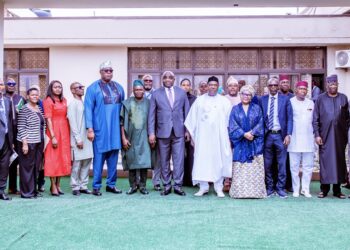
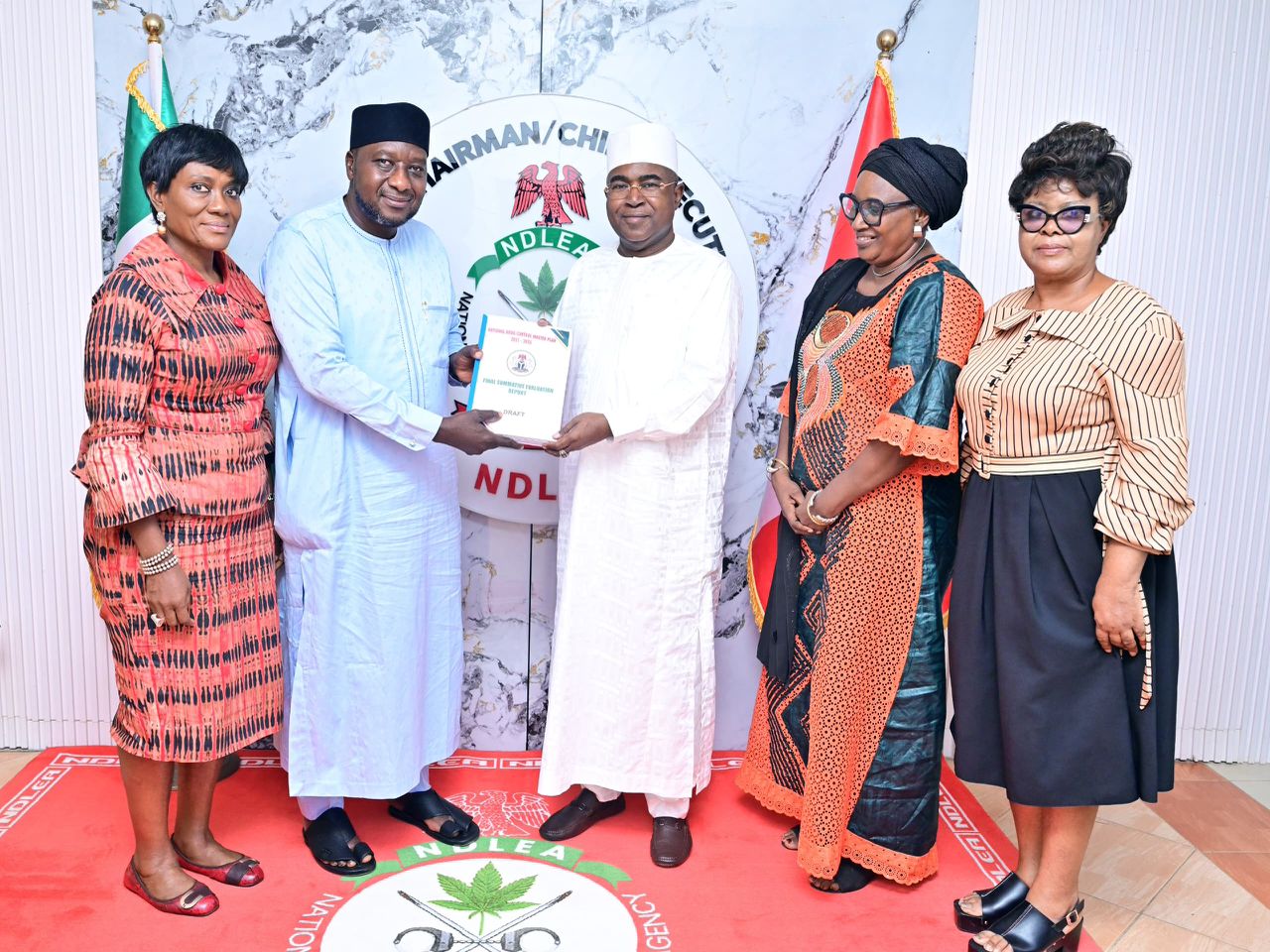
Marwa made this known on Thursday, February 26, 2026, at the Agency’s national headquarters in Abuja while receiving the final summative evaluation report on the performance of the NDCMP 2021–2025. The report was presented by a team of consultants led by Professor Ibrahim Abdu Wakawa, Head of the Mental Health Department at the University of Maiduguri.
According to an official statement signed by the Director, Media and Advocacy of the Agency, Femi Babafemi, the NDLEA boss noted that the serious and holistic efforts being invested in preparing the next master plan would translate into measurable outcomes once implementation begins. He emphasized that the NDCMP 2026–2030, when fully developed and operationalized, would have a significant positive impact on Nigeria’s public health and national security architecture.
Commending the evaluation team for what he described as a thorough and diligent exercise, Marwa praised their professionalism and acknowledged their recognition of the Agency’s performance under the 2021–2025 framework.
“I must commend your commitment, diligence and the excellent job you have done on the evaluation of the NDCMP 2021–2025,” he said. “Your acknowledgement of the successes recorded by the agency in the course of implementing the drug supply reduction and drug demand reduction pillars of the master plan is equally well appreciated. I want it on record that by the time the NDCMP 2026–2030 is fully ready and implemented, we’ll achieve much more under the renewed hope administration of President Bola Tinubu to the benefits of Nigerians and the country as a whole.”
Marwa reiterated that the renewed momentum within the Agency reflects a broader national resolve to tackle drug trafficking and substance abuse through a balanced strategy that integrates enforcement, prevention, treatment, rehabilitation, and social reintegration.
Earlier in his remarks, Professor Wakawa commended Marwa’s leadership, noting that the Agency had surpassed most of the expectations outlined in the 2021–2025 National Drug Control Master Plan. He described the evaluation process as evidence of institutional transparency and accountability, adding that the findings would help strengthen implementation of the next strategic cycle.
He expressed optimism that the NDLEA would bridge any identified gaps, particularly in the area of drug demand reduction, during the execution of the 2026–2030 master plan.
Professor Wakawa was joined by two members of his team, Mrs. Ngozi Oguejiofor and Mrs. Ibiba Odili, both retired Assistant Commanders General of Narcotics (ACGN), who previously headed the NDCMP secretariat at different times within the Agency.
The engagement marked another milestone in the NDLEA’s ongoing efforts to institutionalize strategic planning and evidence-based interventions in Nigeria’s fight against illicit drugs, with the upcoming NDCMP 2026–2030 expected to serve as a critical blueprint for the country’s drug control policy over the next five years.