


By Nkechi Eze
President Bola Ahmed Tinubu has revealed that his administration disbursed over N98 billion last year to strengthen primary healthcare delivery across Nigeria, describing the move as one of the largest single-year investments in grassroots health services in recent times.
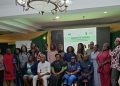
The disclosure was made in an official signed statement by the Special Adviser, Media and Publicity to the Secretary to the Government of the Federation, Yomi Odunuga, following the President’s address at the National Health Convention and Roundtable 1.0 organised by the All Progressives Congress in Abuja on Wednesday.
Represented at the event by the Secretary to the Government of the Federation, George Akume, Tinubu said the funds were released through the Basic Health Care Provision Fund (BHCPF) to support operational expenses in more than 8,300 primary healthcare centres nationwide. He described the disbursement as part of a broader push to reposition the health sector as a cornerstone of national development.
According to the President, the financial injection has already supported the revitalisation of primary healthcare centres (PHCs), with 2,565 centres fully upgraded and another 1,456 currently undergoing rehabilitation. He noted that the upgraded facilities now provide 24-hour services, staffed by trained health workers, and equipped with essential medicines, basic medical equipment, and stable power and water supply.
Tinubu further revealed that the funding framework is being expanded to cover an additional 5,212 facilities, bringing the total number of benefitting PHCs to over 13,500 across the country. The expansion is expected to deepen access to quality healthcare, particularly in rural and underserved communities.
He said, “We have strengthened the Basic Health Care Provision Fund and consistently disbursed the quarterly allocation to primary health care centres, with over N98 billion disbursed to support operational expenses for over 8,300 Primary Health Care facilities last year. Also, we are expanding this very critical sustainable domestic financing mechanism to an additional 5,212 primary health care centres to reach a total of over 13,500 facilities. We have expanded health insurance coverage and provided it to over 10 million vulnerable individuals.”
Highlighting human capital development, Tinubu noted that in 2023 he tasked the Minister of Health with retraining 120,000 primary healthcare workers within four years to enhance service delivery and global competitiveness. He said that in just two years, over 78,000 frontline health workers—including doctors, nurses, midwives, CHEWs, and JCHEWs—have already received training.
The President reaffirmed his administration’s commitment to comprehensive health sector reform, describing quality healthcare delivery as a central pillar of his Renewed Hope Agenda. “A country cannot be prosperous if its citizens are unhealthy,” he stressed, noting the fundamental link between health, national productivity, economic growth, security, and human dignity.
Tinubu also highlighted progress under the Maternal Mortality Reduction and Newborn Innovation Initiative (MAMII), which is currently tracking pregnant women in 172 high-burden local government areas. He disclosed that over 100,000 pregnant women have been linked to health facilities for antenatal, delivery, and postnatal services, with free emergency maternal and newborn care provided in supported facilities.
On efforts to reduce Nigeria’s dependence on imported medicines, the President spoke on the Presidential Initiative for Unlocking the Health Care Value Chain (PVAC), which incentivises local pharmaceutical manufacturing, strengthens regulatory capacity, and promotes backward integration of active pharmaceutical ingredients.
Urging greater collaboration, Tinubu called on APC governors and legislators to align with federal reforms by increasing health budget allocations toward the 15 per cent Abuja Declaration benchmark, ensuring functionality of primary and secondary health facilities, strengthening state health insurance schemes, and publishing measurable annual health scorecards.
“As a ruling party, we must hold ourselves accountable,” he said, questioning budgetary priorities, facility functionality, staff motivation, and direct funding to health centres. Tinubu stressed that health reform must transcend politics and described it as an act of patriotism. He challenged the party’s National Executive Committee to request annual reports on key health and development indices from governors and local government chairmen.
“This convention must not turn into a mere talk shop. Let APC be the first party to institutionalise health reform in Nigeria,” the President urged. He also called on the private sector, development partners, traditional rulers, and faith leaders to deepen collaboration with government in delivering accessible and affordable healthcare services.