


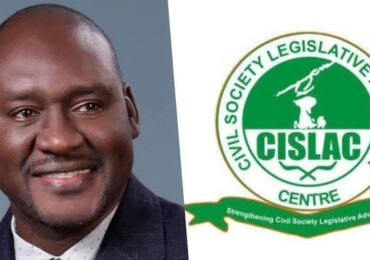
By Nkechi Eze
A leading civil society organisation has warned that continued resistance to the electronic transmission of election results poses a grave threat to Nigeria’s democracy, insisting that attempts to exclude technology from the country’s electoral law are deliberate efforts to preserve manipulation rather than genuine concerns about feasibility.
Executive Director of the Civil Society Legislative Advocacy Centre (CISLAC), Auwal Ibrahim Musa Rafsanjani, described claims that Nigerians are unable to effectively deploy technology for elections as “a convenient fraud,” arguing that such narratives collapse under the weight of everyday realities across the country.
Rafsanjani noted that millions of Nigerians routinely rely on electronic platforms for bank transfers, government services, business transactions, and social engagement, even in rural communities. With expanding connectivity driven by innovations such as 5G and improved network services, he maintained that portraying electronic transmission of election results as impractical is either dishonest or deliberately misleading.
According to him, the controversy surrounding proposed amendments to the Electoral Act has little to do with technological capacity and everything to do with political control. He explained that resistance to reforms that would enhance transparency reflects a long-standing pattern in which certain political interests seek to retain power through manipulation rather than through the will of the electorate.
In a recent interview with The Cabal Newspaper, Rafsanjani warned that when lawmakers deliberately weaken or obstruct reforms such as electronic result transmission, the issue ceases to be a mere legislative disagreement and becomes electoral corruption at its core. He argued that once electoral laws are shaped by selfish or personal interests, the credibility of the entire process collapses.
He cautioned that ambiguous or defective electoral laws make transparency and accountability impossible, effectively denying Nigerians their fundamental right to freely choose their leaders. Resistance to electronic transmission, he said, keeps loopholes open for discretionary handling of results, manipulation during collation, and ultimately, rigging.
Rafsanjani further warned that the foundations for compromising the 2027 general elections are already being laid. He said deliberate efforts to block innovations designed to strengthen electoral credibility send a clear signal that some actors are intent on engineering conditions for manipulation. Such actions, he stressed, do not promote peace or good governance but instead breed instability, violence, and political crisis.
While acknowledging that civil society organisations are not lawmakers, Rafsanjani emphasised their critical role in safeguarding democracy through advocacy, public education, and sustained pressure on institutions of power. He warned that although advocacy may struggle against entrenched political interests, silence would amount to surrender.
He urged legislators to remember their moral and constitutional responsibility to act in the national interest rather than serve a narrow group determined to control the electoral process at all costs. Law-making, he stressed, should strengthen democracy, not weaken it.
“Any law that blocks transparency is not neutral,” Rafsanjani said, adding that such laws are complicit in undermining democratic governance.
He concluded by stressing that Nigeria does not lack the technological capacity to conduct credible elections, but rather faces a deliberate resistance to transparency by actors unwilling to submit to the will of the people.
Rafsanjani is the Executive Director of CISLAC, Head of Transparency International Nigeria, Chairman of the Transition Monitoring Group (TMG), Chairman of the Board of Trustees of Amnesty International Nigeria, and Board Chairman of Corporate Accountability and Public Participation Africa (CAPPA).