

By Nkechi Eze
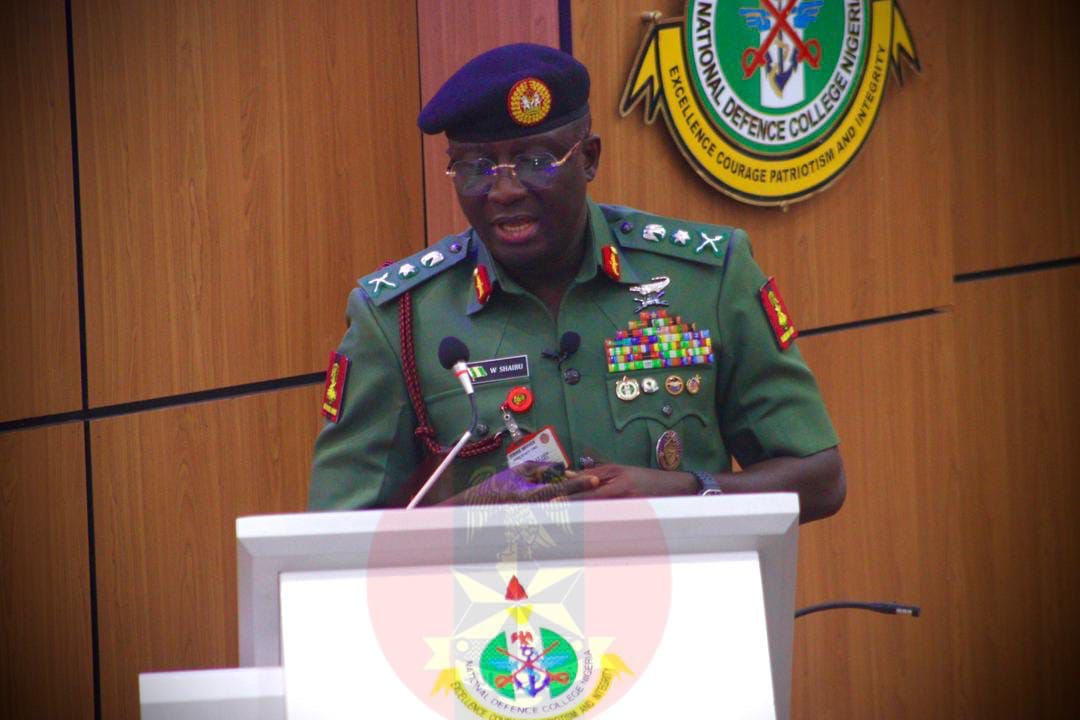
The Chief of Army Staff (COAS), Lieutenant General Waidi Shaibu, has underscored the Nigerian Army’s unwavering commitment to a modern, intelligence-led, and technology-enhanced strategy in addressing asymmetric threats to national security.
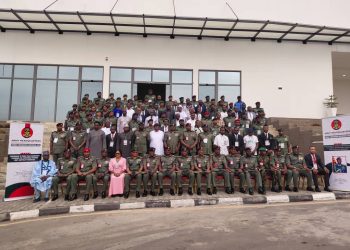
Speaking on Tuesday, 3 February 2026, during a strategic lecture titled “Combating Asymmetric Threats to National Security in Nigeria: The Nigerian Army in Perspective” to participants of the National Defence College (NDC), Course 34, Lieutenant General Shaibu noted that today’s security challenges have shifted from conventional state-based warfare to complex intra-state conflicts. These are increasingly dominated by non-state actors, including terrorists, insurgents, bandits, cybercriminals, and transnational organised crime networks, all of whom exploit governance gaps, societal vulnerabilities, and new technologies.
In response, the COAS explained that the Nigerian Army has deliberately recalibrated its operational doctrine and force deployment through a multi-domain strategy that combines precise military action with intelligence fusion, inter-agency collaboration, joint operations with sister services, and strategic international partnerships.
“Asymmetric threats thrive on adaptability, anonymity, and attacks on civilians to undermine state authority and public confidence. Our approach must therefore be equally adaptive, proactive, intelligence-led, and collaborative, leveraging military power alongside technology, government coordination, and strategic partnerships,” he said.
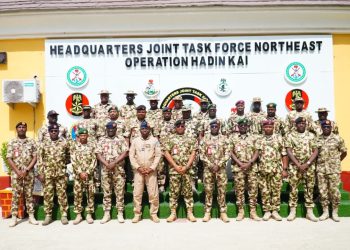
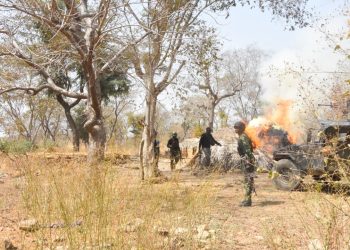
Lieutenant General Shaibu highlighted how operations are tailored to Nigeria’s diverse security landscape. In the North-East, counter-insurgency efforts continue to weaken terrorist networks through intelligence-driven strikes, offensive manoeuvres, and community-focused stabilisation initiatives. In the North-West, joint operations have intensified pressure on bandit groups, disrupted their funding and logistics, and strengthened the protection of local communities. In the North-Central region, operations focus on area domination, civilian protection, and containment of militia and communal violence.
The COAS also pointed to the role of advanced technologies, rigorous training, and stronger integration with sister services in enhancing operational effectiveness, situational awareness, and mission reach. He stressed that national security today extends beyond territorial defence to include economic stability, cyber resilience, environmental security, and human welfare.
He further emphasized that lasting peace can only be achieved when military actions are complemented by good governance, justice, and inclusive socio-economic development. He encouraged NDC Course 34 participants—Nigeria’s future strategic and operational leaders—to adopt integrated and forward-looking security approaches that tackle both immediate threats and their underlying causes.
Reassuring the public, Lieutenant General Shaibu affirmed the Army’s steadfast resolve to defend Nigeria’s sovereignty, safeguard lives and property, and protect critical national infrastructure, even as security threats evolve in complexity and scope.