

By Nkechi Eze
The Chairman and Chief Executive Officer of the National Drug Law Enforcement Agency (NDLEA), Brigadier General Mohamed Buba Marwa (rtd), has declared that Nigeria’s newly introduced Alternative Development Project is designed to end the long-standing confrontation between law enforcement agencies and illicit drug cultivators, while opening a pathway to sustainable livelihoods, food security and inclusive economic growth.
Marwa made this known on Tuesday, 27 January 2026, during a town hall meeting in Akure, Ondo State, to formally launch the Alternative Development Pilot Project in Nigeria.
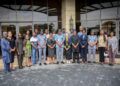
In an official signed statement, Director, Media and Advocacy of NDLEA, Femi Babafemi, disclosed that the launch attracted a broad coalition of national stakeholders and international partners, including Ondo State Governor, Dr Lucky Ayedatiwa; Country Representative of the United Nations Office on Drugs and Crime (UNODC), Mr Cheikh Toure; Head of Project, Global Partnership on Drug Policies and Development, Berlin, Ms Sarah David; Global Coordinator, Alternative Development/Sustainable Livelihoods, UNODC Vienna, Mr Thierry Rostan; Dr Tahirou Abdoulaye of the International Institute of Tropical Agriculture; and a representative of the Minister of Agriculture and Food Security, Senator Abubakar Kyari, among others.
Delivering his keynote address, Marwa acknowledged that illicit drug cultivation remains a major national challenge but insisted that it also presents an opportunity for collective action and lasting solutions. He explained that the town hall meeting was conceived as a platform for dialogue and partnership with affected communities, rather than a top-down enforcement engagement.
“This town hall meeting is designed for us to rub minds, work together, and agree on a friendly, community-centred approach to tackle the challenges of illicit drugs and related environmental crimes. We are not here to talk at you; we are here to talk with you. From this engagement, we look forward to sustainable commitments that will lead to a permanent exit from the world of illicit drugs,” he said.
The NDLEA boss reminded participants of the strong link between drug production, trafficking and violent crimes, noting that drug networks fuel banditry, terrorism and insurgency, both through substance abuse and the financing of criminal activities.
According to him, the Alternative Development Project is anchored on crop substitution and livelihood empowerment, offering communities practical economic alternatives to cannabis and other illicit crops.
“We are here to build a robust community network to support the Alternative Development Project; to locate and establish alternatives to illicit cropping; and to create structures for sustainable livelihoods, ensuring a smooth transition from illicit cropping to food security, in tandem with the Renewed Hope Agenda of Mr President,” Marwa stated.
He stressed that the initiative would be inclusive, community-owned and participatory, with illicit croppers, vulnerable persons and other stakeholders playing active roles in shaping and implementing solutions.
Marwa disclosed that participation in the programme would be strictly voluntary and limited to communities that demonstrate genuine readiness to abandon illicit cultivation.
“There is a wide range of licit cash and food crops, such as Artemisia annua, which has higher financial value than cannabis and possesses medicinal properties, including malaria treatment,” he added.
Explaining the philosophy behind the project, Marwa said Alternative Development represents empowerment as an alternative to enforcement.
“Illicit drugs generate large financial profits, but this wealth rarely reflects in the communities where the drugs are grown. While kingpins prosper elsewhere, cultivating communities are often left with poverty, soil degradation and insecurity. Our primary focus therefore is the Crop Substitution Programme,” he said.
He assured participants that the initiative would not be used as a ploy to arrest or detain anyone, calling instead on traditional rulers, religious leaders, youth groups, women associations, farmers and community leaders to form grassroots structures that will combat illicit cropping and trafficking from within.
“To the cooperating communities, from today we are no longer enemies. We are friends. We are partners in progress. Let us work hand-in-hand to build drug-free, prosperous and healthy communities in Ondo State,” Marwa declared.
He revealed that Ondo State is hosting the pilot phase in three pioneering communities, after which an assessment would be conducted and recommendations forwarded to the Federal Government for nationwide expansion.
In his remarks, Governor Ayedatiwa described the project as timely and laudable, thanking Marwa for choosing Ondo State as the pilot location and pledging the state’s full support.
“I wish to assure the NDLEA of the continued support and cooperation of the Ondo State Government towards stemming the tide of drug abuse. We will strengthen collaboration with traditional institutions, religious bodies, civil society organisations, community leaders and the private sector to expand awareness, promote prevention and support rehabilitation and reintegration,” the governor said.
He urged youths to reject drug abuse and embrace the alternative opportunities provided under the programme, disclosing that the state government is ready to allocate land, carry out land clearing and provide seeds and seedlings to support participating communities.
Speaking on behalf of traditional institutions, the Chairman of the Ondo State Traditional Rulers Council and Olowo of Owo Kingdom, Oba Ajibade Gbadegesin Ogunoye III, pledged royal backing for the initiative and commended Marwa for transforming NDLEA into a results-driven agency.
“We urge our youths to key into this programme. There is no alternative to it, because we know the consequences of cannabis cultivation and all other drugs. It is better to embrace opportunities that are legally available. Let me assure the NDLEA of our support and partnership,” the monarch said.
The launch of the Alternative Development Pilot Project marks a strategic shift in Nigeria’s drug control architecture, combining enforcement with empowerment, and signalling a new chapter in community-led solutions to illicit drug cultivation and trafficking.