By Nkechi Eze
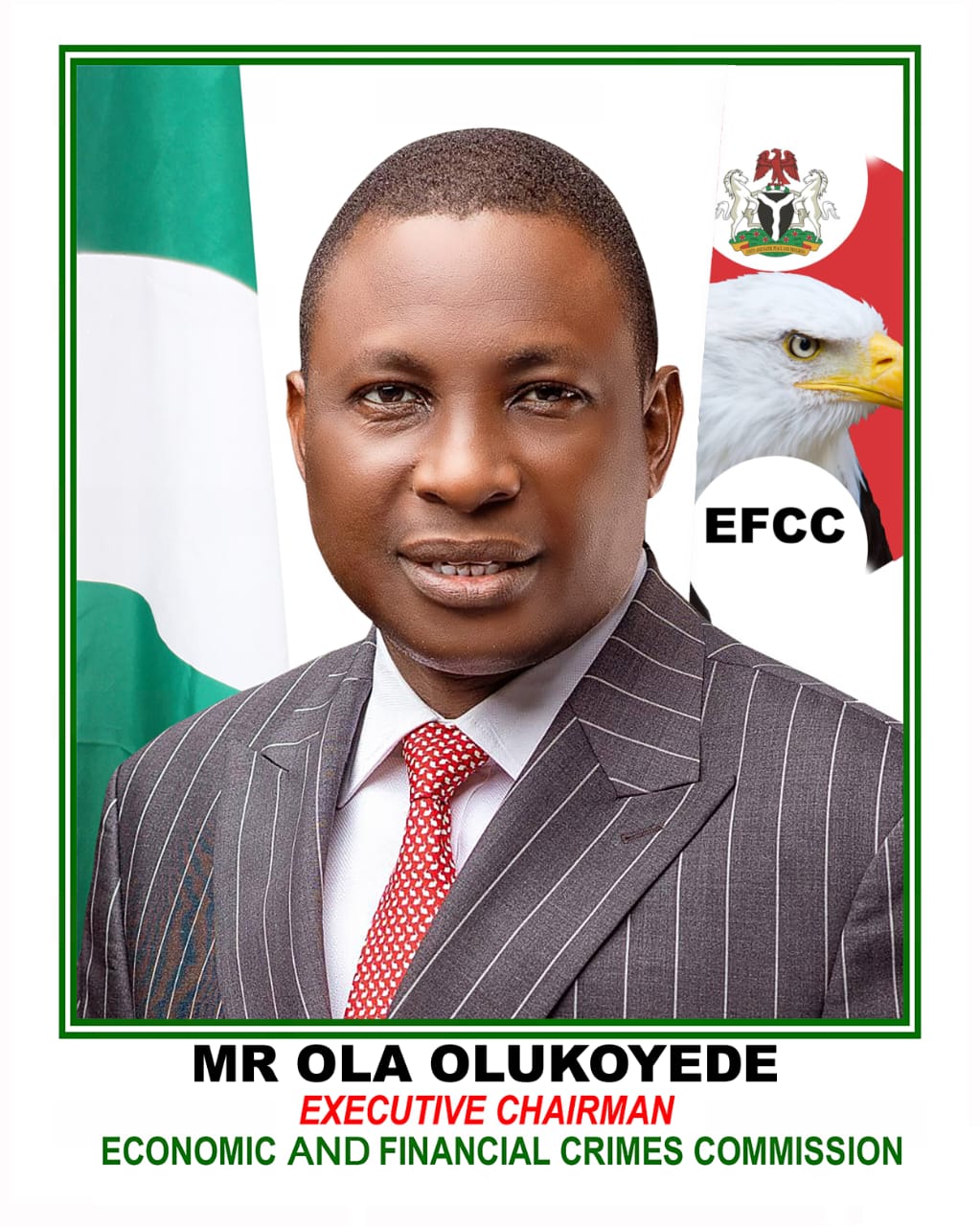
In a country where public service is often greeted with skepticism and anti-corruption efforts are routinely weighed against public trust, moments of broad national recognition carry special significance. Such a moment unfolded in mid-December 2025 when The Nation Newspaper named the Executive Chairman of the Economic and Financial Crimes Commission (EFCC), Mr. Ola Olukoyede, as its Public Servant of the Year, a decision that resonated strongly across governance, media and civil society circles.
The honour, announced at the newspaper’s prestigious annual awards ceremony on Sunday, December 14, 2025, was widely seen as an affirmation of Olukoyede’s impact-driven leadership and the renewed vigour the EFCC has brought to Nigeria’s fight against economic and financial crimes. In a roll call that included some of the country’s most influential figures among them industrial giant Aliko Dangote, who emerged Person of the Year, the recognition of the EFCC chairman stood out as a tribute to public accountability and institutional reform.
For many observers, the award reflected a broader narrative: the emergence of a public servant whose approach to leadership combines firmness with reform, enforcement with introspection. Writing on Olukoyede’s performance, The Nation columnist Femi Macaulay captured this sentiment, noting that the EFCC chairman’s work “reflects a deep sense of duty and a clear understanding of the demands of public office.” Under his leadership, Macaulay observed, the commission has demonstrated a renewed sense of responsibility, one that is not only corrective but also self-reforming and adaptive to emerging challenges.
Since assuming office, Olukoyede has overseen a period of remarkable institutional productivity at the EFCC, marked by unprecedented recoveries, convictions and high-profile forfeitures. Within just two years, the commission recovered hundreds of billions of naira in local currency alongside substantial sums in foreign currencies, reinforcing its role as a central pillar in Nigeria’s anti-corruption architecture. The scale of these recoveries has been matched by landmark forfeitures, including thousands of real estate assets and major institutional properties once linked to illicit activity, some of which have since been repurposed for public benefit.
Beyond asset recovery, the EFCC under Olukoyede has recorded thousands of convictions while filing tens of thousands of cases in courts nationwide, drawn from an even larger volume of petitions and investigations. These figures, while striking on their own, tell a deeper story of institutional momentum, one driven by systematic investigation, prosecutorial discipline and a clear signal that economic crimes will be pursued with consistency rather than selectivity.
The renewed confidence in the EFCC’s direction has not gone unnoticed at the highest levels of government. In October 2025, President Bola Ahmed Tinubu publicly commended Olukoyede, praising his professionalism and courage in the discharge of his duties. The President acknowledged the EFCC chairman’s role in reinforcing the commission’s mandate and advancing transparency, institutional reform and accountability within Nigeria’s governance framework. Such presidential recognition added further weight to the growing perception of Olukoyede as a steady and principled hand in a demanding national assignment.
What distinguishes Olukoyede’s leadership, according to close observers, is not only the intensity of enforcement but the emphasis on institutional renewal. The EFCC, under his watch, has sought to strengthen internal systems, professional standards and public engagement, projecting itself as a learning organisation capable of reforming even as it enforces the law. This balance between toughness and reform has helped reposition the commission in the public imagination, not merely as an agency of arrests, but as an institution committed to long-term integrity in governance.
The Public Servant of the Year award from The Nation adds to a growing list of honours conferred on Olukoyede from across different sectors of Nigerian society. Just a week earlier, on December 7, 2025, he was recognised at the Nigeria Excellence Awards in Public Service held at the State House Conference Centre in Abuja, further underlining the national consensus around his performance.
In the same awards year, The Nation celebrated achievements across business, entertainment, sports and public life, recognising figures such as Aliko Dangote, Abdul Samad Rabiu, Femi Otedola, music star Rema and football icon Victor Osimhen, among others. Yet, Olukoyede’s inclusion as Public Servant of the Year carried a distinct symbolism: a recognition that effective governance and ethical leadership remain central to Nigeria’s progress.
As Nigeria continues to grapple with the complex realities of corruption, economic crimes and institutional trust, the spotlight on Ola Olukoyede reflects more than personal acclaim. It signals a growing expectation that public institutions can work, that leadership can make a difference, and that integrity-driven service is still worthy of celebration. For a nation hungry for accountability and results, Olukoyede’s journey and the recognition it has attracted offers a compelling reminder that public service, when anchored on courage and competence, can indeed command national respect.