By Nkechi Eze
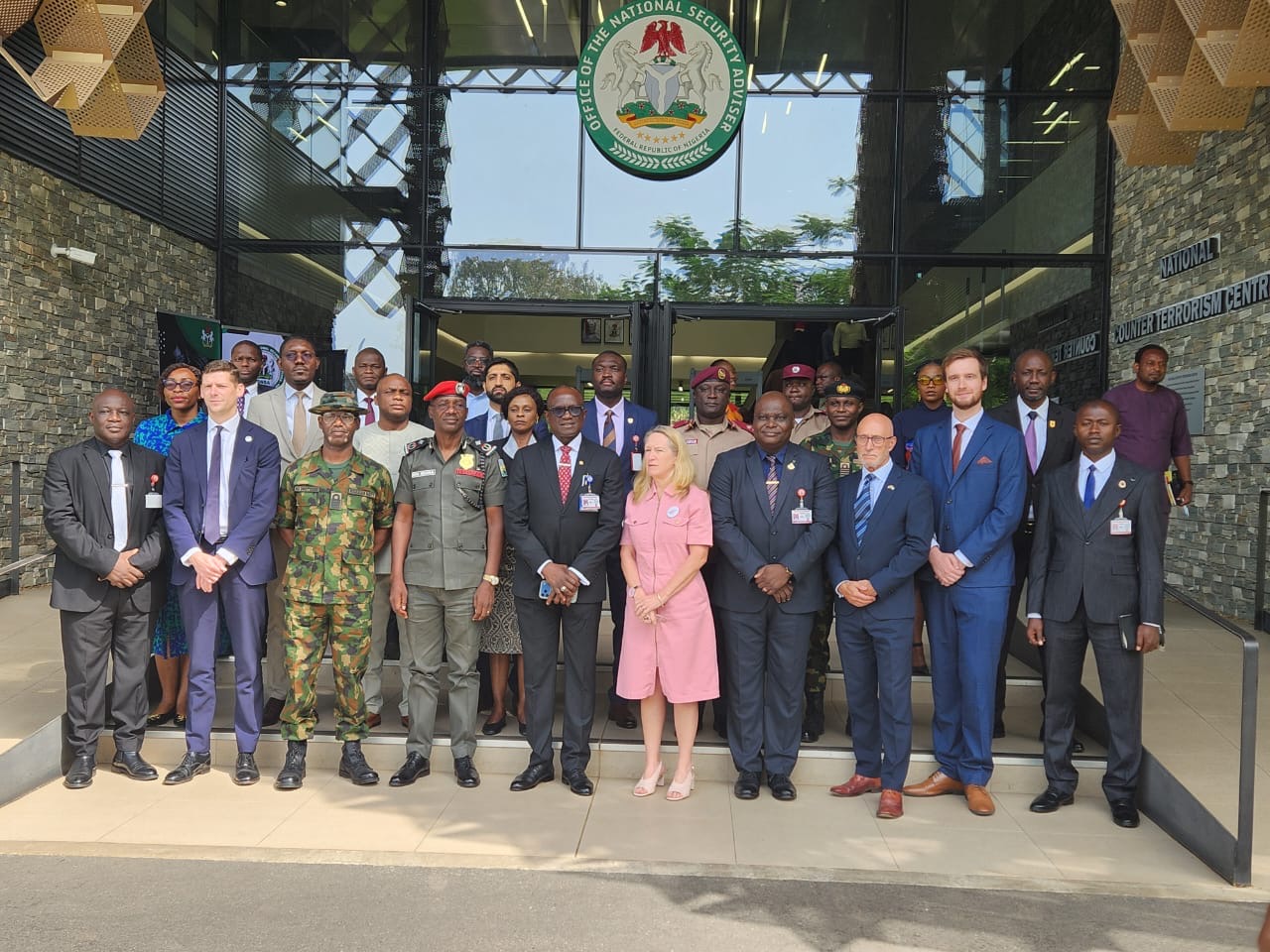
Nigeria’s fight against kidnapping received a renewed boost on Tuesday as top security leaders, international partners, telecom operators, and media stakeholders gathered at the National Counter Terrorism Centre (NCTC), Abuja, for a high-level workshop marking one year of the Multi-Agency Kidnap Fusion Cell, an innovation now credited with saving lives, strengthening intelligence coordination, and reshaping national response to abductions.
The workshop, hosted by the National Coordinator of the NCTC, Major General Adamu Laka, on behalf of the National Security Adviser, Mallam Nuhu Ribadu, brought together security agencies, the Nigerian Police Force, DSS, Armed Forces, British High Commission, National Crime Agency (UK), and private-sector actors, in what officials described as a decisive push to integrate every crucial stakeholder into the country’s evolving kidnap-response architecture.
Delivering his welcome address, Major General Laka said the session reflected deliberate efforts to deepen coordination, intelligence sharing, and operational synergy across agencies as kidnapping continues to evolve into one of Nigeria’s gravest security threats.
He noted that terrorism, banditry, separatist violence, and farmer–herder clashes all share a common thread: the widespread use of kidnapping as a source of financing, logistics, and territorial control by criminal and terrorist networks. What began as an opportunistic crime, he said, had transformed into a “persistent and destabilising enterprise.”
General Laka explained that rising international concern over the trend led to strategic UK–Nigeria collaboration, culminating in the establishment of the Multi-Agency Kidnap Fusion Cell, commissioned on 19 December 2024 by the National Security Adviser. Since its launch, the Cell has coordinated operations among the Armed Forces, intelligence services, law enforcement agencies, and state-level responders, generating actionable intelligence that has led to the rescue of hostages and disruption of kidnapping syndicates nationwide.
He highlighted the Centre’s expansion programme conducted in July 2025, which brought Anti-Kidnap Commanders from the 36 states and the FCT into a single operational network for faster intelligence flow and better state-level response.
However, he acknowledged that certain operational gaps remain particularly the need to formally integrate the media, telecommunications companies, and social media platforms into the national kidnapping-response ecosystem. The workshop, he said, was designed to map out how these actors can enhance the Cell’s effectiveness.
Major General Laka also clarified misconceptions about the Cell’s successes, stressing that its achievements extend far beyond high-profile British-Nigerian rescues. “We have a graph of every case,” he said. “Each case is logged, plugged into the system, and tracked to resolution, whether rescued or outstanding. Let us not view its successes as limited to only British cases.”
He expressed appreciation, on behalf of the NSA, to the Government of the United Kingdom, the National Crime Agency, and all partners whose commitment has strengthened the Cell’s work.
Speaking at the event, Acting British High Commissioner to Nigeria, Gill Lever OBE, described the workshop as a “one-year milestone” in what has become one of the most impactful joint security initiatives between both nations.
She emphasised that kidnapping has become a “real and present danger” that terrorises communities, destroys livelihoods, traumatises families, and damages Nigeria’s international reputation. The Multi-Agency Kidnap Fusion Cell, she said, was designed as a “Nigeria-owned solution” supported by international experience but rooted in Nigeria’s unique security realities.
Drawing from a recent incident involving 18 hostages abducted by river pirates between Calabar and Akwa Ibom, Lever praised the Cell’s professionalism in coordinating intelligence from Cross River to Abuja and back to state authorities, noting that the UK was “very impressed” by the Cell’s swift and structured response.
She stressed that the Cell is not a replacement for frontline responders, but a coordinating body that strengthens their work, adding that its success will depend on strong political backing, operational support from ministries and agencies, and committed participation from telecom operators and the media.
Also speaking, the Nigeria-based Coordinator of the UK’s National Crime Agency, Mr. Chris Grimson, applauded the “exceptional collaboration” between Nigeria and the UK, noting that the Fusion Cell has proven its value in real-world operations.
He highlighted how the successful rescue of a UK-Nigerian national earlier in the year demonstrated to UK policymakers that their investment in Nigeria’s kidnap-response system was yielding measurable results. “You cannot put a value on a human life,” he said. “That one incident proved the concept.”
Grimson praised the use of Nigerian contractors and experts in building the Cell’s operational and data-management systems, noting that the centralised kidnapping database now being maintained by the NCTC represents a major step forward for intelligence accuracy and national-level decision-making.
He urged telecom partners and other stakeholders to “equip the Fusion Cell with more tools” to aid timely tracing and rescue operations, stressing that almost every Nigerian has either experienced kidnapping personally or knows someone who has.
He concluded by describing the fight against kidnapping as a shared national responsibility, promising that the UK will continue supporting Nigeria’s efforts to strengthen the Cell and improve coordinated national response.
The workshop continues the broader vision of the NCTC to position Nigeria as a Regional Centre of Excellence in Counterterrorism for West Africa and the Sahel, a vision stakeholders at the event pledged to advance through deeper collaboration, faster intelligence sharing, and unified commitment to saving lives.